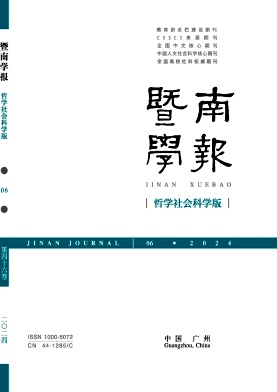
暨南学报(哲学社会科学版)杂志2024年第7期
-
- 中日同形法律术语“逮捕”对应译词辨正
- 陶芸, 冷罗生
- 中日两国同属汉字文化圈,同属大陆法系,二者的法律术语中存在着大量同形词,如“逮捕”等。这些同形词为中国人学习、翻译日本法律以及日本人学习、翻译中国法律带来莫大便利的同时,也给学习者和翻译者设置了各种“陷阱”。研究中日两国词汇的成果较多,但研究中日两国法律术语的成果相对较少。许多中日两国辞典(含法律用语辞典)和翻译的法律文本将“逮捕”当作同形同义词处理。通过查阅中译日和日译中两国辞典(含法律用语辞典)、法律文本翻译件、法学著作中的对应译词,以及比较中日两国刑事诉讼法中强制措施的顺序与特征,基于认知语义学、对照语言学的理论,采用例证的研究方法,仔细辨析中日法律术语“逮捕”的释义,经过比较分析后发现,中日法律术语“逮捕”并非同形同义词,而是同形异义词。中文法律术语“逮捕”的词义相当于日文法律术语“勾留”,日文法律术语“逮捕”的词义相当于中文法律术语“拘留”。"/>template{display:none;}.mag-rich-xref-fn { cursor: pointer;}//长视频$(document).ready(function(){if($("#showLongArticleVideo") && $("#showLongArticleVideo").length && $("#showLongArticleVideo").length>0){mag_ajax_update({ele_id:'showLongArticleVideo',url:mag_currentQikanUrl() + "/CN/article/showLongArticleVideo.do?id="+$("#articleId").val()});}});$(document).ready(function(){window.metaData = {"journal":{"issn":"1000-5072","qiKanMingCheng_CN":"暨南学报(哲学社会科学版)","id":2,"qiKanMingCheng_EN":"Jinan Journal"},"fundList_cn":["国家社会科学基金一般项目“《汉日法律词典》编纂研究”(21BYY044)。"],"article":{"keywordList_cn":["法律术语","同形词","逮捕","拘留","法治文化对外传播"],"juan":"46","zhaiyao_cn":"中日两国同属汉字文化圈,同属大陆法系,二者的法律术语中存在着大量同形词,如“逮捕”等。这些同形词为中国人学习、翻译日本法律以及日本人学习、翻译中国法律带来莫大便利的同时,也给学习者和翻译者设置了各种“陷阱”。研究中日两国词汇的成果较多,但研究中日两国法律术语的成果相对较少。许多中日两国辞典(含法律用语辞典)和翻译的法律文本将“逮捕”当作同形同义词处理。通过查阅中译日和日译中两国辞典(含法律用语辞典)、法律文本翻译件、法学著作中的对应译词,以及比较中日两国刑事诉讼法中强制措施的顺序与特征,基于认知语义学、对照语言学的理论,采用例证的研究方法,仔细辨析中日法律术语“逮捕”的释义,经过比较分析后发现,中日法律术语“逮捕”并非同形同义词,而是同形异义词。中文法律术语“逮捕”的词义相当于日文法律术语“勾留”,日文法律术语“逮捕”的词义相当于中文法律术语“拘留”。","endNoteUrl_en":"https://jnxb.jnu.edu.cn/skb/EN/article/getTxtFile.do?fileType=EndNote&id=7021","reference":"","bibtexUrl_cn":"https://jnxb.jnu.edu.cn/skb/CN/article/getTxtFile.do?fileType=BibTeX&id=7021","abstractUrl_en":"https://jnxb.jnu.edu.cn/skb/EN/10.11778/j.jnxb.20231381","qi":"7","id":7021,"nian":2024,"bianHao":"1725436198048-594178276","zuoZheEn_L":"TAO Yun, LENG Luosheng","juanUrl_en":"https://jnxb.jnu.edu.cn/skb/EN/Y2024","shouCiFaBuRiQi":"2024-09-04","qiShiYe":"1","qiUrl_cn":"https://jnxb.jnu.edu.cn/skb/CN/Y2024/V46/I7","lanMu_cn":"语言学研究","pdfSize":"1209","zuoZhe_CN":"陶芸, 冷罗生","risUrl_cn":"https://jnxb.jnu.edu.cn/skb/CN/article/getTxtFile.do?fileType=Ris&id=7021","title_cn":"中日同形法律术语“逮捕”对应译词辨正","doi":"10.11778/j.jnxb.20231381","jieShuYe":"14","keywordList_en":["legal terminology","homographs","“逮捕” (arrest)","detention","external dissemination of legal culture"],"endNoteUrl_cn":"https://jnxb.jnu.edu.cn/skb/CN/article/getTxtFile.do?fileType=EndNote&id=7021","zhaiyao_en":"China and Japan, both within the cultural sphere of Chinese characters and operating under civil law systems, exhibit a significant number of similar vocabularies in their legal terminologies, including the terms “逮捕” “拘留” “裁判” “审判”. While these vocabularies have facilitated the learning and translation of Japanese law for Chinese learners and vice versa, they have also caused complexities for translators and learners alike. Extensive research has been conducted on vocabularies in both China and Japan, but comparatively little attention has been devoted to legal terminology. Therefore, a comprehensive, in-depth, and accurate understanding of the similarities and differences in legal terminology between China and Japan is a common challenge for linguists, law learners, and researchers.Many Chinese-to-Japanese and Japanese-to-Chinese dictionaries, including those specialized in legal terminology, along with translated legal documents, define “逮捕” “拘留” “裁判” “审判” into synonymous terms based on their form. Due to space limitations, this study only focuses on the corresponding translation of the legal term “逮捕” (arrest) in Chinese and Japanese.Reviewing the aforementioned dictionaries, translated legal texts, and legal works in both China and Japan, as well as a comparative analysis of the order and characteristics of coercive measures outlined in the criminal procedure laws of both countries, this study, based on theories of cognitive semantics and contrastive linguistics, employs illustrative examples to carefully dissect the nuances of the Chinese and Japanese legal term “逮捕”. Following this comparative analysis, it is found that “逮捕” in both Chinese and Japanese language means one of the criminal coercive measures (punishment) that restrict personal freedom in criminal procedures of the two countries. Compared with bench warrant service, bail pending trial, residential surveillance, and detention, Chinese “逮捕” is the most severe criminal coercive measure, equivalent to Japan's criminal coercive punishment of “勾留”. “逮捕” in Japanese, on the other hand, is the initial act of mandatory detention of suspects in Japan's criminal compulsory punishment. compared with “勾留”, and its severity is weaker, equivalent to “custody” in China's criminal compulsory measures. Therefore, the legal term “逮捕” in Chinese and Japanese do not have the same meaning but rather are homographs.The cultural exchanges between China and Japan have a long history. In the process of learning and reference, the phenomenon of directly copying the same legal terminology in translation is relatively common. However, the legal terms of the same form between China and Japan do not correspond to each other. In the mutual translation of Chinese and Japanese legal terms, to distinguish the differences in the lexical meanings of homographs, and try to find out the corresponding equivalent legal terms, it is necessary to analyze the meanings of the original terms from Chinese and Japanese dictionaries, legal text translations, the corresponding substantive law or procedural law, as well as the writings of legal experts in the two countries, and summarize the various meanings of Chinese and Japanese legal terms, accordingly to select the corresponding Chinese and Japanese translations and to limit the scope of the use of legal terms of the same form in both languages, thus accurately expressing the original meanings the legal terms and avoiding misunderstandings, distortions, or omissions in their translation.","bibtexUrl_en":"https://jnxb.jnu.edu.cn/skb/EN/article/getTxtFile.do?fileType=BibTeX&id=7021","abstractUrl_cn":"https://jnxb.jnu.edu.cn/skb/CN/10.11778/j.jnxb.20231381","zuoZheCn_L":"陶芸, 冷罗生","juanUrl_cn":"https://jnxb.jnu.edu.cn/skb/CN/Y2024","lanMu_en":"","qiUrl_en":"https://jnxb.jnu.edu.cn/skb/EN/Y2024/V46/I7","zuoZhe_EN":"TAO Yun, LENG Luosheng","risUrl_en":"https://jnxb.jnu.edu.cn/skb/EN/article/getTxtFile.do?fileType=Ris&id=7021","title_en":"Analysis and Correction of the Translation of “逮捕” (Arrest) in Chinese and Japanese Legal Terminology","hasPdf":"true"},"authorNotes_cn":["陶芸,中央民族大学外国语学院;冷罗生,北京师范大学法学院。"]};if(window.metaData && (!window.metaData.authorNotesCommon_cn && !window.metaData.authorNotesCorresp_cn && window.metaData.authorNotes_cn)){window.metaData.authorNotesCommon_cn = window.metaData.authorNotes_cn;}if(window.metaData && (!window.metaData.authorNotesCommon_en && !window.metaData.authorNotesCorresp_en && window.metaData.authorNotes_en)){window.metaData.authorNotesCommon_en = window.metaData.authorNotes_en;}var _nlmdtdXml = $("#article_nlmdtdXml").val();var magDir = _nlmdtdXml.replace(/\/[^\/]+$/,'');window.metaData.magDir = magDir;new mag_vue({ el: '#metaVue', //dataUrl: mag_currentQikanUrl() + '/EN/article/getRichHtmlJson.do?articleId='+$("#articleId").val(), data:window.metaData, loading:true, doTextFun:function(text){ return doDataJsonText(text); }, doAfterFun:function(selector,jsonData){doMagVueAfter(selector,jsonData);}});var pars = {attachType:'PDF',id:$("#articleId").val(),json:true};jQuery.post($("#mag-common-contextPath").val()+"/CN/article/showArticleFile.do?" + new Date().getTime(), pars, function(data){var json=null;if(data.match(/^\[json\].*/g)){json=eval("("+data.replace(/^\[json\]/g,"")+")");}if(json && json.status == 1){//有权限}else{//无权限$("#no-access-div").show();}});mag_ajax({url:mag_currentQikanUrl() + '/CN/article/getRichHtmlJson.do',data:{articleId:$("#articleId").val(),token:'0e98630c10424fe6811406e44a735e47',referer:document.referrer},dataType:"json",async:"false",success:function(json){if(json.richHtmlJson && json.richHtmlJson.article){if(json.trans){var _nlmdtdXmlCN = $("#article_nlmdtdXmlCN").val();var magDirCN = _nlmdtdXmlCN.replace(/\/[^\/]+$/,'');json.richHtmlJson.magDir=magDirCN;}else{json.richHtmlJson.magDir=magDir;}new mag_vue({ el: '#bodyVue', data:json.richHtmlJson, doTextFun:function(text){ return doDataJsonText(text); }, doAfterFun:function(selector,jsonData){doMagVueAfter(selector,jsonData);}});}}});//altmetricif($.trim($("#article_doi").val())!=''){$.ajax({url:'https://api.altmetric.com/v1/doi/'+$.trim($("#article_doi").val())+'?callback=altmetric_callback',//url:'https://api.altmetric.com/v1/doi/10.1007/s13238-016-0264-7?callback=altmetric_callback',dataType:'jsonp'});}mag_rich_menu(jQuery);$(function(){ $('#autoMenu').autoMenu();})$("#autoMenu").niceScroll({cursorcolor: "#ccc", //滚动条的颜色cursoropacitymax: 0, //滚动条的透明度,从0-1 touchbehavior: false, //使光标拖动滚动像在台式电脑触摸设备 true滚动条拖动不可用 cursorwidth: "6px", //滚动条的宽度 单位默认px cursorborder: "0", // 游标边框css定义 cursorborderradius: "3px", //滚动条两头的圆角 autohidemode: true, //是否隐藏滚动条 true的时候默认不显示滚动条,当鼠标经过的时候显示滚动条 zindex: "auto", //给滚动条设置z-index值 railvalign:'defaul',railpadding: {top: 0,right: -6,left: 0,bottom: 0}, //滚动条的位置});window.autoMenuFlag=true;$("#relatedArticles").niceScroll({cursorcolor: "#ccc", //滚动条的颜色cursoropacitymax: 0, //滚动条的透明度,从0-1 touchbehavior: false, //使光标拖动滚动像在台式电脑触摸设备 true滚动条拖动不可用 cursorwidth: "6px", //滚动条的宽度 单位默认px cursorborder: "0", // 游标边框css定义 cursorborderradius: "3px", //滚动条两头的圆角 autohidemode: true, //是否隐藏滚动条 true的时候默认不显示滚动条,当鼠标经过的时候显示滚动条 zindex: "auto", //给滚动条设置z-index值 railvalign:'defaul',railpadding: {top: 0,right: -6,left: 0,bottom: 0}, //滚动条的位置});//公式序号 居右jQuery(".mag-xml-disp-formula").each(function() {var _this = jQuery(this);var _label= _this.children("label");if(typeof(_label.html())!="undefined"){_this.children("label").remove();_this.wrap("");_this.parent().parent().append(""+_label.html()+"");}});$('body').click(function(){$('.daochu_div').hide();$('.qipao').hide();})$('.qipao').click(function(event){event.stopPropagation();})/*参考文献显示隐藏*/$('.biaotijiantoush1').click(function(event){if($(this).attr('class')=='glyphicon glyphicon-triangle-top biaotijiantoush biaotijiantoush1'){$(this).parents('.mag_main_zhengwen_left_div_ckwx_table_benwenyiny').next('.mag_main_zhengwen_left_div_ckwx_table_ckwx_xiangqing').stop().slideUp();$(this).attr('class','glyphicon glyphicon-triangle-bottom biaotijiantoush biaotijiantoush1');}else if($(this).attr('class')=='glyphicon glyphicon-triangle-bottom biaotijiantoush biaotijiantoush1'){$(this).parents('.mag_main_zhengwen_left_div_ckwx_table_benwenyiny').next('.mag_main_zhengwen_left_div_ckwx_table_ckwx_xiangqing').stop().slideDown();$(this).attr('class','glyphicon glyphicon-triangle-top biaotijiantoush biaotijiantoush1');}event.stopPropagation();});//加载补充材料mag_ajax_update({ele_id:'showArticle_suppls',url:mag_currentQikanUrl() + '/CN/article/showArticleSuppls.do',data:{articleId:$("#articleId").val()}});//加载专题mag_ajax_update({ele_id:'showArticle_subjects',url:mag_currentQikanUrl() + '/CN/subject/showSubjectListByArticle.do',data:{articleId:$("#articleId").val(),forwardJsp:'showArticle'}});//渲染公式mag_mathJax();});function altmetric_callback(json){if(json && json.score){if(json.score - parseInt(json.score) > 0){$("#altmetric-score").html(parseInt(json.score)+1);}else{$("#altmetric-score").html(parseInt(json.score));}$(".main_content_center_right_duoweidu_div").css("width","25%");$("#altmetric-a").show();$("#altmetric-a").attr("href",json.details_url);}}function richClickAuthor(name){var searchSQL = "((("+mag_advSearchValReplace(name)+"[Author]) AND 2J[Journal]) AND year[Order])";mag_request({url:mag_currentQikanUrl() + '/CN/searchresult',data:{searchSQL:searchSQL}});}function richClickKeyword(keyword){var searchSQL = "((("+mag_advSearchValReplace(keyword)+"[Keyword]) AND 2J[Journal]) AND year[Order])";mag_request({url:mag_currentQikanUrl() + '/CN/searchresult',data:{searchSQL:searchSQL}});}function mag_share(){$("#bShare_more_a").click();}function loadRelatedArticles(){if($("#showRelatedArticles") && $("#showRelatedArticles").length>0){//加载过了}else{mag_loading();mag_ajax_update({ele_id:'relatedArticles-content',url:mag_currentQikanUrl() + '/CN/article/relatedArticle.do',data:{id:$("#articleId").val(), forwardJsp:'showArticle'},complete:function(){mag_layer_close();}});}}function showMetrics(){mag_window_location(mag_currentQikanUrl() + '/CN/metrics/'+$("#articleId").val());}function piaofuFn(a,fnId){var content=''+$("#mag-rich-fn-"+fnId).html()+'';piaofu(a,content);}function huoqukuanduimg(){//}function doDataJsonText(text){var str = text;//var _nlmdtdXml = $("#article_nlmdtdXml").val();//var magDir = _nlmdtdXml.replace(/\/[^\/]+$/,'');str = str.replace(/";ss += "";var shuomingTitle = "";var shuomingContent = '';if(fig.titleCn && fig.titleCn!=''){shuomingTitle = fig.titleCn;if(fig.titleContentCn && fig.titleContentCn!=''){shuomingContent += fig.titleContentCn;}}if(shuomingTitle==''){if(fig.titleEn && fig.titleEn!=''){shuomingTitle = fig.titleEn;}if(fig.titleContentEn && fig.titleContentEn!=''){shuomingContent += fig.titleContentEn;}}else{if(fig.titleEn && fig.titleEn!=''){shuomingContent += ""+fig.titleEn+"
-
- 详译明律,承明法统:清律“小注”的典型特征与创新发展
- 王毓
- 清律小注是“详译明律”最典型的体现,创造出以“译”为主的小注风格。清律新增小注以对律文语言结构诸如实词、虚词和连词、副词、介词、代词,以及主语、谓语、宾语、定语、状语等语法结构的补足为主要内容。同时又进一步明晰明律所隐含的法律规范要素,援引其他法律条文提醒法律适用的规则。除此之外,清律小注还将注释范围扩大到律名与例文,充分吸收明代注释律学的精华,注释方式更加灵活,对律典进行全方位的彻底注释。清律小注使得承继自明律的律文确定化程度更高,成为律典小注集大成者。由明律小注之简发展到清律小注之繁,也体现出律典制定繁简交替、因时制宜的要求,对维护律典的稳定传承、法律条文的稳定具有重要作用。"/>template{display:none;}.mag-rich-xref-fn { cursor: pointer;}//长视频$(document).ready(function(){if($("#showLongArticleVideo") && $("#showLongArticleVideo").length && $("#showLongArticleVideo").length>0){mag_ajax_update({ele_id:'showLongArticleVideo',url:mag_currentQikanUrl() + "/CN/article/showLongArticleVideo.do?id="+$("#articleId").val()});}});$(document).ready(function(){window.metaData = {"journal":{"issn":"1000-5072","qiKanMingCheng_CN":"暨南学报(哲学社会科学版)","id":2,"qiKanMingCheng_EN":"Jinan Journal"},"fundList_cn":["贵州大学引进人才科研基金项目“中国古代律典‘小注’研究”(2023005)。"],"article":{"keywordList_cn":["清律","律典小注","律学","明律","律文确定化"],"juan":"46","zhaiyao_cn":"清律小注是“详译明律”最典型的体现,创造出以“译”为主的小注风格。清律新增小注以对律文语言结构诸如实词、虚词和连词、副词、介词、代词,以及主语、谓语、宾语、定语、状语等语法结构的补足为主要内容。同时又进一步明晰明律所隐含的法律规范要素,援引其他法律条文提醒法律适用的规则。除此之外,清律小注还将注释范围扩大到律名与例文,充分吸收明代注释律学的精华,注释方式更加灵活,对律典进行全方位的彻底注释。清律小注使得承继自明律的律文确定化程度更高,成为律典小注集大成者。由明律小注之简发展到清律小注之繁,也体现出律典制定繁简交替、因时制宜的要求,对维护律典的稳定传承、法律条文的稳定具有重要作用。","endNoteUrl_en":"https://jnxb.jnu.edu.cn/skb/EN/article/getTxtFile.do?fileType=EndNote&id=7022","reference":"","bibtexUrl_cn":"https://jnxb.jnu.edu.cn/skb/CN/article/getTxtFile.do?fileType=BibTeX&id=7022","abstractUrl_en":"https://jnxb.jnu.edu.cn/skb/EN/10.11778/j.jnxb.20240352","qi":"7","id":7022,"nian":2024,"bianHao":"1725436208734-1317306076","zuoZheEn_L":"WANG Yu","juanUrl_en":"https://jnxb.jnu.edu.cn/skb/EN/Y2024","shouCiFaBuRiQi":"2024-09-04","qiShiYe":"15","qiUrl_cn":"https://jnxb.jnu.edu.cn/skb/CN/Y2024/V46/I7","lanMu_cn":"语言学研究","pdfSize":"1093","zuoZhe_CN":"王毓","risUrl_cn":"https://jnxb.jnu.edu.cn/skb/CN/article/getTxtFile.do?fileType=Ris&id=7022","title_cn":"详译明律,承明法统:清律“小注”的典型特征与创新发展","doi":"10.11778/j.jnxb.20240352","jieShuYe":"32","keywordList_en":["Qing Code","commentary on the code of laws and regulations","jurisprudence","Ming Code","legal text certainty"],"endNoteUrl_cn":"https://jnxb.jnu.edu.cn/skb/CN/article/getTxtFile.do?fileType=EndNote&id=7022","zhaiyao_en":"Although the Qing Dynasty's legal system originated from the Ming Dynasty's legal system and had a high degree of similarity in legal texts, there were significant differences in the number and scale of annotations on the Ming and Qing dynasties' legal systems. Out of the 460 laws in the Da Ming Law, only 86 are accompanied by annotations, and the vast majority of annotations are explanatory annotations represented by the character “predicate”. However, the Shunzhi Code has almost every article with small annotations, which is by no means the volume that can be covered by the annotations in the Da Ming Law. Most of the Qing Code annotations are added separately from the annotations in the Da Ming Law. Therefore, it can be considered that the legislative policy of “detailed translation of the Ming Code” in the Qing Dynasty is mainly reflected in the annotations. This has also created an unprecedented function of “translation”. “Translation” is a unique function of Qing Code annotations and a characteristic of Qing Code annotations. Based on inheriting the experience of compiling legal dictionaries from previous dynasties, the addition of new annotations in the Qing Dynasty goes beyond the historical experience of legal annotations in the Tang and Ming dynasties, forming a very typical innovation.The innovation of adding annotations to the Qing Code system is firstly reflected in the supplementation of grammatical structures such as content words, function words, conjunctions, adverbs, prepositions, pronouns, as well as subjects, predicates, objects, attributives, adverbials, etc. Secondly, it clarifies the legal normative elements implied by the Ming Code, which includes reproducing various normative elements that have general provisions but are not explained in specific legal texts. This includes inferring the implicit normative elements based on the context of the legal text and reproducing them. Thirdly, it is reflected in the citation of other relevant legal provisions in the Qing Dynasty annotations to remind the applicable rules of the law. Finally, the Qing Code annotations expanded the scope of annotation to law names and examples, fully absorbed the essence of the Ming Dynasty's annotation laws, and treated the Qing Code laws and examples inherited from the Ming Dynasty equally as important objects of annotation. In addition, the explanatory and supplementary legislative annotations are more flexible in their annotation methods, and the annotation content is richer. It can be said that the Qing Code annotations are comprehensive and thorough annotations of the laws and codes. It can be said that the Laws of the Qing Dynasty is an excellent annotation book on the laws of the Ming Dynasty, which is a collection of the essence of a hundred schools of thought.By supplementing the minimalist language style of the Ming Dynasty's legal texts and reproducing the various legal norms implied in them, the Qing Dynasty's legal texts inherited from the Ming Dynasty's legal texts have a higher degree of certainty. From a legislative perspective, they have become the culmination of the collection of legal texts. Compared to the proliferation of legal texts and examples, which have been criticized in historical books throughout history, the alternation of complexity and simplicity in the annotations of legal texts cannot be completely regarded as an alternation of advantages and disadvantages. The development from simple annotations in the Ming Dynasty to complex annotations in the Qing Dynasty precisely reflects the requirement of alternating between complex and simplified regulations in the formulation of legal classics, and adapting to the times. It demonstrates that ancient legislation made good use of interpretive means to ensure the stability of the law, and always strived to bring new vitality to ancient laws. The changes in the complexity and simplicity of legal annotations, in accordance with the times, ensure that the basic values of traditional Chinese law have remained unchanged for thousands of years. This is precisely the valuable experience of traditional legal formulation.","bibtexUrl_en":"https://jnxb.jnu.edu.cn/skb/EN/article/getTxtFile.do?fileType=BibTeX&id=7022","abstractUrl_cn":"https://jnxb.jnu.edu.cn/skb/CN/10.11778/j.jnxb.20240352","zuoZheCn_L":"王毓","juanUrl_cn":"https://jnxb.jnu.edu.cn/skb/CN/Y2024","lanMu_en":"","qiUrl_en":"https://jnxb.jnu.edu.cn/skb/EN/Y2024/V46/I7","zuoZhe_EN":"WANG Yu","risUrl_en":"https://jnxb.jnu.edu.cn/skb/EN/article/getTxtFile.do?fileType=Ris&id=7022","title_en":"Detailed Translation of Ming Code, Inheriting the Laws of the Ming Dynasty: Typical Characteristics and Innovative Development of Qing Code's “Annotations”","hasPdf":"true"},"authorNotes_cn":["王毓,贵州大学法学院。"]};if(window.metaData && (!window.metaData.authorNotesCommon_cn && !window.metaData.authorNotesCorresp_cn && window.metaData.authorNotes_cn)){window.metaData.authorNotesCommon_cn = window.metaData.authorNotes_cn;}if(window.metaData && (!window.metaData.authorNotesCommon_en && !window.metaData.authorNotesCorresp_en && window.metaData.authorNotes_en)){window.metaData.authorNotesCommon_en = window.metaData.authorNotes_en;}var _nlmdtdXml = $("#article_nlmdtdXml").val();var magDir = _nlmdtdXml.replace(/\/[^\/]+$/,'');window.metaData.magDir = magDir;new mag_vue({ el: '#metaVue', //dataUrl: mag_currentQikanUrl() + '/EN/article/getRichHtmlJson.do?articleId='+$("#articleId").val(), data:window.metaData, loading:true, doTextFun:function(text){ return doDataJsonText(text); }, doAfterFun:function(selector,jsonData){doMagVueAfter(selector,jsonData);}});var pars = {attachType:'PDF',id:$("#articleId").val(),json:true};jQuery.post($("#mag-common-contextPath").val()+"/CN/article/showArticleFile.do?" + new Date().getTime(), pars, function(data){var json=null;if(data.match(/^\[json\].*/g)){json=eval("("+data.replace(/^\[json\]/g,"")+")");}if(json && json.status == 1){//有权限}else{//无权限$("#no-access-div").show();}});mag_ajax({url:mag_currentQikanUrl() + '/CN/article/getRichHtmlJson.do',data:{articleId:$("#articleId").val(),token:'9daff3472eec494fbe8fcc756c52900e',referer:document.referrer},dataType:"json",async:"false",success:function(json){if(json.richHtmlJson && json.richHtmlJson.article){if(json.trans){var _nlmdtdXmlCN = $("#article_nlmdtdXmlCN").val();var magDirCN = _nlmdtdXmlCN.replace(/\/[^\/]+$/,'');json.richHtmlJson.magDir=magDirCN;}else{json.richHtmlJson.magDir=magDir;}new mag_vue({ el: '#bodyVue', data:json.richHtmlJson, doTextFun:function(text){ return doDataJsonText(text); }, doAfterFun:function(selector,jsonData){doMagVueAfter(selector,jsonData);}});}}});//altmetricif($.trim($("#article_doi").val())!=''){$.ajax({url:'https://api.altmetric.com/v1/doi/'+$.trim($("#article_doi").val())+'?callback=altmetric_callback',//url:'https://api.altmetric.com/v1/doi/10.1007/s13238-016-0264-7?callback=altmetric_callback',dataType:'jsonp'});}mag_rich_menu(jQuery);$(function(){ $('#autoMenu').autoMenu();})$("#autoMenu").niceScroll({cursorcolor: "#ccc", //滚动条的颜色cursoropacitymax: 0, //滚动条的透明度,从0-1 touchbehavior: false, //使光标拖动滚动像在台式电脑触摸设备 true滚动条拖动不可用 cursorwidth: "6px", //滚动条的宽度 单位默认px cursorborder: "0", // 游标边框css定义 cursorborderradius: "3px", //滚动条两头的圆角 autohidemode: true, //是否隐藏滚动条 true的时候默认不显示滚动条,当鼠标经过的时候显示滚动条 zindex: "auto", //给滚动条设置z-index值 railvalign:'defaul',railpadding: {top: 0,right: -6,left: 0,bottom: 0}, //滚动条的位置});window.autoMenuFlag=true;$("#relatedArticles").niceScroll({cursorcolor: "#ccc", //滚动条的颜色cursoropacitymax: 0, //滚动条的透明度,从0-1 touchbehavior: false, //使光标拖动滚动像在台式电脑触摸设备 true滚动条拖动不可用 cursorwidth: "6px", //滚动条的宽度 单位默认px cursorborder: "0", // 游标边框css定义 cursorborderradius: "3px", //滚动条两头的圆角 autohidemode: true, //是否隐藏滚动条 true的时候默认不显示滚动条,当鼠标经过的时候显示滚动条 zindex: "auto", //给滚动条设置z-index值 railvalign:'defaul',railpadding: {top: 0,right: -6,left: 0,bottom: 0}, //滚动条的位置});//公式序号 居右jQuery(".mag-xml-disp-formula").each(function() {var _this = jQuery(this);var _label= _this.children("label");if(typeof(_label.html())!="undefined"){_this.children("label").remove();_this.wrap("");_this.parent().parent().append(""+_label.html()+"");}});$('body').click(function(){$('.daochu_div').hide();$('.qipao').hide();})$('.qipao').click(function(event){event.stopPropagation();})/*参考文献显示隐藏*/$('.biaotijiantoush1').click(function(event){if($(this).attr('class')=='glyphicon glyphicon-triangle-top biaotijiantoush biaotijiantoush1'){$(this).parents('.mag_main_zhengwen_left_div_ckwx_table_benwenyiny').next('.mag_main_zhengwen_left_div_ckwx_table_ckwx_xiangqing').stop().slideUp();$(this).attr('class','glyphicon glyphicon-triangle-bottom biaotijiantoush biaotijiantoush1');}else if($(this).attr('class')=='glyphicon glyphicon-triangle-bottom biaotijiantoush biaotijiantoush1'){$(this).parents('.mag_main_zhengwen_left_div_ckwx_table_benwenyiny').next('.mag_main_zhengwen_left_div_ckwx_table_ckwx_xiangqing').stop().slideDown();$(this).attr('class','glyphicon glyphicon-triangle-top biaotijiantoush biaotijiantoush1');}event.stopPropagation();});//加载补充材料mag_ajax_update({ele_id:'showArticle_suppls',url:mag_currentQikanUrl() + '/CN/article/showArticleSuppls.do',data:{articleId:$("#articleId").val()}});//加载专题mag_ajax_update({ele_id:'showArticle_subjects',url:mag_currentQikanUrl() + '/CN/subject/showSubjectListByArticle.do',data:{articleId:$("#articleId").val(),forwardJsp:'showArticle'}});//渲染公式mag_mathJax();});function altmetric_callback(json){if(json && json.score){if(json.score - parseInt(json.score) > 0){$("#altmetric-score").html(parseInt(json.score)+1);}else{$("#altmetric-score").html(parseInt(json.score));}$(".main_content_center_right_duoweidu_div").css("width","25%");$("#altmetric-a").show();$("#altmetric-a").attr("href",json.details_url);}}function richClickAuthor(name){var searchSQL = "((("+mag_advSearchValReplace(name)+"[Author]) AND 2J[Journal]) AND year[Order])";mag_request({url:mag_currentQikanUrl() + '/CN/searchresult',data:{searchSQL:searchSQL}});}function richClickKeyword(keyword){var searchSQL = "((("+mag_advSearchValReplace(keyword)+"[Keyword]) AND 2J[Journal]) AND year[Order])";mag_request({url:mag_currentQikanUrl() + '/CN/searchresult',data:{searchSQL:searchSQL}});}function mag_share(){$("#bShare_more_a").click();}function loadRelatedArticles(){if($("#showRelatedArticles") && $("#showRelatedArticles").length>0){//加载过了}else{mag_loading();mag_ajax_update({ele_id:'relatedArticles-content',url:mag_currentQikanUrl() + '/CN/article/relatedArticle.do',data:{id:$("#articleId").val(), forwardJsp:'showArticle'},complete:function(){mag_layer_close();}});}}function showMetrics(){mag_window_location(mag_currentQikanUrl() + '/CN/metrics/'+$("#articleId").val());}function piaofuFn(a,fnId){var content=''+$("#mag-rich-fn-"+fnId).html()+'';piaofu(a,content);}function huoqukuanduimg(){//}function doDataJsonText(text){var str = text;//var _nlmdtdXml = $("#article_nlmdtdXml").val();//var magDir = _nlmdtdXml.replace(/\/[^\/]+$/,'');str = str.replace(/";ss += "";var shuomingTitle = "";var shuomingContent = '';if(fig.titleCn && fig.titleCn!=''){shuomingTitle = fig.titleCn;if(fig.titleContentCn && fig.titleContentCn!=''){shuomingContent += fig.titleContentCn;}}if(shuomingTitle==''){if(fig.titleEn && fig.titleEn!=''){shuomingTitle = fig.titleEn;}if(fig.titleContentEn && fig.titleContentEn!=''){shuomingContent += fig.titleContentEn;}}else{if(fig.titleEn && fig.titleEn!=''){shuomingContent += ""+fig.titleEn+"
-
- 金融数字化、平台化:风险治理的制度挑战与寻解
- 韩龙
- 作为人类历史上第四次产业革命的数字化必将导致金融的数字化和数字金融的平台化,通过创新金融模式、金融服务和市场结构,带来金融生态的巨变,同时也带来许多新型金融风险。数字化带来的金融生态的风险变化,不仅颠覆了传统金融制度的预设,而且使传统金融规制目标受挫与规制措施失灵。在金融数字化、平台化勃兴的当下,其风险治理应实行确保金融规制基本目标实现、自反迭代规制、重视功能与穿透性监管等基于原则的规制思路。在方略上,应实行动态灵活规制,采取窗口指导和试点项目等做法。在措施上,应实行针对性规制,与时俱进地开发出新型规制措施,并以数字技术赋能金融规制和监管。"/>template{display:none;}.mag-rich-xref-fn { cursor: pointer;}//长视频$(document).ready(function(){if($("#showLongArticleVideo") && $("#showLongArticleVideo").length && $("#showLongArticleVideo").length>0){mag_ajax_update({ele_id:'showLongArticleVideo',url:mag_currentQikanUrl() + "/CN/article/showLongArticleVideo.do?id="+$("#articleId").val()});}});$(document).ready(function(){window.metaData = {"journal":{"issn":"1000-5072","qiKanMingCheng_CN":"暨南学报(哲学社会科学版)","id":2,"qiKanMingCheng_EN":"Jinan Journal"},"fundList_cn":["国家社会科学基金重大招标项目“数字化背景下国际金融服务的法律治理体系研究”(22&ZD203)。"],"article":{"keywordList_cn":["金融数字化","平台化","风险治理","制度挑战","制度变革"],"juan":"46","zhaiyao_cn":"作为人类历史上第四次产业革命的数字化必将导致金融的数字化和数字金融的平台化,通过创新金融模式、金融服务和市场结构,带来金融生态的巨变,同时也带来许多新型金融风险。数字化带来的金融生态的风险变化,不仅颠覆了传统金融制度的预设,而且使传统金融规制目标受挫与规制措施失灵。在金融数字化、平台化勃兴的当下,其风险治理应实行确保金融规制基本目标实现、自反迭代规制、重视功能与穿透性监管等基于原则的规制思路。在方略上,应实行动态灵活规制,采取窗口指导和试点项目等做法。在措施上,应实行针对性规制,与时俱进地开发出新型规制措施,并以数字技术赋能金融规制和监管。","endNoteUrl_en":"https://jnxb.jnu.edu.cn/skb/EN/article/getTxtFile.do?fileType=EndNote&id=7023","reference":"","bibtexUrl_cn":"https://jnxb.jnu.edu.cn/skb/CN/article/getTxtFile.do?fileType=BibTeX&id=7023","abstractUrl_en":"https://jnxb.jnu.edu.cn/skb/EN/10.11778/j.jnxb.20240028","qi":"7","id":7023,"nian":2024,"bianHao":"1725436209066-1414885731","zuoZheEn_L":"HAN Long","juanUrl_en":"https://jnxb.jnu.edu.cn/skb/EN/Y2024","shouCiFaBuRiQi":"2024-09-04","qiShiYe":"33","qiUrl_cn":"https://jnxb.jnu.edu.cn/skb/CN/Y2024/V46/I7","lanMu_cn":"数字法治","pdfSize":"673","zuoZhe_CN":"韩龙","risUrl_cn":"https://jnxb.jnu.edu.cn/skb/CN/article/getTxtFile.do?fileType=Ris&id=7023","title_cn":"金融数字化、平台化:风险治理的制度挑战与寻解","doi":"10.11778/j.jnxb.20240028","jieShuYe":"46","keywordList_en":["financial digitalization","platformization","risk governance","institutional challenges","institutional reform"],"endNoteUrl_cn":"https://jnxb.jnu.edu.cn/skb/CN/article/getTxtFile.do?fileType=EndNote&id=7023","zhaiyao_en":"With the advent of the digital era, the financial industry, as a pioneer in technological application, is undergoing a profound digital transformation. This transformation not only involves traditional financial institutions moving their operations online but also encompasses new financial models and businesses created by digital technologies, such as Initial Coin Offerings (ICOs) and crowdfunding, which have altered the traditional intermediary model of finance. The application of digital technologies, particularly big data, artificial intelligence (AI), and cloud computing, enables financial institutions to leverage broader data sources for more precise risk assessments, enhancing the inclusiveness and personalization levels of financial services. Financial digitalization and platformization have introduced a series of new risks, including data security and privacy risks, algorithmic risks, externalities, and systemic risks. These risks differ from traditional financial risks in terms of their mechanisms of emergence, breadth, and destructive power, far surpassing the levels in the pre-digital era. For example, digital technologies allow financial institutions to synthesize unprecedented financial assets or liabilities, potentially leading to new factors of financial instability. The impact of financial digitalization and platformization on traditional financial systems is significant. On one hand, the application of digital technologies disrupts the balance between market freedom and market regulation, undermining the objectives of traditional financial regulation. On the other hand, emerging financial models and businesses tend to be more opaque, making them difficult to regulate with conventional measures. Moreover, non-financial institutions and platforms that enter the financial sector often design business models to circumvent regulatory oversight, further complicating regulatory efforts. To address these challenges, a set of new approaches and measures for financial risk governance should be considered. Firstly, there is a need for a principle-based regulatory approach, including ensuring the realization of basic goals of financial regulation, implementing reflexive iterative regulation, and emphasizing functional regulation. Secondly, dynamic and flexible regulatory strategies should be adopted, such as window guidance and pilot projects. Finally, targeted regulatory measures should be developed, leveraging digital technologies to empower financial regulation and supervision. Financial digitalization and platformization have a profound impact on the financial industry, driving innovation in financial models and services while introducing new financial risks. To effectively manage these risks, financial risk governance systems need to be innovated to adapt to the challenges of the digital age. We can implement principle-based regulation, dynamic and flexible regulatory strategies, and targeted regulatory measures, to achieve a balance between financial innovation and risk prevention, ensuring financial stability while promoting the healthy development of the financial industry.","bibtexUrl_en":"https://jnxb.jnu.edu.cn/skb/EN/article/getTxtFile.do?fileType=BibTeX&id=7023","abstractUrl_cn":"https://jnxb.jnu.edu.cn/skb/CN/10.11778/j.jnxb.20240028","zuoZheCn_L":"韩龙","juanUrl_cn":"https://jnxb.jnu.edu.cn/skb/CN/Y2024","lanMu_en":"","qiUrl_en":"https://jnxb.jnu.edu.cn/skb/EN/Y2024/V46/I7","zuoZhe_EN":"HAN Long","risUrl_en":"https://jnxb.jnu.edu.cn/skb/EN/article/getTxtFile.do?fileType=Ris&id=7023","title_en":"Financial Digitalization and Platformization: Challenges for Risk Governance Systems and Solutions","hasPdf":"true"},"authorNotes_cn":["韩龙,新疆政法学院,海南大学法学院。"]};if(window.metaData && (!window.metaData.authorNotesCommon_cn && !window.metaData.authorNotesCorresp_cn && window.metaData.authorNotes_cn)){window.metaData.authorNotesCommon_cn = window.metaData.authorNotes_cn;}if(window.metaData && (!window.metaData.authorNotesCommon_en && !window.metaData.authorNotesCorresp_en && window.metaData.authorNotes_en)){window.metaData.authorNotesCommon_en = window.metaData.authorNotes_en;}var _nlmdtdXml = $("#article_nlmdtdXml").val();var magDir = _nlmdtdXml.replace(/\/[^\/]+$/,'');window.metaData.magDir = magDir;new mag_vue({ el: '#metaVue', //dataUrl: mag_currentQikanUrl() + '/EN/article/getRichHtmlJson.do?articleId='+$("#articleId").val(), data:window.metaData, loading:true, doTextFun:function(text){ return doDataJsonText(text); }, doAfterFun:function(selector,jsonData){doMagVueAfter(selector,jsonData);}});var pars = {attachType:'PDF',id:$("#articleId").val(),json:true};jQuery.post($("#mag-common-contextPath").val()+"/CN/article/showArticleFile.do?" + new Date().getTime(), pars, function(data){var json=null;if(data.match(/^\[json\].*/g)){json=eval("("+data.replace(/^\[json\]/g,"")+")");}if(json && json.status == 1){//有权限}else{//无权限$("#no-access-div").show();}});mag_ajax({url:mag_currentQikanUrl() + '/CN/article/getRichHtmlJson.do',data:{articleId:$("#articleId").val(),token:'e58a6a5c6860415c8cd6d1a87e9203c5',referer:document.referrer},dataType:"json",async:"false",success:function(json){if(json.richHtmlJson && json.richHtmlJson.article){if(json.trans){var _nlmdtdXmlCN = $("#article_nlmdtdXmlCN").val();var magDirCN = _nlmdtdXmlCN.replace(/\/[^\/]+$/,'');json.richHtmlJson.magDir=magDirCN;}else{json.richHtmlJson.magDir=magDir;}new mag_vue({ el: '#bodyVue', data:json.richHtmlJson, doTextFun:function(text){ return doDataJsonText(text); }, doAfterFun:function(selector,jsonData){doMagVueAfter(selector,jsonData);}});}}});//altmetricif($.trim($("#article_doi").val())!=''){$.ajax({url:'https://api.altmetric.com/v1/doi/'+$.trim($("#article_doi").val())+'?callback=altmetric_callback',//url:'https://api.altmetric.com/v1/doi/10.1007/s13238-016-0264-7?callback=altmetric_callback',dataType:'jsonp'});}mag_rich_menu(jQuery);$(function(){ $('#autoMenu').autoMenu();})$("#autoMenu").niceScroll({cursorcolor: "#ccc", //滚动条的颜色cursoropacitymax: 0, //滚动条的透明度,从0-1 touchbehavior: false, //使光标拖动滚动像在台式电脑触摸设备 true滚动条拖动不可用 cursorwidth: "6px", //滚动条的宽度 单位默认px cursorborder: "0", // 游标边框css定义 cursorborderradius: "3px", //滚动条两头的圆角 autohidemode: true, //是否隐藏滚动条 true的时候默认不显示滚动条,当鼠标经过的时候显示滚动条 zindex: "auto", //给滚动条设置z-index值 railvalign:'defaul',railpadding: {top: 0,right: -6,left: 0,bottom: 0}, //滚动条的位置});window.autoMenuFlag=true;$("#relatedArticles").niceScroll({cursorcolor: "#ccc", //滚动条的颜色cursoropacitymax: 0, //滚动条的透明度,从0-1 touchbehavior: false, //使光标拖动滚动像在台式电脑触摸设备 true滚动条拖动不可用 cursorwidth: "6px", //滚动条的宽度 单位默认px cursorborder: "0", // 游标边框css定义 cursorborderradius: "3px", //滚动条两头的圆角 autohidemode: true, //是否隐藏滚动条 true的时候默认不显示滚动条,当鼠标经过的时候显示滚动条 zindex: "auto", //给滚动条设置z-index值 railvalign:'defaul',railpadding: {top: 0,right: -6,left: 0,bottom: 0}, //滚动条的位置});//公式序号 居右jQuery(".mag-xml-disp-formula").each(function() {var _this = jQuery(this);var _label= _this.children("label");if(typeof(_label.html())!="undefined"){_this.children("label").remove();_this.wrap("");_this.parent().parent().append(""+_label.html()+"");}});$('body').click(function(){$('.daochu_div').hide();$('.qipao').hide();})$('.qipao').click(function(event){event.stopPropagation();})/*参考文献显示隐藏*/$('.biaotijiantoush1').click(function(event){if($(this).attr('class')=='glyphicon glyphicon-triangle-top biaotijiantoush biaotijiantoush1'){$(this).parents('.mag_main_zhengwen_left_div_ckwx_table_benwenyiny').next('.mag_main_zhengwen_left_div_ckwx_table_ckwx_xiangqing').stop().slideUp();$(this).attr('class','glyphicon glyphicon-triangle-bottom biaotijiantoush biaotijiantoush1');}else if($(this).attr('class')=='glyphicon glyphicon-triangle-bottom biaotijiantoush biaotijiantoush1'){$(this).parents('.mag_main_zhengwen_left_div_ckwx_table_benwenyiny').next('.mag_main_zhengwen_left_div_ckwx_table_ckwx_xiangqing').stop().slideDown();$(this).attr('class','glyphicon glyphicon-triangle-top biaotijiantoush biaotijiantoush1');}event.stopPropagation();});//加载补充材料mag_ajax_update({ele_id:'showArticle_suppls',url:mag_currentQikanUrl() + '/CN/article/showArticleSuppls.do',data:{articleId:$("#articleId").val()}});//加载专题mag_ajax_update({ele_id:'showArticle_subjects',url:mag_currentQikanUrl() + '/CN/subject/showSubjectListByArticle.do',data:{articleId:$("#articleId").val(),forwardJsp:'showArticle'}});//渲染公式mag_mathJax();});function altmetric_callback(json){if(json && json.score){if(json.score - parseInt(json.score) > 0){$("#altmetric-score").html(parseInt(json.score)+1);}else{$("#altmetric-score").html(parseInt(json.score));}$(".main_content_center_right_duoweidu_div").css("width","25%");$("#altmetric-a").show();$("#altmetric-a").attr("href",json.details_url);}}function richClickAuthor(name){var searchSQL = "((("+mag_advSearchValReplace(name)+"[Author]) AND 2J[Journal]) AND year[Order])";mag_request({url:mag_currentQikanUrl() + '/CN/searchresult',data:{searchSQL:searchSQL}});}function richClickKeyword(keyword){var searchSQL = "((("+mag_advSearchValReplace(keyword)+"[Keyword]) AND 2J[Journal]) AND year[Order])";mag_request({url:mag_currentQikanUrl() + '/CN/searchresult',data:{searchSQL:searchSQL}});}function mag_share(){$("#bShare_more_a").click();}function loadRelatedArticles(){if($("#showRelatedArticles") && $("#showRelatedArticles").length>0){//加载过了}else{mag_loading();mag_ajax_update({ele_id:'relatedArticles-content',url:mag_currentQikanUrl() + '/CN/article/relatedArticle.do',data:{id:$("#articleId").val(), forwardJsp:'showArticle'},complete:function(){mag_layer_close();}});}}function showMetrics(){mag_window_location(mag_currentQikanUrl() + '/CN/metrics/'+$("#articleId").val());}function piaofuFn(a,fnId){var content=''+$("#mag-rich-fn-"+fnId).html()+'';piaofu(a,content);}function huoqukuanduimg(){//}function doDataJsonText(text){var str = text;//var _nlmdtdXml = $("#article_nlmdtdXml").val();//var magDir = _nlmdtdXml.replace(/\/[^\/]+$/,'');str = str.replace(/";ss += "";var shuomingTitle = "";var shuomingContent = '';if(fig.titleCn && fig.titleCn!=''){shuomingTitle = fig.titleCn;if(fig.titleContentCn && fig.titleContentCn!=''){shuomingContent += fig.titleContentCn;}}if(shuomingTitle==''){if(fig.titleEn && fig.titleEn!=''){shuomingTitle = fig.titleEn;}if(fig.titleContentEn && fig.titleContentEn!=''){shuomingContent += fig.titleContentEn;}}else{if(fig.titleEn && fig.titleEn!=''){shuomingContent += ""+fig.titleEn+"
-
- 数字主权与全球数字治理
- 廖凡
- 数字主权是国家主权在数字领域的自然延伸,同传统主权一样表现为国家在数字领域的对内最高管辖权和对外独立自主权。数字主权大体包括网络主权和数据主权两个方面。就网络主权而言,应当坚持网络空间的“和平”和“日常”属性,强调一国基于国家主权所享有的管辖权、管理权和规制权;就数据主权而言,应当探索平衡、适度的跨境数据流动监管路径和方法,在维护数据主权与发展数字经济之间求得最优解,有望推动全球数字治理正向发展,对其的异化和滥用则可能诱发监管过度扩张、加速西方国家对华“数字脱钩”。作为因应,中国在国内层面应当坚持数字主权的国家属性和“防御”属性,探索更加平衡、适度的监管方法和路径;在双边层面应当对“等效监管”要求作出更加灵活有效的应对,包括考虑主动进行“逆向”充分性认定;在多边层面应当探索确立以主权平等为基础的全球数字治理模式,并充分利用有关区域性机制。"/>template{display:none;}.mag-rich-xref-fn { cursor: pointer;}//长视频$(document).ready(function(){if($("#showLongArticleVideo") && $("#showLongArticleVideo").length && $("#showLongArticleVideo").length>0){mag_ajax_update({ele_id:'showLongArticleVideo',url:mag_currentQikanUrl() + "/CN/article/showLongArticleVideo.do?id="+$("#articleId").val()});}});$(document).ready(function(){window.metaData = {"journal":{"issn":"1000-5072","qiKanMingCheng_CN":"暨南学报(哲学社会科学版)","id":2,"qiKanMingCheng_EN":"Jinan Journal"},"fundList_cn":["国家社会科学基金重大项目“我国经济制裁法律体系构建研究”(21&ZD202)。"],"article":{"keywordList_cn":["数字主权","网络主权","数据主权","全球数字治理","网络空间命运共同体"],"juan":"46","zhaiyao_cn":"数字主权是国家主权在数字领域的自然延伸,同传统主权一样表现为国家在数字领域的对内最高管辖权和对外独立自主权。数字主权大体包括网络主权和数据主权两个方面。就网络主权而言,应当坚持网络空间的“和平”和“日常”属性,强调一国基于国家主权所享有的管辖权、管理权和规制权;就数据主权而言,应当探索平衡、适度的跨境数据流动监管路径和方法,在维护数据主权与发展数字经济之间求得最优解,有望推动全球数字治理正向发展,对其的异化和滥用则可能诱发监管过度扩张、加速西方国家对华“数字脱钩”。作为因应,中国在国内层面应当坚持数字主权的国家属性和“防御”属性,探索更加平衡、适度的监管方法和路径;在双边层面应当对“等效监管”要求作出更加灵活有效的应对,包括考虑主动进行“逆向”充分性认定;在多边层面应当探索确立以主权平等为基础的全球数字治理模式,并充分利用有关区域性机制。","endNoteUrl_en":"https://jnxb.jnu.edu.cn/skb/EN/article/getTxtFile.do?fileType=EndNote&id=7024","reference":"","bibtexUrl_cn":"https://jnxb.jnu.edu.cn/skb/CN/article/getTxtFile.do?fileType=BibTeX&id=7024","abstractUrl_en":"https://jnxb.jnu.edu.cn/skb/EN/10.11778/j.jnxb.20240029","qi":"7","id":7024,"nian":2024,"bianHao":"1725436209402-17652396","zuoZheEn_L":"LIAO Fan","juanUrl_en":"https://jnxb.jnu.edu.cn/skb/EN/Y2024","shouCiFaBuRiQi":"2024-09-04","qiShiYe":"47","qiUrl_cn":"https://jnxb.jnu.edu.cn/skb/CN/Y2024/V46/I7","lanMu_cn":"数字法治","pdfSize":"704","zuoZhe_CN":"廖凡","risUrl_cn":"https://jnxb.jnu.edu.cn/skb/CN/article/getTxtFile.do?fileType=Ris&id=7024","title_cn":"数字主权与全球数字治理","doi":"10.11778/j.jnxb.20240029","jieShuYe":"60","keywordList_en":["digital sovereignty","network sovereignty","data sovereignty","global digital governance","community of shared future in cyberspace"],"endNoteUrl_cn":"https://jnxb.jnu.edu.cn/skb/CN/article/getTxtFile.do?fileType=EndNote&id=7024","zhaiyao_en":"Digital sovereignty is seen as the natural extension of national sovereignty into cyberspace and the digital domain, encompassing both Internet sovereignty and data sovereignty. Internet sovereignty involves a state's jurisdiction over the Internet space, while data sovereignty pertains to a state's supreme authority and independence over data. The proper interpretation and application of digital sovereignty can help promote positive development in global digital governance, but its misuse may lead to excessive regulation and exacerbate “digital decoupling” between Western countries and China. To address these challenges, China needs to uphold the national and defensive attributes of digital sovereignty domestically, exploring a balanced regulatory approach. Bilaterally, China should flexibly respond to equivalent regulatory requirements and consider proactive reverse adequacy determinations. Multilaterally, China should explore a global digital governance model based on sovereign equality and leverage regional mechanisms. The EU, emphasizing its digital sovereignty, aims to establish its authority, autonomy, and effectiveness in digital governance. This aligns with China's stance, which has consistently emphasized sovereignty principles. Since 2010, China has introduced the concept of “Internet sovereignty” in the white paper China Statistical Report on Internet Development and has gradually shifted towards “cyberspace sovereignty”. As data becomes the foundation of economic and social activities, data sovereignty has become a manifestation of national core competitiveness. Countries have adopted various legal strategies to safeguard their data sovereignty. The United States emphasizes free flow of data, and the CLOUD Act establishes data sovereignty rules centered on data freedom. The EU, on the other hand, has established data sovereignty rules focused on data protection through the General Data Protection Regulation (GDPR), thereby reshaping its data protection framework with the United States. The United States seeks to build cross-border data transfer rules based on free flow of data, while the EU leads in data regulation and has become one of the global standard-setters for data protection through its regulations. The rule conflict between them reflects the clash between the concepts of “data freedom” and “data protection” in the context of data sovereignty. In summary, digital sovereignty is a crucial component of national sovereignty in the digital age, vital for maintaining national security and developing the digital economy. China should actively participate in the construction of global digital governance, guarding against excessive regulation while avoiding “digital decoupling”, and promoting healthy development in the digital space through international cooperation.","bibtexUrl_en":"https://jnxb.jnu.edu.cn/skb/EN/article/getTxtFile.do?fileType=BibTeX&id=7024","abstractUrl_cn":"https://jnxb.jnu.edu.cn/skb/CN/10.11778/j.jnxb.20240029","zuoZheCn_L":"廖凡","juanUrl_cn":"https://jnxb.jnu.edu.cn/skb/CN/Y2024","lanMu_en":"","qiUrl_en":"https://jnxb.jnu.edu.cn/skb/EN/Y2024/V46/I7","zuoZhe_EN":"LIAO Fan","risUrl_en":"https://jnxb.jnu.edu.cn/skb/EN/article/getTxtFile.do?fileType=Ris&id=7024","title_en":"Digital Sovereignty and Global Digital Governance","hasPdf":"true"},"authorNotes_cn":["廖凡,中国社会科学院大学法学院。"]};if(window.metaData && (!window.metaData.authorNotesCommon_cn && !window.metaData.authorNotesCorresp_cn && window.metaData.authorNotes_cn)){window.metaData.authorNotesCommon_cn = window.metaData.authorNotes_cn;}if(window.metaData && (!window.metaData.authorNotesCommon_en && !window.metaData.authorNotesCorresp_en && window.metaData.authorNotes_en)){window.metaData.authorNotesCommon_en = window.metaData.authorNotes_en;}var _nlmdtdXml = $("#article_nlmdtdXml").val();var magDir = _nlmdtdXml.replace(/\/[^\/]+$/,'');window.metaData.magDir = magDir;new mag_vue({ el: '#metaVue', //dataUrl: mag_currentQikanUrl() + '/EN/article/getRichHtmlJson.do?articleId='+$("#articleId").val(), data:window.metaData, loading:true, doTextFun:function(text){ return doDataJsonText(text); }, doAfterFun:function(selector,jsonData){doMagVueAfter(selector,jsonData);}});var pars = {attachType:'PDF',id:$("#articleId").val(),json:true};jQuery.post($("#mag-common-contextPath").val()+"/CN/article/showArticleFile.do?" + new Date().getTime(), pars, function(data){var json=null;if(data.match(/^\[json\].*/g)){json=eval("("+data.replace(/^\[json\]/g,"")+")");}if(json && json.status == 1){//有权限}else{//无权限$("#no-access-div").show();}});mag_ajax({url:mag_currentQikanUrl() + '/CN/article/getRichHtmlJson.do',data:{articleId:$("#articleId").val(),token:'740ebfa68538447e992de16b9f0d6aaa',referer:document.referrer},dataType:"json",async:"false",success:function(json){if(json.richHtmlJson && json.richHtmlJson.article){if(json.trans){var _nlmdtdXmlCN = $("#article_nlmdtdXmlCN").val();var magDirCN = _nlmdtdXmlCN.replace(/\/[^\/]+$/,'');json.richHtmlJson.magDir=magDirCN;}else{json.richHtmlJson.magDir=magDir;}new mag_vue({ el: '#bodyVue', data:json.richHtmlJson, doTextFun:function(text){ return doDataJsonText(text); }, doAfterFun:function(selector,jsonData){doMagVueAfter(selector,jsonData);}});}}});//altmetricif($.trim($("#article_doi").val())!=''){$.ajax({url:'https://api.altmetric.com/v1/doi/'+$.trim($("#article_doi").val())+'?callback=altmetric_callback',//url:'https://api.altmetric.com/v1/doi/10.1007/s13238-016-0264-7?callback=altmetric_callback',dataType:'jsonp'});}mag_rich_menu(jQuery);$(function(){ $('#autoMenu').autoMenu();})$("#autoMenu").niceScroll({cursorcolor: "#ccc", //滚动条的颜色cursoropacitymax: 0, //滚动条的透明度,从0-1 touchbehavior: false, //使光标拖动滚动像在台式电脑触摸设备 true滚动条拖动不可用 cursorwidth: "6px", //滚动条的宽度 单位默认px cursorborder: "0", // 游标边框css定义 cursorborderradius: "3px", //滚动条两头的圆角 autohidemode: true, //是否隐藏滚动条 true的时候默认不显示滚动条,当鼠标经过的时候显示滚动条 zindex: "auto", //给滚动条设置z-index值 railvalign:'defaul',railpadding: {top: 0,right: -6,left: 0,bottom: 0}, //滚动条的位置});window.autoMenuFlag=true;$("#relatedArticles").niceScroll({cursorcolor: "#ccc", //滚动条的颜色cursoropacitymax: 0, //滚动条的透明度,从0-1 touchbehavior: false, //使光标拖动滚动像在台式电脑触摸设备 true滚动条拖动不可用 cursorwidth: "6px", //滚动条的宽度 单位默认px cursorborder: "0", // 游标边框css定义 cursorborderradius: "3px", //滚动条两头的圆角 autohidemode: true, //是否隐藏滚动条 true的时候默认不显示滚动条,当鼠标经过的时候显示滚动条 zindex: "auto", //给滚动条设置z-index值 railvalign:'defaul',railpadding: {top: 0,right: -6,left: 0,bottom: 0}, //滚动条的位置});//公式序号 居右jQuery(".mag-xml-disp-formula").each(function() {var _this = jQuery(this);var _label= _this.children("label");if(typeof(_label.html())!="undefined"){_this.children("label").remove();_this.wrap("");_this.parent().parent().append(""+_label.html()+"");}});$('body').click(function(){$('.daochu_div').hide();$('.qipao').hide();})$('.qipao').click(function(event){event.stopPropagation();})/*参考文献显示隐藏*/$('.biaotijiantoush1').click(function(event){if($(this).attr('class')=='glyphicon glyphicon-triangle-top biaotijiantoush biaotijiantoush1'){$(this).parents('.mag_main_zhengwen_left_div_ckwx_table_benwenyiny').next('.mag_main_zhengwen_left_div_ckwx_table_ckwx_xiangqing').stop().slideUp();$(this).attr('class','glyphicon glyphicon-triangle-bottom biaotijiantoush biaotijiantoush1');}else if($(this).attr('class')=='glyphicon glyphicon-triangle-bottom biaotijiantoush biaotijiantoush1'){$(this).parents('.mag_main_zhengwen_left_div_ckwx_table_benwenyiny').next('.mag_main_zhengwen_left_div_ckwx_table_ckwx_xiangqing').stop().slideDown();$(this).attr('class','glyphicon glyphicon-triangle-top biaotijiantoush biaotijiantoush1');}event.stopPropagation();});//加载补充材料mag_ajax_update({ele_id:'showArticle_suppls',url:mag_currentQikanUrl() + '/CN/article/showArticleSuppls.do',data:{articleId:$("#articleId").val()}});//加载专题mag_ajax_update({ele_id:'showArticle_subjects',url:mag_currentQikanUrl() + '/CN/subject/showSubjectListByArticle.do',data:{articleId:$("#articleId").val(),forwardJsp:'showArticle'}});//渲染公式mag_mathJax();});function altmetric_callback(json){if(json && json.score){if(json.score - parseInt(json.score) > 0){$("#altmetric-score").html(parseInt(json.score)+1);}else{$("#altmetric-score").html(parseInt(json.score));}$(".main_content_center_right_duoweidu_div").css("width","25%");$("#altmetric-a").show();$("#altmetric-a").attr("href",json.details_url);}}function richClickAuthor(name){var searchSQL = "((("+mag_advSearchValReplace(name)+"[Author]) AND 2J[Journal]) AND year[Order])";mag_request({url:mag_currentQikanUrl() + '/CN/searchresult',data:{searchSQL:searchSQL}});}function richClickKeyword(keyword){var searchSQL = "((("+mag_advSearchValReplace(keyword)+"[Keyword]) AND 2J[Journal]) AND year[Order])";mag_request({url:mag_currentQikanUrl() + '/CN/searchresult',data:{searchSQL:searchSQL}});}function mag_share(){$("#bShare_more_a").click();}function loadRelatedArticles(){if($("#showRelatedArticles") && $("#showRelatedArticles").length>0){//加载过了}else{mag_loading();mag_ajax_update({ele_id:'relatedArticles-content',url:mag_currentQikanUrl() + '/CN/article/relatedArticle.do',data:{id:$("#articleId").val(), forwardJsp:'showArticle'},complete:function(){mag_layer_close();}});}}function showMetrics(){mag_window_location(mag_currentQikanUrl() + '/CN/metrics/'+$("#articleId").val());}function piaofuFn(a,fnId){var content=''+$("#mag-rich-fn-"+fnId).html()+'';piaofu(a,content);}function huoqukuanduimg(){//}function doDataJsonText(text){var str = text;//var _nlmdtdXml = $("#article_nlmdtdXml").val();//var magDir = _nlmdtdXml.replace(/\/[^\/]+$/,'');str = str.replace(/";ss += "";var shuomingTitle = "";var shuomingContent = '';if(fig.titleCn && fig.titleCn!=''){shuomingTitle = fig.titleCn;if(fig.titleContentCn && fig.titleContentCn!=''){shuomingContent += fig.titleContentCn;}}if(shuomingTitle==''){if(fig.titleEn && fig.titleEn!=''){shuomingTitle = fig.titleEn;}if(fig.titleContentEn && fig.titleContentEn!=''){shuomingContent += fig.titleContentEn;}}else{if(fig.titleEn && fig.titleEn!=''){shuomingContent += ""+fig.titleEn+"
-
- 数字化条件下系统性金融风险治理的制度挑战与建构
- 戚红梅
- 2008年全球金融危机之后,各国普遍采纳宏观审慎监管制度以不发生系统性金融风险为底限,但金融数字化对这一新生制度形成严重冲击。数字技术、数字科技企业、数字平台和数字基础设施构成数字时代系统性金融风险的新型和主要来源,并能够将损害扩展到金融之外的整个市场和社会。系统性风险的变化对宏观审慎监测制度、宏观审慎监管措施、宏观审慎处置制度以及宏观审慎监管体制形成了全方位的挑战。既有宏观审慎监管制度唯有进行变革才能完成自身救赎。为此,宏观审慎监管制度需要将进入金融业的传统金融机构之外的新型机构纳入约束范围,同时开发出跟踪、监测金融数字化条件下的宏观审慎监测制度,变革宏观审慎监管措施及其实施制度,改革宏观审慎处置制度及宏观审慎监管体制,使之与金融数字化相适应。"/>template{display:none;}.mag-rich-xref-fn { cursor: pointer;}//长视频$(document).ready(function(){if($("#showLongArticleVideo") && $("#showLongArticleVideo").length && $("#showLongArticleVideo").length>0){mag_ajax_update({ele_id:'showLongArticleVideo',url:mag_currentQikanUrl() + "/CN/article/showLongArticleVideo.do?id="+$("#articleId").val()});}});$(document).ready(function(){window.metaData = {"journal":{"issn":"1000-5072","qiKanMingCheng_CN":"暨南学报(哲学社会科学版)","id":2,"qiKanMingCheng_EN":"Jinan Journal"},"fundList_cn":["国家社会科学基金重大招标项目“数字化背景下国际金融服务的法律治理体系研究”(22&ZD203);海南省哲学社会科学规划课题“海南自贸港打造一流营商环境的制度创新研究”[HNSK(ZX)21-94]。"],"article":{"keywordList_cn":["金融数字化","系统性风险","风险治理","制度挑战","制度建构"],"juan":"46","zhaiyao_cn":"2008年全球金融危机之后,各国普遍采纳宏观审慎监管制度以不发生系统性金融风险为底限,但金融数字化对这一新生制度形成严重冲击。数字技术、数字科技企业、数字平台和数字基础设施构成数字时代系统性金融风险的新型和主要来源,并能够将损害扩展到金融之外的整个市场和社会。系统性风险的变化对宏观审慎监测制度、宏观审慎监管措施、宏观审慎处置制度以及宏观审慎监管体制形成了全方位的挑战。既有宏观审慎监管制度唯有进行变革才能完成自身救赎。为此,宏观审慎监管制度需要将进入金融业的传统金融机构之外的新型机构纳入约束范围,同时开发出跟踪、监测金融数字化条件下的宏观审慎监测制度,变革宏观审慎监管措施及其实施制度,改革宏观审慎处置制度及宏观审慎监管体制,使之与金融数字化相适应。","endNoteUrl_en":"https://jnxb.jnu.edu.cn/skb/EN/article/getTxtFile.do?fileType=EndNote&id=7025","reference":"","bibtexUrl_cn":"https://jnxb.jnu.edu.cn/skb/CN/article/getTxtFile.do?fileType=BibTeX&id=7025","abstractUrl_en":"https://jnxb.jnu.edu.cn/skb/EN/10.11778/j.jnxb.20231804","qi":"7","id":7025,"nian":2024,"bianHao":"1725436209741-1565750808","zuoZheEn_L":"QI Hongmei","juanUrl_en":"https://jnxb.jnu.edu.cn/skb/EN/Y2024","shouCiFaBuRiQi":"2024-09-04","qiShiYe":"61","qiUrl_cn":"https://jnxb.jnu.edu.cn/skb/CN/Y2024/V46/I7","lanMu_cn":"数字法治","pdfSize":"761","zuoZhe_CN":"戚红梅","risUrl_cn":"https://jnxb.jnu.edu.cn/skb/CN/article/getTxtFile.do?fileType=Ris&id=7025","title_cn":"数字化条件下系统性金融风险治理的制度挑战与建构","doi":"10.11778/j.jnxb.20231804","jieShuYe":"74","keywordList_en":["financial digitalization","systemic risks","risk management","institutional challenges","institutional reconstruction"],"endNoteUrl_cn":"https://jnxb.jnu.edu.cn/skb/CN/article/getTxtFile.do?fileType=EndNote&id=7025","zhaiyao_en":"After the 2008 global financial crisis, countries have adopted macroprudential regulatory systems, aimed at preventing systemic financial risks and avoiding the transmission of operational risks from financial institutions to the broader financial system and the real economy. However, with the advent of the digital revolution, the financial industry has undergone profound transformations, with the application of digital technologies leading to new financial models, business operations, and market structures that pose significant challenges to traditional macroprudential frameworks. In the digital age, sources of systemic financial risk have shifted from conventional financial institutions to newer carriers such as digital technologies, fintech companies, digital platforms, and digital infrastructure, which can disseminate risks more widely across markets and society. As a result, existing macroprudential regulatory systems face comprehensive challenges, particularly in terms of monitoring, regulatory measures, resolution mechanisms, and the overall regulatory framework. To address these challenges, reforms should be considered in several areas. (1) Expansion of regulatory scope: In addition to traditional financial institutions, novel financial entities should be included within the regulatory scope. (2) Development of monitoring systems: New monitoring systems and technological tools need to be developed to better track and monitor potential systemic risks under conditions of financial digitalization. (3) Adjustment of regulatory measures: Regulatory measures and their implementation methods should be adjusted in response to changes in systemic risks. (4) Reform of resolution mechanisms and regulatory frameworks: Existing resolution mechanisms and regulatory frameworks should be reformed to better accommodate the realities of financial digitalization. These reforms aim to ensure that the regulatory environment remains effective and adaptive in the face of rapid technological change and evolving financial landscapes.","bibtexUrl_en":"https://jnxb.jnu.edu.cn/skb/EN/article/getTxtFile.do?fileType=BibTeX&id=7025","abstractUrl_cn":"https://jnxb.jnu.edu.cn/skb/CN/10.11778/j.jnxb.20231804","zuoZheCn_L":"戚红梅","juanUrl_cn":"https://jnxb.jnu.edu.cn/skb/CN/Y2024","lanMu_en":"","qiUrl_en":"https://jnxb.jnu.edu.cn/skb/EN/Y2024/V46/I7","zuoZhe_EN":"QI Hongmei","risUrl_en":"https://jnxb.jnu.edu.cn/skb/EN/article/getTxtFile.do?fileType=Ris&id=7025","title_en":"Institutional Challenges and Reconstruction Arising from the Financial Systemic Risk Management in the Digital Era","hasPdf":"true"},"authorNotes_cn":["戚红梅,海南大学法学院。"]};if(window.metaData && (!window.metaData.authorNotesCommon_cn && !window.metaData.authorNotesCorresp_cn && window.metaData.authorNotes_cn)){window.metaData.authorNotesCommon_cn = window.metaData.authorNotes_cn;}if(window.metaData && (!window.metaData.authorNotesCommon_en && !window.metaData.authorNotesCorresp_en && window.metaData.authorNotes_en)){window.metaData.authorNotesCommon_en = window.metaData.authorNotes_en;}var _nlmdtdXml = $("#article_nlmdtdXml").val();var magDir = _nlmdtdXml.replace(/\/[^\/]+$/,'');window.metaData.magDir = magDir;new mag_vue({ el: '#metaVue', //dataUrl: mag_currentQikanUrl() + '/EN/article/getRichHtmlJson.do?articleId='+$("#articleId").val(), data:window.metaData, loading:true, doTextFun:function(text){ return doDataJsonText(text); }, doAfterFun:function(selector,jsonData){doMagVueAfter(selector,jsonData);}});var pars = {attachType:'PDF',id:$("#articleId").val(),json:true};jQuery.post($("#mag-common-contextPath").val()+"/CN/article/showArticleFile.do?" + new Date().getTime(), pars, function(data){var json=null;if(data.match(/^\[json\].*/g)){json=eval("("+data.replace(/^\[json\]/g,"")+")");}if(json && json.status == 1){//有权限}else{//无权限$("#no-access-div").show();}});mag_ajax({url:mag_currentQikanUrl() + '/CN/article/getRichHtmlJson.do',data:{articleId:$("#articleId").val(),token:'3699347ecdcf40ccad35015c4243dbd8',referer:document.referrer},dataType:"json",async:"false",success:function(json){if(json.richHtmlJson && json.richHtmlJson.article){if(json.trans){var _nlmdtdXmlCN = $("#article_nlmdtdXmlCN").val();var magDirCN = _nlmdtdXmlCN.replace(/\/[^\/]+$/,'');json.richHtmlJson.magDir=magDirCN;}else{json.richHtmlJson.magDir=magDir;}new mag_vue({ el: '#bodyVue', data:json.richHtmlJson, doTextFun:function(text){ return doDataJsonText(text); }, doAfterFun:function(selector,jsonData){doMagVueAfter(selector,jsonData);}});}}});//altmetricif($.trim($("#article_doi").val())!=''){$.ajax({url:'https://api.altmetric.com/v1/doi/'+$.trim($("#article_doi").val())+'?callback=altmetric_callback',//url:'https://api.altmetric.com/v1/doi/10.1007/s13238-016-0264-7?callback=altmetric_callback',dataType:'jsonp'});}mag_rich_menu(jQuery);$(function(){ $('#autoMenu').autoMenu();})$("#autoMenu").niceScroll({cursorcolor: "#ccc", //滚动条的颜色cursoropacitymax: 0, //滚动条的透明度,从0-1 touchbehavior: false, //使光标拖动滚动像在台式电脑触摸设备 true滚动条拖动不可用 cursorwidth: "6px", //滚动条的宽度 单位默认px cursorborder: "0", // 游标边框css定义 cursorborderradius: "3px", //滚动条两头的圆角 autohidemode: true, //是否隐藏滚动条 true的时候默认不显示滚动条,当鼠标经过的时候显示滚动条 zindex: "auto", //给滚动条设置z-index值 railvalign:'defaul',railpadding: {top: 0,right: -6,left: 0,bottom: 0}, //滚动条的位置});window.autoMenuFlag=true;$("#relatedArticles").niceScroll({cursorcolor: "#ccc", //滚动条的颜色cursoropacitymax: 0, //滚动条的透明度,从0-1 touchbehavior: false, //使光标拖动滚动像在台式电脑触摸设备 true滚动条拖动不可用 cursorwidth: "6px", //滚动条的宽度 单位默认px cursorborder: "0", // 游标边框css定义 cursorborderradius: "3px", //滚动条两头的圆角 autohidemode: true, //是否隐藏滚动条 true的时候默认不显示滚动条,当鼠标经过的时候显示滚动条 zindex: "auto", //给滚动条设置z-index值 railvalign:'defaul',railpadding: {top: 0,right: -6,left: 0,bottom: 0}, //滚动条的位置});//公式序号 居右jQuery(".mag-xml-disp-formula").each(function() {var _this = jQuery(this);var _label= _this.children("label");if(typeof(_label.html())!="undefined"){_this.children("label").remove();_this.wrap("");_this.parent().parent().append(""+_label.html()+"");}});$('body').click(function(){$('.daochu_div').hide();$('.qipao').hide();})$('.qipao').click(function(event){event.stopPropagation();})/*参考文献显示隐藏*/$('.biaotijiantoush1').click(function(event){if($(this).attr('class')=='glyphicon glyphicon-triangle-top biaotijiantoush biaotijiantoush1'){$(this).parents('.mag_main_zhengwen_left_div_ckwx_table_benwenyiny').next('.mag_main_zhengwen_left_div_ckwx_table_ckwx_xiangqing').stop().slideUp();$(this).attr('class','glyphicon glyphicon-triangle-bottom biaotijiantoush biaotijiantoush1');}else if($(this).attr('class')=='glyphicon glyphicon-triangle-bottom biaotijiantoush biaotijiantoush1'){$(this).parents('.mag_main_zhengwen_left_div_ckwx_table_benwenyiny').next('.mag_main_zhengwen_left_div_ckwx_table_ckwx_xiangqing').stop().slideDown();$(this).attr('class','glyphicon glyphicon-triangle-top biaotijiantoush biaotijiantoush1');}event.stopPropagation();});//加载补充材料mag_ajax_update({ele_id:'showArticle_suppls',url:mag_currentQikanUrl() + '/CN/article/showArticleSuppls.do',data:{articleId:$("#articleId").val()}});//加载专题mag_ajax_update({ele_id:'showArticle_subjects',url:mag_currentQikanUrl() + '/CN/subject/showSubjectListByArticle.do',data:{articleId:$("#articleId").val(),forwardJsp:'showArticle'}});//渲染公式mag_mathJax();});function altmetric_callback(json){if(json && json.score){if(json.score - parseInt(json.score) > 0){$("#altmetric-score").html(parseInt(json.score)+1);}else{$("#altmetric-score").html(parseInt(json.score));}$(".main_content_center_right_duoweidu_div").css("width","25%");$("#altmetric-a").show();$("#altmetric-a").attr("href",json.details_url);}}function richClickAuthor(name){var searchSQL = "((("+mag_advSearchValReplace(name)+"[Author]) AND 2J[Journal]) AND year[Order])";mag_request({url:mag_currentQikanUrl() + '/CN/searchresult',data:{searchSQL:searchSQL}});}function richClickKeyword(keyword){var searchSQL = "((("+mag_advSearchValReplace(keyword)+"[Keyword]) AND 2J[Journal]) AND year[Order])";mag_request({url:mag_currentQikanUrl() + '/CN/searchresult',data:{searchSQL:searchSQL}});}function mag_share(){$("#bShare_more_a").click();}function loadRelatedArticles(){if($("#showRelatedArticles") && $("#showRelatedArticles").length>0){//加载过了}else{mag_loading();mag_ajax_update({ele_id:'relatedArticles-content',url:mag_currentQikanUrl() + '/CN/article/relatedArticle.do',data:{id:$("#articleId").val(), forwardJsp:'showArticle'},complete:function(){mag_layer_close();}});}}function showMetrics(){mag_window_location(mag_currentQikanUrl() + '/CN/metrics/'+$("#articleId").val());}function piaofuFn(a,fnId){var content=''+$("#mag-rich-fn-"+fnId).html()+'';piaofu(a,content);}function huoqukuanduimg(){//}function doDataJsonText(text){var str = text;//var _nlmdtdXml = $("#article_nlmdtdXml").val();//var magDir = _nlmdtdXml.replace(/\/[^\/]+$/,'');str = str.replace(/";ss += "";var shuomingTitle = "";var shuomingContent = '';if(fig.titleCn && fig.titleCn!=''){shuomingTitle = fig.titleCn;if(fig.titleContentCn && fig.titleContentCn!=''){shuomingContent += fig.titleContentCn;}}if(shuomingTitle==''){if(fig.titleEn && fig.titleEn!=''){shuomingTitle = fig.titleEn;}if(fig.titleContentEn && fig.titleContentEn!=''){shuomingContent += fig.titleContentEn;}}else{if(fig.titleEn && fig.titleEn!=''){shuomingContent += ""+fig.titleEn+"
-
- 工作指标量化:多中心工作背景下乡镇政府的高强度动员及其困境
- 杜姣
- 近年来,随着国家能力的增强,国家在乡村设置了多重治理目标,由此型构出基层的多中心工作格局。面对多中心工作压力,工作指标全面量化不仅是上级考核下级的重要制度工具,而且已经越来越成为乡镇政府实现乡镇内部工作人员高强度动员的重要手段。工作指标的全面量化主要表现为完成结果可量化工作指标的结果量化和过程量化,以及完成结果不可量化工作指标的过程量化。乡镇借助量化工作指标所内含的工作任务的可计算性、可分解性以及可比较性,充分启动责任到人、结账督办以及面子激励等机制来实现对乡镇工作人员的高强度动员,提升工作任务的执行效率。然而,此种依靠工作任务指标量化的动员方式同样引发了乡镇的过度动员与超负荷运转,以及形式主义滋生和基层政权悬浮等困境。要破解这一困境,需要改变基层政府的多中心工作格局,保持基层治理的简约状态,减轻基层负担,同时赋予基层政府一定的自主治理空间,增强基层政府的社会回应性。"/>template{display:none;}.mag-rich-xref-fn { cursor: pointer;}//长视频$(document).ready(function(){if($("#showLongArticleVideo") && $("#showLongArticleVideo").length && $("#showLongArticleVideo").length>0){mag_ajax_update({ele_id:'showLongArticleVideo',url:mag_currentQikanUrl() + "/CN/article/showLongArticleVideo.do?id="+$("#articleId").val()});}});$(document).ready(function(){window.metaData = {"journal":{"issn":"1000-5072","qiKanMingCheng_CN":"暨南学报(哲学社会科学版)","id":2,"qiKanMingCheng_EN":"Jinan Journal"},"fundList_cn":["国家社会科学基金青年项目“乡村振兴战略背景下乡村治理中的精英流失及其应对机制构建研究”(19CSH007)。"],"article":{"keywordList_cn":["多中心工作","乡镇治理","乡镇动员","指标量化","高强度动员"],"juan":"46","zhaiyao_cn":"近年来,随着国家能力的增强,国家在乡村设置了多重治理目标,由此型构出基层的多中心工作格局。面对多中心工作压力,工作指标全面量化不仅是上级考核下级的重要制度工具,而且已经越来越成为乡镇政府实现乡镇内部工作人员高强度动员的重要手段。工作指标的全面量化主要表现为完成结果可量化工作指标的结果量化和过程量化,以及完成结果不可量化工作指标的过程量化。乡镇借助量化工作指标所内含的工作任务的可计算性、可分解性以及可比较性,充分启动责任到人、结账督办以及面子激励等机制来实现对乡镇工作人员的高强度动员,提升工作任务的执行效率。然而,此种依靠工作任务指标量化的动员方式同样引发了乡镇的过度动员与超负荷运转,以及形式主义滋生和基层政权悬浮等困境。要破解这一困境,需要改变基层政府的多中心工作格局,保持基层治理的简约状态,减轻基层负担,同时赋予基层政府一定的自主治理空间,增强基层政府的社会回应性。","endNoteUrl_en":"https://jnxb.jnu.edu.cn/skb/EN/article/getTxtFile.do?fileType=EndNote&id=7026","reference":"","bibtexUrl_cn":"https://jnxb.jnu.edu.cn/skb/CN/article/getTxtFile.do?fileType=BibTeX&id=7026","abstractUrl_en":"https://jnxb.jnu.edu.cn/skb/EN/10.11778/j.jnxb.20240401","qi":"7","id":7026,"nian":2024,"bianHao":"1725436210088-2073796666","zuoZheEn_L":"DU Jiao","juanUrl_en":"https://jnxb.jnu.edu.cn/skb/EN/Y2024","shouCiFaBuRiQi":"2024-09-04","qiShiYe":"75","qiUrl_cn":"https://jnxb.jnu.edu.cn/skb/CN/Y2024/V46/I7","lanMu_cn":"公共管理·基层治理","pdfSize":"900","zuoZhe_CN":"杜姣","risUrl_cn":"https://jnxb.jnu.edu.cn/skb/CN/article/getTxtFile.do?fileType=Ris&id=7026","title_cn":"工作指标量化:多中心工作背景下乡镇政府的高强度动员及其困境","doi":"10.11778/j.jnxb.20240401","jieShuYe":"87","keywordList_en":["multi-center work","township governance","township mobilization","quantification of indicators"],"endNoteUrl_cn":"https://jnxb.jnu.edu.cn/skb/CN/article/getTxtFile.do?fileType=EndNote&id=7026","zhaiyao_en":"Grassroots governance in China is undergoing a period of drastic transformation, with the state shifting from passive intervention to active governance in rural areas, and the state is shifting from selective control over rural society to comprehensive governance. In this situation, the government has set multiple governance goals in rural areas, forming a multi-center work pattern at the grassroots. The multi-center work task places higher demands on the governance ability, especially the self-mobilization ability of grassroots governments. However, existing research on government mobilization systems and mechanisms is mainly applicable to normalized governance situations, such as single-center work tasks or limited-center work tasks, lacking necessary attention to township mobilization mechanisms in multi-center work task situations.This article adopts a case study method, taking W Town in the central region as a typical case, focusing on exploring the internal mobilization and operational logic of resource-scarce townships widely existing in the central and western regions. In particular, it presents the practical mechanism of quantifying work task indicators as a way for township governments to mobilize township workers, in addition to serving as a system instrument for superiors to assess subordinates, enriching and promoting research on township governance.This article finds that faced with the pressure of multi-center work, quantifying work indicators comprehensively is not only an important institutional instrument for superiors to assess subordinates but also an increasingly important means for township governments to achieve high-intensity mobilization of internal staff in townships. The comprehensive quantification of work indicators mainly manifests in the simultaneous quantification of results and processes for work indicators with quantifiable completion results, as well as the quantification of processes for work indicators with non-quantifiable completion results. Leveraging the computability, decomposability, and comparability of work tasks contained in quantitative work indicators, townships can fully activate mechanisms such as accountability, accounting supervision, and face-saving incentives to achieve high-intensity mobilization of township cadres and improve the efficiency of task execution. However, this mobilization method that relies on quantifying work task indicators brings difficulties such as excessive mobilization and operation of townships, and the breeding of formalism and suspension of grassroots political power. To solve this dilemma, it is necessary to change the multi-center work pattern of grassroots governments, maintain a simple state of grassroots governance, reduce the burden on grassroots governments, and give them a certain degree of autonomous governance space to enhance their social responsiveness.This article contributes to existing literature in two aspects. First, it expands the governance context embedded in government mobilization, especially township government mobilization, by achieving a transition from single-center or limited-center work task scenarios to multi-center work task scenarios, taking into account the practical changes in China's rural governance context; Second, it deepens the understanding of the concept of “quantification of work indicators”, which means that “quantification of work indicators” is not only an institutional instrument for the superior government to assess and manage township governments but also an important way for township governments to mobilize township workers in all aspects when facing multi-task pressures. This article focuses on understanding the significance of quantifying work indicators in promoting township governance work from the perspective of mobilization.This article reveals the logical manifestation of quantified work indicators as a mobilization method in township governance in the context of multi-center work tasks. It analyzes the potential governance risks of this mobilization method that heavily relies on quantified work indicators and proposes solutions, which will help national and local governments achieve the goal of modernizing rural governance.","bibtexUrl_en":"https://jnxb.jnu.edu.cn/skb/EN/article/getTxtFile.do?fileType=BibTeX&id=7026","abstractUrl_cn":"https://jnxb.jnu.edu.cn/skb/CN/10.11778/j.jnxb.20240401","zuoZheCn_L":"杜姣","juanUrl_cn":"https://jnxb.jnu.edu.cn/skb/CN/Y2024","lanMu_en":"","qiUrl_en":"https://jnxb.jnu.edu.cn/skb/EN/Y2024/V46/I7","zuoZhe_EN":"DU Jiao","risUrl_en":"https://jnxb.jnu.edu.cn/skb/EN/article/getTxtFile.do?fileType=Ris&id=7026","title_en":"Quantification of Work Indicators: High-Intensity Mobilization and Challenges of Township Governments in the Context of Multi-Center Work","hasPdf":"true"},"authorNotes_cn":["杜姣,武汉大学政治与公共管理学院。"]};if(window.metaData && (!window.metaData.authorNotesCommon_cn && !window.metaData.authorNotesCorresp_cn && window.metaData.authorNotes_cn)){window.metaData.authorNotesCommon_cn = window.metaData.authorNotes_cn;}if(window.metaData && (!window.metaData.authorNotesCommon_en && !window.metaData.authorNotesCorresp_en && window.metaData.authorNotes_en)){window.metaData.authorNotesCommon_en = window.metaData.authorNotes_en;}var _nlmdtdXml = $("#article_nlmdtdXml").val();var magDir = _nlmdtdXml.replace(/\/[^\/]+$/,'');window.metaData.magDir = magDir;new mag_vue({ el: '#metaVue', //dataUrl: mag_currentQikanUrl() + '/EN/article/getRichHtmlJson.do?articleId='+$("#articleId").val(), data:window.metaData, loading:true, doTextFun:function(text){ return doDataJsonText(text); }, doAfterFun:function(selector,jsonData){doMagVueAfter(selector,jsonData);}});var pars = {attachType:'PDF',id:$("#articleId").val(),json:true};jQuery.post($("#mag-common-contextPath").val()+"/CN/article/showArticleFile.do?" + new Date().getTime(), pars, function(data){var json=null;if(data.match(/^\[json\].*/g)){json=eval("("+data.replace(/^\[json\]/g,"")+")");}if(json && json.status == 1){//有权限}else{//无权限$("#no-access-div").show();}});mag_ajax({url:mag_currentQikanUrl() + '/CN/article/getRichHtmlJson.do',data:{articleId:$("#articleId").val(),token:'6580a7875ddc467fb85d5975a7f415b2',referer:document.referrer},dataType:"json",async:"false",success:function(json){if(json.richHtmlJson && json.richHtmlJson.article){if(json.trans){var _nlmdtdXmlCN = $("#article_nlmdtdXmlCN").val();var magDirCN = _nlmdtdXmlCN.replace(/\/[^\/]+$/,'');json.richHtmlJson.magDir=magDirCN;}else{json.richHtmlJson.magDir=magDir;}new mag_vue({ el: '#bodyVue', data:json.richHtmlJson, doTextFun:function(text){ return doDataJsonText(text); }, doAfterFun:function(selector,jsonData){doMagVueAfter(selector,jsonData);}});}}});//altmetricif($.trim($("#article_doi").val())!=''){$.ajax({url:'https://api.altmetric.com/v1/doi/'+$.trim($("#article_doi").val())+'?callback=altmetric_callback',//url:'https://api.altmetric.com/v1/doi/10.1007/s13238-016-0264-7?callback=altmetric_callback',dataType:'jsonp'});}mag_rich_menu(jQuery);$(function(){ $('#autoMenu').autoMenu();})$("#autoMenu").niceScroll({cursorcolor: "#ccc", //滚动条的颜色cursoropacitymax: 0, //滚动条的透明度,从0-1 touchbehavior: false, //使光标拖动滚动像在台式电脑触摸设备 true滚动条拖动不可用 cursorwidth: "6px", //滚动条的宽度 单位默认px cursorborder: "0", // 游标边框css定义 cursorborderradius: "3px", //滚动条两头的圆角 autohidemode: true, //是否隐藏滚动条 true的时候默认不显示滚动条,当鼠标经过的时候显示滚动条 zindex: "auto", //给滚动条设置z-index值 railvalign:'defaul',railpadding: {top: 0,right: -6,left: 0,bottom: 0}, //滚动条的位置});window.autoMenuFlag=true;$("#relatedArticles").niceScroll({cursorcolor: "#ccc", //滚动条的颜色cursoropacitymax: 0, //滚动条的透明度,从0-1 touchbehavior: false, //使光标拖动滚动像在台式电脑触摸设备 true滚动条拖动不可用 cursorwidth: "6px", //滚动条的宽度 单位默认px cursorborder: "0", // 游标边框css定义 cursorborderradius: "3px", //滚动条两头的圆角 autohidemode: true, //是否隐藏滚动条 true的时候默认不显示滚动条,当鼠标经过的时候显示滚动条 zindex: "auto", //给滚动条设置z-index值 railvalign:'defaul',railpadding: {top: 0,right: -6,left: 0,bottom: 0}, //滚动条的位置});//公式序号 居右jQuery(".mag-xml-disp-formula").each(function() {var _this = jQuery(this);var _label= _this.children("label");if(typeof(_label.html())!="undefined"){_this.children("label").remove();_this.wrap("");_this.parent().parent().append(""+_label.html()+"");}});$('body').click(function(){$('.daochu_div').hide();$('.qipao').hide();})$('.qipao').click(function(event){event.stopPropagation();})/*参考文献显示隐藏*/$('.biaotijiantoush1').click(function(event){if($(this).attr('class')=='glyphicon glyphicon-triangle-top biaotijiantoush biaotijiantoush1'){$(this).parents('.mag_main_zhengwen_left_div_ckwx_table_benwenyiny').next('.mag_main_zhengwen_left_div_ckwx_table_ckwx_xiangqing').stop().slideUp();$(this).attr('class','glyphicon glyphicon-triangle-bottom biaotijiantoush biaotijiantoush1');}else if($(this).attr('class')=='glyphicon glyphicon-triangle-bottom biaotijiantoush biaotijiantoush1'){$(this).parents('.mag_main_zhengwen_left_div_ckwx_table_benwenyiny').next('.mag_main_zhengwen_left_div_ckwx_table_ckwx_xiangqing').stop().slideDown();$(this).attr('class','glyphicon glyphicon-triangle-top biaotijiantoush biaotijiantoush1');}event.stopPropagation();});//加载补充材料mag_ajax_update({ele_id:'showArticle_suppls',url:mag_currentQikanUrl() + '/CN/article/showArticleSuppls.do',data:{articleId:$("#articleId").val()}});//加载专题mag_ajax_update({ele_id:'showArticle_subjects',url:mag_currentQikanUrl() + '/CN/subject/showSubjectListByArticle.do',data:{articleId:$("#articleId").val(),forwardJsp:'showArticle'}});//渲染公式mag_mathJax();});function altmetric_callback(json){if(json && json.score){if(json.score - parseInt(json.score) > 0){$("#altmetric-score").html(parseInt(json.score)+1);}else{$("#altmetric-score").html(parseInt(json.score));}$(".main_content_center_right_duoweidu_div").css("width","25%");$("#altmetric-a").show();$("#altmetric-a").attr("href",json.details_url);}}function richClickAuthor(name){var searchSQL = "((("+mag_advSearchValReplace(name)+"[Author]) AND 2J[Journal]) AND year[Order])";mag_request({url:mag_currentQikanUrl() + '/CN/searchresult',data:{searchSQL:searchSQL}});}function richClickKeyword(keyword){var searchSQL = "((("+mag_advSearchValReplace(keyword)+"[Keyword]) AND 2J[Journal]) AND year[Order])";mag_request({url:mag_currentQikanUrl() + '/CN/searchresult',data:{searchSQL:searchSQL}});}function mag_share(){$("#bShare_more_a").click();}function loadRelatedArticles(){if($("#showRelatedArticles") && $("#showRelatedArticles").length>0){//加载过了}else{mag_loading();mag_ajax_update({ele_id:'relatedArticles-content',url:mag_currentQikanUrl() + '/CN/article/relatedArticle.do',data:{id:$("#articleId").val(), forwardJsp:'showArticle'},complete:function(){mag_layer_close();}});}}function showMetrics(){mag_window_location(mag_currentQikanUrl() + '/CN/metrics/'+$("#articleId").val());}function piaofuFn(a,fnId){var content=''+$("#mag-rich-fn-"+fnId).html()+'';piaofu(a,content);}function huoqukuanduimg(){//}function doDataJsonText(text){var str = text;//var _nlmdtdXml = $("#article_nlmdtdXml").val();//var magDir = _nlmdtdXml.replace(/\/[^\/]+$/,'');str = str.replace(/";ss += "";var shuomingTitle = "";var shuomingContent = '';if(fig.titleCn && fig.titleCn!=''){shuomingTitle = fig.titleCn;if(fig.titleContentCn && fig.titleContentCn!=''){shuomingContent += fig.titleContentCn;}}if(shuomingTitle==''){if(fig.titleEn && fig.titleEn!=''){shuomingTitle = fig.titleEn;}if(fig.titleContentEn && fig.titleContentEn!=''){shuomingContent += fig.titleContentEn;}}else{if(fig.titleEn && fig.titleEn!=''){shuomingContent += ""+fig.titleEn+"
-
- 激励失灵:基层公务员晋升的现实逻辑及其后果——基于中部A省某区直单位“关系消解激励”的观察
- 陈文琼
- 自上而下为调动基层公务员积极性,做了很多正向激励的努力,如职级并行、考核奖励、“制造流动”等等,但基层公务员工作积极性不高的问题仍然普遍存在,基层公务员存在激励困境,本文旨在探讨该困境生成的内在机理。基于中部A省某区直单位为期6年的观察发现,首先,体制内激励基层公务员的办法通常有精神奖励、物质奖励以及晋升激励。这三种奖励办法可以归结为两种不同的类型,即以晋升为奖励手段的内核激励,以及以物质和精神奖励为手段的边缘奖励。其次,由于奖励资源的稀缺性,实施奖励就必须具有程序上的公平依据,因此,考核是实施激励的重要补充。但吊诡的是,现实中考核往往并不是激励的依据,而是相反。再次,实施内核激励的真实依据是由基层公务员在体制内外关系资源的强弱建构的隐性晋升秩序,而边缘奖励则对该秩序中的弱势群体提供,作为一种平衡。因此基层普遍存在年度优秀公务员和晋升者不一致,以及晋升者的领导评价和同事风评不一致的现象。最后,隐形晋升秩序让内核激励和边缘激励效果出现了双降,本文将其总结为“关系消解激励”,并且当前的分配型体制正在强化县域的关系属性。"/>template{display:none;}.mag-rich-xref-fn { cursor: pointer;}//长视频$(document).ready(function(){if($("#showLongArticleVideo") && $("#showLongArticleVideo").length && $("#showLongArticleVideo").length>0){mag_ajax_update({ele_id:'showLongArticleVideo',url:mag_currentQikanUrl() + "/CN/article/showLongArticleVideo.do?id="+$("#articleId").val()});}});$(document).ready(function(){window.metaData = {"journal":{"issn":"1000-5072","qiKanMingCheng_CN":"暨南学报(哲学社会科学版)","id":2,"qiKanMingCheng_EN":"Jinan Journal"},"fundList_cn":["国家社会科学基金青年项目“城乡融合背景下农村土地资源整合机制研究”(21CSH012)。"],"article":{"keywordList_cn":["关系消解激励","公务员晋升","隐性晋升秩序","分配型体制","公务员考核"],"juan":"46","zhaiyao_cn":"自上而下为调动基层公务员积极性,做了很多正向激励的努力,如职级并行、考核奖励、“制造流动”等等,但基层公务员工作积极性不高的问题仍然普遍存在,基层公务员存在激励困境,本文旨在探讨该困境生成的内在机理。基于中部A省某区直单位为期6年的观察发现,首先,体制内激励基层公务员的办法通常有精神奖励、物质奖励以及晋升激励。这三种奖励办法可以归结为两种不同的类型,即以晋升为奖励手段的内核激励,以及以物质和精神奖励为手段的边缘奖励。其次,由于奖励资源的稀缺性,实施奖励就必须具有程序上的公平依据,因此,考核是实施激励的重要补充。但吊诡的是,现实中考核往往并不是激励的依据,而是相反。再次,实施内核激励的真实依据是由基层公务员在体制内外关系资源的强弱建构的隐性晋升秩序,而边缘奖励则对该秩序中的弱势群体提供,作为一种平衡。因此基层普遍存在年度优秀公务员和晋升者不一致,以及晋升者的领导评价和同事风评不一致的现象。最后,隐形晋升秩序让内核激励和边缘激励效果出现了双降,本文将其总结为“关系消解激励”,并且当前的分配型体制正在强化县域的关系属性。","endNoteUrl_en":"https://jnxb.jnu.edu.cn/skb/EN/article/getTxtFile.do?fileType=EndNote&id=7027","reference":"","bibtexUrl_cn":"https://jnxb.jnu.edu.cn/skb/CN/article/getTxtFile.do?fileType=BibTeX&id=7027","abstractUrl_en":"https://jnxb.jnu.edu.cn/skb/EN/10.11778/j.jnxb.20240247","qi":"7","id":7027,"nian":2024,"bianHao":"1725436210452-825495482","zuoZheEn_L":"CHEN Wenqiong","juanUrl_en":"https://jnxb.jnu.edu.cn/skb/EN/Y2024","shouCiFaBuRiQi":"2024-09-04","qiShiYe":"88","qiUrl_cn":"https://jnxb.jnu.edu.cn/skb/CN/Y2024/V46/I7","lanMu_cn":"公共管理·基层治理","pdfSize":"1332","zuoZhe_CN":"陈文琼","risUrl_cn":"https://jnxb.jnu.edu.cn/skb/CN/article/getTxtFile.do?fileType=Ris&id=7027","title_cn":"激励失灵:基层公务员晋升的现实逻辑及其后果——基于中部A省某区直单位“关系消解激励”的观察","doi":"10.11778/j.jnxb.20240247","jieShuYe":"103","keywordList_en":["relationship dissolution incentive","civil service promotion","implicit promotion order","distribution-based system","the assessment of civil servant"],"endNoteUrl_cn":"https://jnxb.jnu.edu.cn/skb/CN/article/getTxtFile.do?fileType=EndNote&id=7027","zhaiyao_en":"In the last few years, a lot of positive incentive efforts have been made to mobilize the enthusiasm of grassroots civil servants from top to bottom, such as parallel ranks, assessment, and rewards, “creating flow”, but the problem of low enthusiasm of grassroots civil servants is still widespread and there is an incentive dilemma for grassroots civil servants, so this paper aims to explore the internal mechanism of the dilemma.Based on the field survey, participatory observation, and in-depth interviews, this paper clarifies the promotion phenomenon and logic of a district-level unit in A Province in the central region from 2017 to 2022.The field survey shows that firstly, the methods of motivating grassroots civil servants usually include spiritual rewards, material rewards, and promotion incentives. However, in grassroots practice, these three types of incentives can be boiled down to two different types, namely, core incentives with promotion as a means of reward, and marginal rewards with material and spiritual rewards as the means. Secondly, due to the scarcity of reward resources, the implementation of rewards must have a procedural fair basis; therefore, assessment is an important supplement to the implementation of incentives. In reality, appraisal is often not the basis for incentives; on the contrary, an organization's promotion decisions profoundly affect the results of appraisals. Thirdly, the basis for the implementation of core incentives is the implicit promotion order constructed by the intensity of the relationship resources between grassroots civil servants inside and outside the system, while the marginal rewards are provided to the disadvantaged groups in the system as a balance. Therefore, there are inconsistencies between outstanding civil servants and promoters in a year, as well as inconsistencies between leaders' evaluation and the colleague evaluation of those who are promoted. Finally, the invisible promotion order reduces the effect of both core incentive and marginal incentive, which is summarized as “relational dissolution incentive”, and the current distribution-oriented system is strengthening the relational attribute of counties.Compared with previous research on the promotion of grassroots civil servants, this paper has contributions in the following three aspects. Firstly, in the explanation of the promotion of grassroots civil servants, the key figures who affect the promotion are proposed, and the key people and the grassroots civil servants are connected by emotional or interest bonds. Secondly, the specific types of relationships that affect the promotion of grassroots civil servants are subdivided, that is, strong political relations, weak political but strong economic relations, and weak political and economic relationships, that is, the relationship is used as an analytical tool to discuss the promotion of civil servants. Thirdly, it clarifies the consequences of relational intervention in the promotion of civil servants, that is, “relational dissolution incentives”, including three different dissolution paths, namely, strong political relations replacing and even determining evaluation, strong economic but weak political relations weakening evaluation, and weak political and economic relations leading to incentive fail.","bibtexUrl_en":"https://jnxb.jnu.edu.cn/skb/EN/article/getTxtFile.do?fileType=BibTeX&id=7027","abstractUrl_cn":"https://jnxb.jnu.edu.cn/skb/CN/10.11778/j.jnxb.20240247","zuoZheCn_L":"陈文琼","juanUrl_cn":"https://jnxb.jnu.edu.cn/skb/CN/Y2024","lanMu_en":"","qiUrl_en":"https://jnxb.jnu.edu.cn/skb/EN/Y2024/V46/I7","zuoZhe_EN":"CHEN Wenqiong","risUrl_en":"https://jnxb.jnu.edu.cn/skb/EN/article/getTxtFile.do?fileType=Ris&id=7027","title_en":"Incentive Failure: The Realistic Logic and Consequences of Grassroots Civil Servants' Promotion —Observations Based on the “Relationships Dissolve Incentives” in a District Unit in Central Province A","hasPdf":"true"},"authorNotes_cn":["陈文琼,中南大学公共管理学院。"]};if(window.metaData && (!window.metaData.authorNotesCommon_cn && !window.metaData.authorNotesCorresp_cn && window.metaData.authorNotes_cn)){window.metaData.authorNotesCommon_cn = window.metaData.authorNotes_cn;}if(window.metaData && (!window.metaData.authorNotesCommon_en && !window.metaData.authorNotesCorresp_en && window.metaData.authorNotes_en)){window.metaData.authorNotesCommon_en = window.metaData.authorNotes_en;}var _nlmdtdXml = $("#article_nlmdtdXml").val();var magDir = _nlmdtdXml.replace(/\/[^\/]+$/,'');window.metaData.magDir = magDir;new mag_vue({ el: '#metaVue', //dataUrl: mag_currentQikanUrl() + '/EN/article/getRichHtmlJson.do?articleId='+$("#articleId").val(), data:window.metaData, loading:true, doTextFun:function(text){ return doDataJsonText(text); }, doAfterFun:function(selector,jsonData){doMagVueAfter(selector,jsonData);}});var pars = {attachType:'PDF',id:$("#articleId").val(),json:true};jQuery.post($("#mag-common-contextPath").val()+"/CN/article/showArticleFile.do?" + new Date().getTime(), pars, function(data){var json=null;if(data.match(/^\[json\].*/g)){json=eval("("+data.replace(/^\[json\]/g,"")+")");}if(json && json.status == 1){//有权限}else{//无权限$("#no-access-div").show();}});mag_ajax({url:mag_currentQikanUrl() + '/CN/article/getRichHtmlJson.do',data:{articleId:$("#articleId").val(),token:'d17a3175655a4b11843f7130971c9050',referer:document.referrer},dataType:"json",async:"false",success:function(json){if(json.richHtmlJson && json.richHtmlJson.article){if(json.trans){var _nlmdtdXmlCN = $("#article_nlmdtdXmlCN").val();var magDirCN = _nlmdtdXmlCN.replace(/\/[^\/]+$/,'');json.richHtmlJson.magDir=magDirCN;}else{json.richHtmlJson.magDir=magDir;}new mag_vue({ el: '#bodyVue', data:json.richHtmlJson, doTextFun:function(text){ return doDataJsonText(text); }, doAfterFun:function(selector,jsonData){doMagVueAfter(selector,jsonData);}});}}});//altmetricif($.trim($("#article_doi").val())!=''){$.ajax({url:'https://api.altmetric.com/v1/doi/'+$.trim($("#article_doi").val())+'?callback=altmetric_callback',//url:'https://api.altmetric.com/v1/doi/10.1007/s13238-016-0264-7?callback=altmetric_callback',dataType:'jsonp'});}mag_rich_menu(jQuery);$(function(){ $('#autoMenu').autoMenu();})$("#autoMenu").niceScroll({cursorcolor: "#ccc", //滚动条的颜色cursoropacitymax: 0, //滚动条的透明度,从0-1 touchbehavior: false, //使光标拖动滚动像在台式电脑触摸设备 true滚动条拖动不可用 cursorwidth: "6px", //滚动条的宽度 单位默认px cursorborder: "0", // 游标边框css定义 cursorborderradius: "3px", //滚动条两头的圆角 autohidemode: true, //是否隐藏滚动条 true的时候默认不显示滚动条,当鼠标经过的时候显示滚动条 zindex: "auto", //给滚动条设置z-index值 railvalign:'defaul',railpadding: {top: 0,right: -6,left: 0,bottom: 0}, //滚动条的位置});window.autoMenuFlag=true;$("#relatedArticles").niceScroll({cursorcolor: "#ccc", //滚动条的颜色cursoropacitymax: 0, //滚动条的透明度,从0-1 touchbehavior: false, //使光标拖动滚动像在台式电脑触摸设备 true滚动条拖动不可用 cursorwidth: "6px", //滚动条的宽度 单位默认px cursorborder: "0", // 游标边框css定义 cursorborderradius: "3px", //滚动条两头的圆角 autohidemode: true, //是否隐藏滚动条 true的时候默认不显示滚动条,当鼠标经过的时候显示滚动条 zindex: "auto", //给滚动条设置z-index值 railvalign:'defaul',railpadding: {top: 0,right: -6,left: 0,bottom: 0}, //滚动条的位置});//公式序号 居右jQuery(".mag-xml-disp-formula").each(function() {var _this = jQuery(this);var _label= _this.children("label");if(typeof(_label.html())!="undefined"){_this.children("label").remove();_this.wrap("");_this.parent().parent().append(""+_label.html()+"");}});$('body').click(function(){$('.daochu_div').hide();$('.qipao').hide();})$('.qipao').click(function(event){event.stopPropagation();})/*参考文献显示隐藏*/$('.biaotijiantoush1').click(function(event){if($(this).attr('class')=='glyphicon glyphicon-triangle-top biaotijiantoush biaotijiantoush1'){$(this).parents('.mag_main_zhengwen_left_div_ckwx_table_benwenyiny').next('.mag_main_zhengwen_left_div_ckwx_table_ckwx_xiangqing').stop().slideUp();$(this).attr('class','glyphicon glyphicon-triangle-bottom biaotijiantoush biaotijiantoush1');}else if($(this).attr('class')=='glyphicon glyphicon-triangle-bottom biaotijiantoush biaotijiantoush1'){$(this).parents('.mag_main_zhengwen_left_div_ckwx_table_benwenyiny').next('.mag_main_zhengwen_left_div_ckwx_table_ckwx_xiangqing').stop().slideDown();$(this).attr('class','glyphicon glyphicon-triangle-top biaotijiantoush biaotijiantoush1');}event.stopPropagation();});//加载补充材料mag_ajax_update({ele_id:'showArticle_suppls',url:mag_currentQikanUrl() + '/CN/article/showArticleSuppls.do',data:{articleId:$("#articleId").val()}});//加载专题mag_ajax_update({ele_id:'showArticle_subjects',url:mag_currentQikanUrl() + '/CN/subject/showSubjectListByArticle.do',data:{articleId:$("#articleId").val(),forwardJsp:'showArticle'}});//渲染公式mag_mathJax();});function altmetric_callback(json){if(json && json.score){if(json.score - parseInt(json.score) > 0){$("#altmetric-score").html(parseInt(json.score)+1);}else{$("#altmetric-score").html(parseInt(json.score));}$(".main_content_center_right_duoweidu_div").css("width","25%");$("#altmetric-a").show();$("#altmetric-a").attr("href",json.details_url);}}function richClickAuthor(name){var searchSQL = "((("+mag_advSearchValReplace(name)+"[Author]) AND 2J[Journal]) AND year[Order])";mag_request({url:mag_currentQikanUrl() + '/CN/searchresult',data:{searchSQL:searchSQL}});}function richClickKeyword(keyword){var searchSQL = "((("+mag_advSearchValReplace(keyword)+"[Keyword]) AND 2J[Journal]) AND year[Order])";mag_request({url:mag_currentQikanUrl() + '/CN/searchresult',data:{searchSQL:searchSQL}});}function mag_share(){$("#bShare_more_a").click();}function loadRelatedArticles(){if($("#showRelatedArticles") && $("#showRelatedArticles").length>0){//加载过了}else{mag_loading();mag_ajax_update({ele_id:'relatedArticles-content',url:mag_currentQikanUrl() + '/CN/article/relatedArticle.do',data:{id:$("#articleId").val(), forwardJsp:'showArticle'},complete:function(){mag_layer_close();}});}}function showMetrics(){mag_window_location(mag_currentQikanUrl() + '/CN/metrics/'+$("#articleId").val());}function piaofuFn(a,fnId){var content=''+$("#mag-rich-fn-"+fnId).html()+'';piaofu(a,content);}function huoqukuanduimg(){//}function doDataJsonText(text){var str = text;//var _nlmdtdXml = $("#article_nlmdtdXml").val();//var magDir = _nlmdtdXml.replace(/\/[^\/]+$/,'');str = str.replace(/";ss += "";var shuomingTitle = "";var shuomingContent = '';if(fig.titleCn && fig.titleCn!=''){shuomingTitle = fig.titleCn;if(fig.titleContentCn && fig.titleContentCn!=''){shuomingContent += fig.titleContentCn;}}if(shuomingTitle==''){if(fig.titleEn && fig.titleEn!=''){shuomingTitle = fig.titleEn;}if(fig.titleContentEn && fig.titleContentEn!=''){shuomingContent += fig.titleContentEn;}}else{if(fig.titleEn && fig.titleEn!=''){shuomingContent += ""+fig.titleEn+"
-
- 现代社会的风险类型、形塑逻辑及其治理策略
- 王刚, 张康宁
- 现代社会被标签为“风险社会”,一方面体现在风险类型的多样化,另一方面体现在风险类型之间的转化和扩散。其风险的形塑链条遵循“类型拓展”与“由实向虚”两种途径。在形塑过程中,体现了风险三种状态的嫁接和重叠:类型转化、扩散放大和实虚相张。遵循风险的形塑链条和形态嫁接,现代社会的风险治理,应该在三个方面进行:系统应对、技术治理和扎根情景。系统认识现代社会风险形态及其形塑逻辑有利于践行党的二十大对国家安全和重大风险防范的指示。"/>template{display:none;}.mag-rich-xref-fn { cursor: pointer;}//长视频$(document).ready(function(){if($("#showLongArticleVideo") && $("#showLongArticleVideo").length && $("#showLongArticleVideo").length>0){mag_ajax_update({ele_id:'showLongArticleVideo',url:mag_currentQikanUrl() + "/CN/article/showLongArticleVideo.do?id="+$("#articleId").val()});}});$(document).ready(function(){window.metaData = {"journal":{"issn":"1000-5072","qiKanMingCheng_CN":"暨南学报(哲学社会科学版)","id":2,"qiKanMingCheng_EN":"Jinan Journal"},"fundList_cn":["国家社会科学基金重点项目“总体国家安全观下沿海特大城市风险的韧性治理研究”(21AZZ014);教育部哲学社会科学研究专项“党的二十届三中全会精神研究”。"],"article":{"keywordList_cn":["风险社会","风险类型","形塑逻辑","总体国家安全观"],"juan":"46","zhaiyao_cn":"现代社会被标签为“风险社会”,一方面体现在风险类型的多样化,另一方面体现在风险类型之间的转化和扩散。其风险的形塑链条遵循“类型拓展”与“由实向虚”两种途径。在形塑过程中,体现了风险三种状态的嫁接和重叠:类型转化、扩散放大和实虚相张。遵循风险的形塑链条和形态嫁接,现代社会的风险治理,应该在三个方面进行:系统应对、技术治理和扎根情景。系统认识现代社会风险形态及其形塑逻辑有利于践行党的二十大对国家安全和重大风险防范的指示。","endNoteUrl_en":"https://jnxb.jnu.edu.cn/skb/EN/article/getTxtFile.do?fileType=EndNote&id=7028","reference":"","bibtexUrl_cn":"https://jnxb.jnu.edu.cn/skb/CN/article/getTxtFile.do?fileType=BibTeX&id=7028","abstractUrl_en":"https://jnxb.jnu.edu.cn/skb/EN/10.11778/j.jnxb.20231365","qi":"7","id":7028,"nian":2024,"bianHao":"1725436210720-784547293","zuoZheEn_L":"WANG Gang, ZHANG Kangning","juanUrl_en":"https://jnxb.jnu.edu.cn/skb/EN/Y2024","shouCiFaBuRiQi":"2024-09-04","qiShiYe":"104","qiUrl_cn":"https://jnxb.jnu.edu.cn/skb/CN/Y2024/V46/I7","lanMu_cn":"公共管理·风险管理","pdfSize":"676","zuoZhe_CN":"王刚, 张康宁","risUrl_cn":"https://jnxb.jnu.edu.cn/skb/CN/article/getTxtFile.do?fileType=Ris&id=7028","title_cn":"现代社会的风险类型、形塑逻辑及其治理策略","doi":"10.11778/j.jnxb.20231365","jieShuYe":"117","keywordList_en":["risk society","risk type","formation logic","a holistic approach to national security"],"endNoteUrl_cn":"https://jnxb.jnu.edu.cn/skb/CN/article/getTxtFile.do?fileType=EndNote&id=7028","zhaiyao_en":"Modern society is called a risk society. With the development of science and technology, economic upgrading, and the increasingly close connection of society, the types of risks in modern society become more diversified, and the transformation and spreading of risk types become more complicated. Risks occur everywhere and their impacts are everywhere. However, academia has not presented a panoramic view of the types of risk in modern society, and the transformational chains and shaping logic between risks have yet to be systematically sorted out.Building on the characteristics of modern society, this study provides an overview of the types of risks in modern society. This study proposes that the types of risks that play a dominant role in the evolution of risks in modern society include technological risk, environmental risk, social risk, and political risk. They follow the evolutionary chain of technological risk-environmental risk-social risk-political risk. They shape the unique risk landscape of modern society.The shaping process shows three forms of risk grafting and overlapping: the type transformation, diffusion and amplification, and coexistence of the real and the virtual. Among the four types of risks, technological risk is the source of risks in modern societies, and environmental risk amplifies and generalizes these risks. On this basis, social risk affects individual behavior in modern society, and the construction of relevant social norms and institutions. Political risk triggers state action and even becomes an important consideration in the construction of political systems. The diffusion and amplification of risks have a cross-border, correlation, and resonance nature, which makes the horizon of risk concern and preventive initiatives not be limited to the original location of risks, but should be treated more systematically and comprehensively. Additionally, the natural and objective nature of risks is nested with its social and subjective nature, making the logic of risk shaping in modern society interspersed and superimposed between the natural and the social, and between the objective and the subjective.Following the paths and forms of risk formation, risk governance in modern society should be on three aspects: systematic treatment, using technological means, and based on different scenarios. Firstly, we should coordinate different types of risks, integrate the strengths of different fields, and carry out risk prevention and control based on the whole process and incorporating different perspectives. Secondly, we should always be aware of the risk factors embedded in the use of technology, use technology to empower the improvement of governance capacity, rely on technology to realize the elimination of specific risk factors, and develop technology to enhance social resilience. Thirdly, the inconsistency of the goals of risk response, the perceived state of risk, and the value judgment of risks are considered and solution strategies with applicable scope need to be constructed situationally.This study analyzes and summarizes the types of risks and the logic of shaping modern society, which deepens the understanding of risks in modern society and inspires academia to pay attention to and further explore in depth in this area. At the same time, the risk response strategies in modern society provide strategic references for China's practice of a holistic approach to national security, preventing and resolving major risks, and contributing to the governance of modern social risks.","bibtexUrl_en":"https://jnxb.jnu.edu.cn/skb/EN/article/getTxtFile.do?fileType=BibTeX&id=7028","abstractUrl_cn":"https://jnxb.jnu.edu.cn/skb/CN/10.11778/j.jnxb.20231365","zuoZheCn_L":"王刚, 张康宁","juanUrl_cn":"https://jnxb.jnu.edu.cn/skb/CN/Y2024","lanMu_en":"","qiUrl_en":"https://jnxb.jnu.edu.cn/skb/EN/Y2024/V46/I7","zuoZhe_EN":"WANG Gang, ZHANG Kangning","risUrl_en":"https://jnxb.jnu.edu.cn/skb/EN/article/getTxtFile.do?fileType=Ris&id=7028","title_en":"Types, Formation Logic, and Governance Strategies of Risks in Modern Society","hasPdf":"true"},"authorNotes_cn":["王刚、张康宁,中国海洋大学国际事务与公共管理学院。"]};if(window.metaData && (!window.metaData.authorNotesCommon_cn && !window.metaData.authorNotesCorresp_cn && window.metaData.authorNotes_cn)){window.metaData.authorNotesCommon_cn = window.metaData.authorNotes_cn;}if(window.metaData && (!window.metaData.authorNotesCommon_en && !window.metaData.authorNotesCorresp_en && window.metaData.authorNotes_en)){window.metaData.authorNotesCommon_en = window.metaData.authorNotes_en;}var _nlmdtdXml = $("#article_nlmdtdXml").val();var magDir = _nlmdtdXml.replace(/\/[^\/]+$/,'');window.metaData.magDir = magDir;new mag_vue({ el: '#metaVue', //dataUrl: mag_currentQikanUrl() + '/EN/article/getRichHtmlJson.do?articleId='+$("#articleId").val(), data:window.metaData, loading:true, doTextFun:function(text){ return doDataJsonText(text); }, doAfterFun:function(selector,jsonData){doMagVueAfter(selector,jsonData);}});var pars = {attachType:'PDF',id:$("#articleId").val(),json:true};jQuery.post($("#mag-common-contextPath").val()+"/CN/article/showArticleFile.do?" + new Date().getTime(), pars, function(data){var json=null;if(data.match(/^\[json\].*/g)){json=eval("("+data.replace(/^\[json\]/g,"")+")");}if(json && json.status == 1){//有权限}else{//无权限$("#no-access-div").show();}});mag_ajax({url:mag_currentQikanUrl() + '/CN/article/getRichHtmlJson.do',data:{articleId:$("#articleId").val(),token:'c349e26ff0bf47bfa647f61df22f0abf',referer:document.referrer},dataType:"json",async:"false",success:function(json){if(json.richHtmlJson && json.richHtmlJson.article){if(json.trans){var _nlmdtdXmlCN = $("#article_nlmdtdXmlCN").val();var magDirCN = _nlmdtdXmlCN.replace(/\/[^\/]+$/,'');json.richHtmlJson.magDir=magDirCN;}else{json.richHtmlJson.magDir=magDir;}new mag_vue({ el: '#bodyVue', data:json.richHtmlJson, doTextFun:function(text){ return doDataJsonText(text); }, doAfterFun:function(selector,jsonData){doMagVueAfter(selector,jsonData);}});}}});//altmetricif($.trim($("#article_doi").val())!=''){$.ajax({url:'https://api.altmetric.com/v1/doi/'+$.trim($("#article_doi").val())+'?callback=altmetric_callback',//url:'https://api.altmetric.com/v1/doi/10.1007/s13238-016-0264-7?callback=altmetric_callback',dataType:'jsonp'});}mag_rich_menu(jQuery);$(function(){ $('#autoMenu').autoMenu();})$("#autoMenu").niceScroll({cursorcolor: "#ccc", //滚动条的颜色cursoropacitymax: 0, //滚动条的透明度,从0-1 touchbehavior: false, //使光标拖动滚动像在台式电脑触摸设备 true滚动条拖动不可用 cursorwidth: "6px", //滚动条的宽度 单位默认px cursorborder: "0", // 游标边框css定义 cursorborderradius: "3px", //滚动条两头的圆角 autohidemode: true, //是否隐藏滚动条 true的时候默认不显示滚动条,当鼠标经过的时候显示滚动条 zindex: "auto", //给滚动条设置z-index值 railvalign:'defaul',railpadding: {top: 0,right: -6,left: 0,bottom: 0}, //滚动条的位置});window.autoMenuFlag=true;$("#relatedArticles").niceScroll({cursorcolor: "#ccc", //滚动条的颜色cursoropacitymax: 0, //滚动条的透明度,从0-1 touchbehavior: false, //使光标拖动滚动像在台式电脑触摸设备 true滚动条拖动不可用 cursorwidth: "6px", //滚动条的宽度 单位默认px cursorborder: "0", // 游标边框css定义 cursorborderradius: "3px", //滚动条两头的圆角 autohidemode: true, //是否隐藏滚动条 true的时候默认不显示滚动条,当鼠标经过的时候显示滚动条 zindex: "auto", //给滚动条设置z-index值 railvalign:'defaul',railpadding: {top: 0,right: -6,left: 0,bottom: 0}, //滚动条的位置});//公式序号 居右jQuery(".mag-xml-disp-formula").each(function() {var _this = jQuery(this);var _label= _this.children("label");if(typeof(_label.html())!="undefined"){_this.children("label").remove();_this.wrap("");_this.parent().parent().append(""+_label.html()+"");}});$('body').click(function(){$('.daochu_div').hide();$('.qipao').hide();})$('.qipao').click(function(event){event.stopPropagation();})/*参考文献显示隐藏*/$('.biaotijiantoush1').click(function(event){if($(this).attr('class')=='glyphicon glyphicon-triangle-top biaotijiantoush biaotijiantoush1'){$(this).parents('.mag_main_zhengwen_left_div_ckwx_table_benwenyiny').next('.mag_main_zhengwen_left_div_ckwx_table_ckwx_xiangqing').stop().slideUp();$(this).attr('class','glyphicon glyphicon-triangle-bottom biaotijiantoush biaotijiantoush1');}else if($(this).attr('class')=='glyphicon glyphicon-triangle-bottom biaotijiantoush biaotijiantoush1'){$(this).parents('.mag_main_zhengwen_left_div_ckwx_table_benwenyiny').next('.mag_main_zhengwen_left_div_ckwx_table_ckwx_xiangqing').stop().slideDown();$(this).attr('class','glyphicon glyphicon-triangle-top biaotijiantoush biaotijiantoush1');}event.stopPropagation();});//加载补充材料mag_ajax_update({ele_id:'showArticle_suppls',url:mag_currentQikanUrl() + '/CN/article/showArticleSuppls.do',data:{articleId:$("#articleId").val()}});//加载专题mag_ajax_update({ele_id:'showArticle_subjects',url:mag_currentQikanUrl() + '/CN/subject/showSubjectListByArticle.do',data:{articleId:$("#articleId").val(),forwardJsp:'showArticle'}});//渲染公式mag_mathJax();});function altmetric_callback(json){if(json && json.score){if(json.score - parseInt(json.score) > 0){$("#altmetric-score").html(parseInt(json.score)+1);}else{$("#altmetric-score").html(parseInt(json.score));}$(".main_content_center_right_duoweidu_div").css("width","25%");$("#altmetric-a").show();$("#altmetric-a").attr("href",json.details_url);}}function richClickAuthor(name){var searchSQL = "((("+mag_advSearchValReplace(name)+"[Author]) AND 2J[Journal]) AND year[Order])";mag_request({url:mag_currentQikanUrl() + '/CN/searchresult',data:{searchSQL:searchSQL}});}function richClickKeyword(keyword){var searchSQL = "((("+mag_advSearchValReplace(keyword)+"[Keyword]) AND 2J[Journal]) AND year[Order])";mag_request({url:mag_currentQikanUrl() + '/CN/searchresult',data:{searchSQL:searchSQL}});}function mag_share(){$("#bShare_more_a").click();}function loadRelatedArticles(){if($("#showRelatedArticles") && $("#showRelatedArticles").length>0){//加载过了}else{mag_loading();mag_ajax_update({ele_id:'relatedArticles-content',url:mag_currentQikanUrl() + '/CN/article/relatedArticle.do',data:{id:$("#articleId").val(), forwardJsp:'showArticle'},complete:function(){mag_layer_close();}});}}function showMetrics(){mag_window_location(mag_currentQikanUrl() + '/CN/metrics/'+$("#articleId").val());}function piaofuFn(a,fnId){var content=''+$("#mag-rich-fn-"+fnId).html()+'';piaofu(a,content);}function huoqukuanduimg(){//}function doDataJsonText(text){var str = text;//var _nlmdtdXml = $("#article_nlmdtdXml").val();//var magDir = _nlmdtdXml.replace(/\/[^\/]+$/,'');str = str.replace(/";ss += "";var shuomingTitle = "";var shuomingContent = '';if(fig.titleCn && fig.titleCn!=''){shuomingTitle = fig.titleCn;if(fig.titleContentCn && fig.titleContentCn!=''){shuomingContent += fig.titleContentCn;}}if(shuomingTitle==''){if(fig.titleEn && fig.titleEn!=''){shuomingTitle = fig.titleEn;}if(fig.titleContentEn && fig.titleContentEn!=''){shuomingContent += fig.titleContentEn;}}else{if(fig.titleEn && fig.titleEn!=''){shuomingContent += ""+fig.titleEn+"
-
- 食品安全风险监测计划何以高效决策?——基于组织规范构造的视角
- 赵谦
- 食品安全风险监测计划决策的时效性、科学性乃至执行效率,往往受制于相关政府职能部门的组织机构建制水平。有必要基于组织规范构造的视角,围绕所涉政府职能部门的权责配置与职权行使事项,来系统性约束和保障其机构能力。一方面,应针对专有权责与共有权责来设定其权责配置规范,以彰显相应职能部门在该类决策过程中的差异性决策设计与多元化决策考量。另一方面,应针对监测计划设置与监测信息传递来设定其职权行使规范,以厘清相应职能部门在该类决策过程中的内部决策定位与外部决策整合。最终尝试依托复合决策维度中、决策要素驱动下的协同履职,来明晰实现高效决策的可行规范进路。"/>template{display:none;}.mag-rich-xref-fn { cursor: pointer;}//长视频$(document).ready(function(){if($("#showLongArticleVideo") && $("#showLongArticleVideo").length && $("#showLongArticleVideo").length>0){mag_ajax_update({ele_id:'showLongArticleVideo',url:mag_currentQikanUrl() + "/CN/article/showLongArticleVideo.do?id="+$("#articleId").val()});}});$(document).ready(function(){window.metaData = {"journal":{"issn":"1000-5072","qiKanMingCheng_CN":"暨南学报(哲学社会科学版)","id":2,"qiKanMingCheng_EN":"Jinan Journal"},"fundList_cn":["国家社会科学基金重大项目“国家治理现代化背景下保证宪法全面实施制度体系研究”(23ZDA074)。"],"article":{"keywordList_cn":["食品安全风险监测计划","风险决策","组织规范","权责配置","职权行使"],"juan":"46","zhaiyao_cn":"食品安全风险监测计划决策的时效性、科学性乃至执行效率,往往受制于相关政府职能部门的组织机构建制水平。有必要基于组织规范构造的视角,围绕所涉政府职能部门的权责配置与职权行使事项,来系统性约束和保障其机构能力。一方面,应针对专有权责与共有权责来设定其权责配置规范,以彰显相应职能部门在该类决策过程中的差异性决策设计与多元化决策考量。另一方面,应针对监测计划设置与监测信息传递来设定其职权行使规范,以厘清相应职能部门在该类决策过程中的内部决策定位与外部决策整合。最终尝试依托复合决策维度中、决策要素驱动下的协同履职,来明晰实现高效决策的可行规范进路。","endNoteUrl_en":"https://jnxb.jnu.edu.cn/skb/EN/article/getTxtFile.do?fileType=EndNote&id=7029","reference":"","bibtexUrl_cn":"https://jnxb.jnu.edu.cn/skb/CN/article/getTxtFile.do?fileType=BibTeX&id=7029","abstractUrl_en":"https://jnxb.jnu.edu.cn/skb/EN/10.11778/j.jnxb.20220789","qi":"7","id":7029,"nian":2024,"bianHao":"1725436210970-1645882641","zuoZheEn_L":"ZHAO Qian","juanUrl_en":"https://jnxb.jnu.edu.cn/skb/EN/Y2024","shouCiFaBuRiQi":"2024-09-04","qiShiYe":"118","qiUrl_cn":"https://jnxb.jnu.edu.cn/skb/CN/Y2024/V46/I7","lanMu_cn":"公共管理·风险管理","pdfSize":"616","zuoZhe_CN":"赵谦","risUrl_cn":"https://jnxb.jnu.edu.cn/skb/CN/article/getTxtFile.do?fileType=Ris&id=7029","title_cn":"食品安全风险监测计划何以高效决策?——基于组织规范构造的视角","doi":"10.11778/j.jnxb.20220789","jieShuYe":"130","keywordList_en":["food safety risk monitoring plan","risk decision-making","organization norms","power and responsibility configuration","exercising authority"],"endNoteUrl_cn":"https://jnxb.jnu.edu.cn/skb/CN/article/getTxtFile.do?fileType=EndNote&id=7029","zhaiyao_en":"As a kind of objective technical proposition in the field of food, food safety risk has been abstracted from the level of social facts to the concept of positive definite law at the level of normative facts. Food safety risk monitoring has become a normative significance proposition that is comprehensively stipulated by various special normative documents. Food safety risk monitoring plan is the compiled preset work content and action steps, focusing on the collection, analysis, and notification of food safety risk data information. The decision-making matters of food safety risk monitoring plan are often carried out in the process of planning and decision-making of government functional departments that implement and promote food safety risk monitoring. The timeliness, scientificity, and implementation efficiency of the food safety risk monitoring plan decision-making are often restricted by the organizational agency framework of relevant functional government departments. It is necessary to provide systematic constraints and safeguards on their institutional capacity around the allocation of power and responsibility matters and the exercise of power matters of relevant functional government departments from the perspective of organization norms construction.On the one hand, we should set its power and responsibility configuration norms by focusing on the exclusive power and responsibility and common power and responsibility, to highlight the different decision-making designs and diversified decision-making considerations of corresponding functional government departments in this kind of decision-making process. The exclusive power and responsibility matters should be concretely carried out mainly around the logical connection, role boundary, and differentiated structural content of the national food safety risk monitoring plan, regional food safety risk monitoring plan (or scheme), and departmental food safety risk monitoring plan. The relevant provisions aim to follow the differential decision-making orientation to clarify the specific power and responsibility configuration matters of different dominant decision-making or collaborative decision-making functional departments. The common power and responsibility matters should be concretely carried out mainly around boundary setting and operation standard setting of various functional departments in different common power and responsibility matters. The relevant provisions aim to strengthen the power integration effect of the dominant decision-making or collaborative decision-making functional departments involved, thus following the diversified decision-making orientation to clarify the power and responsibility configuration matters of collaborative decision-making in different departments.On the other hand, we should set its exercising authority norms by focusing on the monitoring plan setting and monitoring information transmission, to clarify the orientation of internal decision-making and integration of external decision-making of corresponding functional departments in this kind of decision-making process. The orientation of internal decision-making of this kind of plan-setting norms aims to ensure the scientificity of the monitoring plan drawn up by the various monitoring plan decision-making functional departments, and should rationally orientate the internal decision-making elements of monitoring plan setting. It is necessary to combine the factual situation of food safety risks at different planning levels and regions to make judicious decisions by focusing on internal decision-making elements such as setting principles, infrastructure, and main content. The integration of external decision-making of this kind of information transmission norms aims to ensure the effectiveness of monitoring plans formulated by various monitoring plan decision-making functional departments, and should actively integrate the external decision-making elements of monitoring information transmission. It is necessary to stand on the food safety risk monitoring results that highlight objectivity and authenticity to make an orderly decision based on the sharing and cooperation of external decision-making elements such as information transmission areas, levels, and departments. Finally, it tries to clarify the feasible normative paths to realize efficient decision-making based on the synergistic duty performance in the composite decision dimension and driven by the decision-making factors. Through the typed deconstruction of the organizational decision-making normative matters of the food safety risk monitoring plan, it can provide the necessary organizational structure guidance for the regulation strategy in the follow-up monitoring plan implementation process.","bibtexUrl_en":"https://jnxb.jnu.edu.cn/skb/EN/article/getTxtFile.do?fileType=BibTeX&id=7029","abstractUrl_cn":"https://jnxb.jnu.edu.cn/skb/CN/10.11778/j.jnxb.20220789","zuoZheCn_L":"赵谦","juanUrl_cn":"https://jnxb.jnu.edu.cn/skb/CN/Y2024","lanMu_en":"","qiUrl_en":"https://jnxb.jnu.edu.cn/skb/EN/Y2024/V46/I7","zuoZhe_EN":"ZHAO Qian","risUrl_en":"https://jnxb.jnu.edu.cn/skb/EN/article/getTxtFile.do?fileType=Ris&id=7029","title_en":"How Can Food safety Risk Monitoring Plan Promote Efficient Decision-Making: From the Perspective of Organization Norms Construction","hasPdf":"true"},"authorNotes_cn":["赵谦,西南大学法学院。"]};if(window.metaData && (!window.metaData.authorNotesCommon_cn && !window.metaData.authorNotesCorresp_cn && window.metaData.authorNotes_cn)){window.metaData.authorNotesCommon_cn = window.metaData.authorNotes_cn;}if(window.metaData && (!window.metaData.authorNotesCommon_en && !window.metaData.authorNotesCorresp_en && window.metaData.authorNotes_en)){window.metaData.authorNotesCommon_en = window.metaData.authorNotes_en;}var _nlmdtdXml = $("#article_nlmdtdXml").val();var magDir = _nlmdtdXml.replace(/\/[^\/]+$/,'');window.metaData.magDir = magDir;new mag_vue({ el: '#metaVue', //dataUrl: mag_currentQikanUrl() + '/EN/article/getRichHtmlJson.do?articleId='+$("#articleId").val(), data:window.metaData, loading:true, doTextFun:function(text){ return doDataJsonText(text); }, doAfterFun:function(selector,jsonData){doMagVueAfter(selector,jsonData);}});var pars = {attachType:'PDF',id:$("#articleId").val(),json:true};jQuery.post($("#mag-common-contextPath").val()+"/CN/article/showArticleFile.do?" + new Date().getTime(), pars, function(data){var json=null;if(data.match(/^\[json\].*/g)){json=eval("("+data.replace(/^\[json\]/g,"")+")");}if(json && json.status == 1){//有权限}else{//无权限$("#no-access-div").show();}});mag_ajax({url:mag_currentQikanUrl() + '/CN/article/getRichHtmlJson.do',data:{articleId:$("#articleId").val(),token:'bc66a1b29efa41e5b4ed1d9f33a11180',referer:document.referrer},dataType:"json",async:"false",success:function(json){if(json.richHtmlJson && json.richHtmlJson.article){if(json.trans){var _nlmdtdXmlCN = $("#article_nlmdtdXmlCN").val();var magDirCN = _nlmdtdXmlCN.replace(/\/[^\/]+$/,'');json.richHtmlJson.magDir=magDirCN;}else{json.richHtmlJson.magDir=magDir;}new mag_vue({ el: '#bodyVue', data:json.richHtmlJson, doTextFun:function(text){ return doDataJsonText(text); }, doAfterFun:function(selector,jsonData){doMagVueAfter(selector,jsonData);}});}}});//altmetricif($.trim($("#article_doi").val())!=''){$.ajax({url:'https://api.altmetric.com/v1/doi/'+$.trim($("#article_doi").val())+'?callback=altmetric_callback',//url:'https://api.altmetric.com/v1/doi/10.1007/s13238-016-0264-7?callback=altmetric_callback',dataType:'jsonp'});}mag_rich_menu(jQuery);$(function(){ $('#autoMenu').autoMenu();})$("#autoMenu").niceScroll({cursorcolor: "#ccc", //滚动条的颜色cursoropacitymax: 0, //滚动条的透明度,从0-1 touchbehavior: false, //使光标拖动滚动像在台式电脑触摸设备 true滚动条拖动不可用 cursorwidth: "6px", //滚动条的宽度 单位默认px cursorborder: "0", // 游标边框css定义 cursorborderradius: "3px", //滚动条两头的圆角 autohidemode: true, //是否隐藏滚动条 true的时候默认不显示滚动条,当鼠标经过的时候显示滚动条 zindex: "auto", //给滚动条设置z-index值 railvalign:'defaul',railpadding: {top: 0,right: -6,left: 0,bottom: 0}, //滚动条的位置});window.autoMenuFlag=true;$("#relatedArticles").niceScroll({cursorcolor: "#ccc", //滚动条的颜色cursoropacitymax: 0, //滚动条的透明度,从0-1 touchbehavior: false, //使光标拖动滚动像在台式电脑触摸设备 true滚动条拖动不可用 cursorwidth: "6px", //滚动条的宽度 单位默认px cursorborder: "0", // 游标边框css定义 cursorborderradius: "3px", //滚动条两头的圆角 autohidemode: true, //是否隐藏滚动条 true的时候默认不显示滚动条,当鼠标经过的时候显示滚动条 zindex: "auto", //给滚动条设置z-index值 railvalign:'defaul',railpadding: {top: 0,right: -6,left: 0,bottom: 0}, //滚动条的位置});//公式序号 居右jQuery(".mag-xml-disp-formula").each(function() {var _this = jQuery(this);var _label= _this.children("label");if(typeof(_label.html())!="undefined"){_this.children("label").remove();_this.wrap("");_this.parent().parent().append(""+_label.html()+"");}});$('body').click(function(){$('.daochu_div').hide();$('.qipao').hide();})$('.qipao').click(function(event){event.stopPropagation();})/*参考文献显示隐藏*/$('.biaotijiantoush1').click(function(event){if($(this).attr('class')=='glyphicon glyphicon-triangle-top biaotijiantoush biaotijiantoush1'){$(this).parents('.mag_main_zhengwen_left_div_ckwx_table_benwenyiny').next('.mag_main_zhengwen_left_div_ckwx_table_ckwx_xiangqing').stop().slideUp();$(this).attr('class','glyphicon glyphicon-triangle-bottom biaotijiantoush biaotijiantoush1');}else if($(this).attr('class')=='glyphicon glyphicon-triangle-bottom biaotijiantoush biaotijiantoush1'){$(this).parents('.mag_main_zhengwen_left_div_ckwx_table_benwenyiny').next('.mag_main_zhengwen_left_div_ckwx_table_ckwx_xiangqing').stop().slideDown();$(this).attr('class','glyphicon glyphicon-triangle-top biaotijiantoush biaotijiantoush1');}event.stopPropagation();});//加载补充材料mag_ajax_update({ele_id:'showArticle_suppls',url:mag_currentQikanUrl() + '/CN/article/showArticleSuppls.do',data:{articleId:$("#articleId").val()}});//加载专题mag_ajax_update({ele_id:'showArticle_subjects',url:mag_currentQikanUrl() + '/CN/subject/showSubjectListByArticle.do',data:{articleId:$("#articleId").val(),forwardJsp:'showArticle'}});//渲染公式mag_mathJax();});function altmetric_callback(json){if(json && json.score){if(json.score - parseInt(json.score) > 0){$("#altmetric-score").html(parseInt(json.score)+1);}else{$("#altmetric-score").html(parseInt(json.score));}$(".main_content_center_right_duoweidu_div").css("width","25%");$("#altmetric-a").show();$("#altmetric-a").attr("href",json.details_url);}}function richClickAuthor(name){var searchSQL = "((("+mag_advSearchValReplace(name)+"[Author]) AND 2J[Journal]) AND year[Order])";mag_request({url:mag_currentQikanUrl() + '/CN/searchresult',data:{searchSQL:searchSQL}});}function richClickKeyword(keyword){var searchSQL = "((("+mag_advSearchValReplace(keyword)+"[Keyword]) AND 2J[Journal]) AND year[Order])";mag_request({url:mag_currentQikanUrl() + '/CN/searchresult',data:{searchSQL:searchSQL}});}function mag_share(){$("#bShare_more_a").click();}function loadRelatedArticles(){if($("#showRelatedArticles") && $("#showRelatedArticles").length>0){//加载过了}else{mag_loading();mag_ajax_update({ele_id:'relatedArticles-content',url:mag_currentQikanUrl() + '/CN/article/relatedArticle.do',data:{id:$("#articleId").val(), forwardJsp:'showArticle'},complete:function(){mag_layer_close();}});}}function showMetrics(){mag_window_location(mag_currentQikanUrl() + '/CN/metrics/'+$("#articleId").val());}function piaofuFn(a,fnId){var content=''+$("#mag-rich-fn-"+fnId).html()+'';piaofu(a,content);}function huoqukuanduimg(){//}function doDataJsonText(text){var str = text;//var _nlmdtdXml = $("#article_nlmdtdXml").val();//var magDir = _nlmdtdXml.replace(/\/[^\/]+$/,'');str = str.replace(/";ss += "";var shuomingTitle = "";var shuomingContent = '';if(fig.titleCn && fig.titleCn!=''){shuomingTitle = fig.titleCn;if(fig.titleContentCn && fig.titleContentCn!=''){shuomingContent += fig.titleContentCn;}}if(shuomingTitle==''){if(fig.titleEn && fig.titleEn!=''){shuomingTitle = fig.titleEn;}if(fig.titleContentEn && fig.titleContentEn!=''){shuomingContent += fig.titleContentEn;}}else{if(fig.titleEn && fig.titleEn!=''){shuomingContent += ""+fig.titleEn+"
-
- 粤港澳大湾区产业园区高质量发展研究
- 李鹏, 史丹
- 产业园区是促进地区技术水平提升、加快形成新质生产力、实现经济高质量发展的重要平台。粤港澳大湾区建设作为新发展阶段国家实施的重大发展战略,对于推动创新驱动发展、实现高水平对外开放、建成社会主义现代化强国具有重大意义。以“创新、协调、绿色、开放、共享”反映园区发展质量,研究认为,通过超前制定政策规划、优化创新体制机制等,粤港澳大湾区产业园区发展质量不断提升,创新能力显著增强,协同发展基础持续夯实,绿色发展成效不断显现,跨境贸易日益繁荣,园区合作竞相迸发。然而,粤港澳大湾区产业园区也存在一些突出问题,如部分园区体制机制有待健全、创新要素不充分不均衡、产业集群缺乏整体统筹和引导、生态环境管理机制亟待优化、服务平台建设不足等。"/>template{display:none;}.mag-rich-xref-fn { cursor: pointer;}//长视频$(document).ready(function(){if($("#showLongArticleVideo") && $("#showLongArticleVideo").length && $("#showLongArticleVideo").length>0){mag_ajax_update({ele_id:'showLongArticleVideo',url:mag_currentQikanUrl() + "/CN/article/showLongArticleVideo.do?id="+$("#articleId").val()});}});$(document).ready(function(){window.metaData = {"journal":{"issn":"1000-5072","qiKanMingCheng_CN":"暨南学报(哲学社会科学版)","id":2,"qiKanMingCheng_EN":"Jinan Journal"},"fundList_cn":["中国社会科学院登峰战略优势学科(产业经济学)(DF2023YS24)。"],"article":{"keywordList_cn":["粤港澳大湾区","产业园区","高质量发展","开放协同","营商环境"],"juan":"46","zhaiyao_cn":"产业园区是促进地区技术水平提升、加快形成新质生产力、实现经济高质量发展的重要平台。粤港澳大湾区建设作为新发展阶段国家实施的重大发展战略,对于推动创新驱动发展、实现高水平对外开放、建成社会主义现代化强国具有重大意义。以“创新、协调、绿色、开放、共享”反映园区发展质量,研究认为,通过超前制定政策规划、优化创新体制机制等,粤港澳大湾区产业园区发展质量不断提升,创新能力显著增强,协同发展基础持续夯实,绿色发展成效不断显现,跨境贸易日益繁荣,园区合作竞相迸发。然而,粤港澳大湾区产业园区也存在一些突出问题,如部分园区体制机制有待健全、创新要素不充分不均衡、产业集群缺乏整体统筹和引导、生态环境管理机制亟待优化、服务平台建设不足等。","endNoteUrl_en":"https://jnxb.jnu.edu.cn/skb/EN/article/getTxtFile.do?fileType=EndNote&id=7030","reference":"","bibtexUrl_cn":"https://jnxb.jnu.edu.cn/skb/CN/article/getTxtFile.do?fileType=BibTeX&id=7030","abstractUrl_en":"https://jnxb.jnu.edu.cn/skb/EN/10.11778/j.jnxb.20240487","qi":"7","id":7030,"nian":2024,"bianHao":"1725436211228-1994825111","zuoZheEn_L":"LI Peng, SHI Dan","juanUrl_en":"https://jnxb.jnu.edu.cn/skb/EN/Y2024","shouCiFaBuRiQi":"2024-09-04","qiShiYe":"131","qiUrl_cn":"https://jnxb.jnu.edu.cn/skb/CN/Y2024/V46/I7","lanMu_cn":"经济研究·粤港澳大湾区","pdfSize":"724","zuoZhe_CN":"李鹏, 史丹","risUrl_cn":"https://jnxb.jnu.edu.cn/skb/CN/article/getTxtFile.do?fileType=Ris&id=7030","title_cn":"粤港澳大湾区产业园区高质量发展研究","doi":"10.11778/j.jnxb.20240487","jieShuYe":"145","keywordList_en":["Guangdong-Hong Kong-Macao Greater Bay Area","industrial park","high-quality development","open collaboration","business environment"],"endNoteUrl_cn":"https://jnxb.jnu.edu.cn/skb/CN/article/getTxtFile.do?fileType=EndNote&id=7030","zhaiyao_en":"The construction of the Guangdong-Hong Kong-Macao Greater Bay Area (hereinafter referred to as the Greater Bay Area), as a major development strategy in the new stage of development, is of great significance for innovation-driven development, achieving high-level opening up, and building a great modern socialist country. Meanwhile, industrial parks are important platforms for improving regional technological levels, accelerating the new quality productive forces, and achieving high-quality economic development. Therefore, at the new stage, it is of great practical significance to analyze the current situation and prominent problems of industrial parks in the Greater Bay Area and propose effective countermeasures.This article conducts a systematic study on the development quality of industrial parks in the Greater Bay Area, based on the five development concepts of “innovation, coordination, green, openness, and sharing”. Specifically, the quality of industrial parks is demonstrated from the aspects of innovative development, industrial synergy, green and low-carbon, open circulation, and business services. Results of this article suggest that the development quality of industrial parks in the Greater Bay Area continues to improve through advanced policy planning and optimization of innovative institutional mechanisms. The R&D investment of enterprises continues to increase and their innovation capabilities have significantly improved. The agglomeration effect of industries is becoming increasingly prominent and the ability for coordinated development is continuously strengthened. The ability to control pollution is steadily improving, and the effectiveness of green development is constantly showing. High-level opening up continues to advance and cross-border trade is becoming increasingly prosperous. The level of business services continues to improve and the cooperation in industrial parks is booming. However, there are some prominent problems, such as the lack of sound institutional mechanisms in some parks, insufficient and unbalanced innovative elements, lack of overall coordination and guidance in industrial clusters, urgent optimization of ecological environment management mechanisms, multiple challenges faced by cross-border business development, and insufficient construction of service platforms.The contribution of this paper lies in that there have been relatively more studies on high-tech industrial parks and industrial clusters, but there are still relatively few achievements about the high-quality development status of industrial parks in the Greater Bay Area. As an important area for China to promote reform, opening up, and modernization, the Greater Bay Area has developed industrial parks. It is necessary to fully summarize and analyze the current development status and problems of industrial parks in the region. This article helps to seize the significant opportunity of creating a high-quality development model in the Greater Bay Area.Based on the connotation of the new development concept, this article analyzes the current development status of industrial parks in the Greater Bay Area, providing policy inspirations for improving development efficiency in the Greater Bay Area. At a theoretical level, this is conducive to promoting industrial cooperation, cultural exchange, and factor flow among the three regions, and improving the development quality. At a practical level, this is an inevitable choice for building a unified national market, promoting regional coordinated development, and building a new development pattern.","bibtexUrl_en":"https://jnxb.jnu.edu.cn/skb/EN/article/getTxtFile.do?fileType=BibTeX&id=7030","abstractUrl_cn":"https://jnxb.jnu.edu.cn/skb/CN/10.11778/j.jnxb.20240487","zuoZheCn_L":"李鹏, 史丹","juanUrl_cn":"https://jnxb.jnu.edu.cn/skb/CN/Y2024","lanMu_en":"","qiUrl_en":"https://jnxb.jnu.edu.cn/skb/EN/Y2024/V46/I7","zuoZhe_EN":"LI Peng, SHI Dan","risUrl_en":"https://jnxb.jnu.edu.cn/skb/EN/article/getTxtFile.do?fileType=Ris&id=7030","title_en":"High-Quality Development of Industrial Parks in the Guangdong-Hong Kong-Macao Greater Bay Area","hasPdf":"true"},"authorNotes_cn":["李鹏、史丹,中国社会科学院工业经济研究所。"]};if(window.metaData && (!window.metaData.authorNotesCommon_cn && !window.metaData.authorNotesCorresp_cn && window.metaData.authorNotes_cn)){window.metaData.authorNotesCommon_cn = window.metaData.authorNotes_cn;}if(window.metaData && (!window.metaData.authorNotesCommon_en && !window.metaData.authorNotesCorresp_en && window.metaData.authorNotes_en)){window.metaData.authorNotesCommon_en = window.metaData.authorNotes_en;}var _nlmdtdXml = $("#article_nlmdtdXml").val();var magDir = _nlmdtdXml.replace(/\/[^\/]+$/,'');window.metaData.magDir = magDir;new mag_vue({ el: '#metaVue', //dataUrl: mag_currentQikanUrl() + '/EN/article/getRichHtmlJson.do?articleId='+$("#articleId").val(), data:window.metaData, loading:true, doTextFun:function(text){ return doDataJsonText(text); }, doAfterFun:function(selector,jsonData){doMagVueAfter(selector,jsonData);}});var pars = {attachType:'PDF',id:$("#articleId").val(),json:true};jQuery.post($("#mag-common-contextPath").val()+"/CN/article/showArticleFile.do?" + new Date().getTime(), pars, function(data){var json=null;if(data.match(/^\[json\].*/g)){json=eval("("+data.replace(/^\[json\]/g,"")+")");}if(json && json.status == 1){//有权限}else{//无权限$("#no-access-div").show();}});mag_ajax({url:mag_currentQikanUrl() + '/CN/article/getRichHtmlJson.do',data:{articleId:$("#articleId").val(),token:'7d1ed4df13e840ab8eb32879f72ee686',referer:document.referrer},dataType:"json",async:"false",success:function(json){if(json.richHtmlJson && json.richHtmlJson.article){if(json.trans){var _nlmdtdXmlCN = $("#article_nlmdtdXmlCN").val();var magDirCN = _nlmdtdXmlCN.replace(/\/[^\/]+$/,'');json.richHtmlJson.magDir=magDirCN;}else{json.richHtmlJson.magDir=magDir;}new mag_vue({ el: '#bodyVue', data:json.richHtmlJson, doTextFun:function(text){ return doDataJsonText(text); }, doAfterFun:function(selector,jsonData){doMagVueAfter(selector,jsonData);}});}}});//altmetricif($.trim($("#article_doi").val())!=''){$.ajax({url:'https://api.altmetric.com/v1/doi/'+$.trim($("#article_doi").val())+'?callback=altmetric_callback',//url:'https://api.altmetric.com/v1/doi/10.1007/s13238-016-0264-7?callback=altmetric_callback',dataType:'jsonp'});}mag_rich_menu(jQuery);$(function(){ $('#autoMenu').autoMenu();})$("#autoMenu").niceScroll({cursorcolor: "#ccc", //滚动条的颜色cursoropacitymax: 0, //滚动条的透明度,从0-1 touchbehavior: false, //使光标拖动滚动像在台式电脑触摸设备 true滚动条拖动不可用 cursorwidth: "6px", //滚动条的宽度 单位默认px cursorborder: "0", // 游标边框css定义 cursorborderradius: "3px", //滚动条两头的圆角 autohidemode: true, //是否隐藏滚动条 true的时候默认不显示滚动条,当鼠标经过的时候显示滚动条 zindex: "auto", //给滚动条设置z-index值 railvalign:'defaul',railpadding: {top: 0,right: -6,left: 0,bottom: 0}, //滚动条的位置});window.autoMenuFlag=true;$("#relatedArticles").niceScroll({cursorcolor: "#ccc", //滚动条的颜色cursoropacitymax: 0, //滚动条的透明度,从0-1 touchbehavior: false, //使光标拖动滚动像在台式电脑触摸设备 true滚动条拖动不可用 cursorwidth: "6px", //滚动条的宽度 单位默认px cursorborder: "0", // 游标边框css定义 cursorborderradius: "3px", //滚动条两头的圆角 autohidemode: true, //是否隐藏滚动条 true的时候默认不显示滚动条,当鼠标经过的时候显示滚动条 zindex: "auto", //给滚动条设置z-index值 railvalign:'defaul',railpadding: {top: 0,right: -6,left: 0,bottom: 0}, //滚动条的位置});//公式序号 居右jQuery(".mag-xml-disp-formula").each(function() {var _this = jQuery(this);var _label= _this.children("label");if(typeof(_label.html())!="undefined"){_this.children("label").remove();_this.wrap("");_this.parent().parent().append(""+_label.html()+"");}});$('body').click(function(){$('.daochu_div').hide();$('.qipao').hide();})$('.qipao').click(function(event){event.stopPropagation();})/*参考文献显示隐藏*/$('.biaotijiantoush1').click(function(event){if($(this).attr('class')=='glyphicon glyphicon-triangle-top biaotijiantoush biaotijiantoush1'){$(this).parents('.mag_main_zhengwen_left_div_ckwx_table_benwenyiny').next('.mag_main_zhengwen_left_div_ckwx_table_ckwx_xiangqing').stop().slideUp();$(this).attr('class','glyphicon glyphicon-triangle-bottom biaotijiantoush biaotijiantoush1');}else if($(this).attr('class')=='glyphicon glyphicon-triangle-bottom biaotijiantoush biaotijiantoush1'){$(this).parents('.mag_main_zhengwen_left_div_ckwx_table_benwenyiny').next('.mag_main_zhengwen_left_div_ckwx_table_ckwx_xiangqing').stop().slideDown();$(this).attr('class','glyphicon glyphicon-triangle-top biaotijiantoush biaotijiantoush1');}event.stopPropagation();});//加载补充材料mag_ajax_update({ele_id:'showArticle_suppls',url:mag_currentQikanUrl() + '/CN/article/showArticleSuppls.do',data:{articleId:$("#articleId").val()}});//加载专题mag_ajax_update({ele_id:'showArticle_subjects',url:mag_currentQikanUrl() + '/CN/subject/showSubjectListByArticle.do',data:{articleId:$("#articleId").val(),forwardJsp:'showArticle'}});//渲染公式mag_mathJax();});function altmetric_callback(json){if(json && json.score){if(json.score - parseInt(json.score) > 0){$("#altmetric-score").html(parseInt(json.score)+1);}else{$("#altmetric-score").html(parseInt(json.score));}$(".main_content_center_right_duoweidu_div").css("width","25%");$("#altmetric-a").show();$("#altmetric-a").attr("href",json.details_url);}}function richClickAuthor(name){var searchSQL = "((("+mag_advSearchValReplace(name)+"[Author]) AND 2J[Journal]) AND year[Order])";mag_request({url:mag_currentQikanUrl() + '/CN/searchresult',data:{searchSQL:searchSQL}});}function richClickKeyword(keyword){var searchSQL = "((("+mag_advSearchValReplace(keyword)+"[Keyword]) AND 2J[Journal]) AND year[Order])";mag_request({url:mag_currentQikanUrl() + '/CN/searchresult',data:{searchSQL:searchSQL}});}function mag_share(){$("#bShare_more_a").click();}function loadRelatedArticles(){if($("#showRelatedArticles") && $("#showRelatedArticles").length>0){//加载过了}else{mag_loading();mag_ajax_update({ele_id:'relatedArticles-content',url:mag_currentQikanUrl() + '/CN/article/relatedArticle.do',data:{id:$("#articleId").val(), forwardJsp:'showArticle'},complete:function(){mag_layer_close();}});}}function showMetrics(){mag_window_location(mag_currentQikanUrl() + '/CN/metrics/'+$("#articleId").val());}function piaofuFn(a,fnId){var content=''+$("#mag-rich-fn-"+fnId).html()+'';piaofu(a,content);}function huoqukuanduimg(){//}function doDataJsonText(text){var str = text;//var _nlmdtdXml = $("#article_nlmdtdXml").val();//var magDir = _nlmdtdXml.replace(/\/[^\/]+$/,'');str = str.replace(/";ss += "";var shuomingTitle = "";var shuomingContent = '';if(fig.titleCn && fig.titleCn!=''){shuomingTitle = fig.titleCn;if(fig.titleContentCn && fig.titleContentCn!=''){shuomingContent += fig.titleContentCn;}}if(shuomingTitle==''){if(fig.titleEn && fig.titleEn!=''){shuomingTitle = fig.titleEn;}if(fig.titleContentEn && fig.titleContentEn!=''){shuomingContent += fig.titleContentEn;}}else{if(fig.titleEn && fig.titleEn!=''){shuomingContent += ""+fig.titleEn+"
-
- 粤港澳大湾区真的产业结构趋同了吗?——基于制造业产业结构趋同与竞合关系视角
- 杨亚平, 秦宁
- 制造业高质量发展是粤港澳大湾区经济发展迈向高端化的重要支撑与主攻方向。粤港澳大湾区内地城市制造业规模优势突出,调整区域产业结构,促进城市产业分工和协作对于提升粤港澳大湾区制造业核心竞争力意义重大。对粤港澳大湾区内地城市制造业2011年、2016年和2021年三个时间点的结构趋同程度、产业竞争和合作网络、行业专业化分工程度以及主导产业特征及其演变研究的结果表明:(1)粤港澳大湾区内地城市之间存在不同程度的制造业结构趋同,其中广州都市圈、深圳都市圈总体表现出合意的趋同,主要是都市圈核心城市与协作城市产业内和产业链分工协作所致。(2)粤港澳大湾区内地城市制造业的产业竞争表现为能级接近城市之间的横向竞争,这种横向竞争无论是否在相同城市圈都存在。产业合作则表现为核心城市与协作城市的纵向合作,主要存在于都市圈内部,且横向竞争在减弱,纵向合作得到加强。(3)核心城市部分行业专业化、集聚现象得到强化,外围城市正经历差异化、专业化发展阶段,这是制造业升级过程中产业在区域范围再次分工、协作的结果。(4)都市圈联系网络的加强、核心城市的辐射带动作用、地理邻近性、港澳地区的积极作用等是促进粤港澳大湾区内地城市制造业结构趋同和产业趋向分工合作的主要原因。"/>template{display:none;}.mag-rich-xref-fn { cursor: pointer;}//长视频$(document).ready(function(){if($("#showLongArticleVideo") && $("#showLongArticleVideo").length && $("#showLongArticleVideo").length>0){mag_ajax_update({ele_id:'showLongArticleVideo',url:mag_currentQikanUrl() + "/CN/article/showLongArticleVideo.do?id="+$("#articleId").val()});}});$(document).ready(function(){window.metaData = {"journal":{"issn":"1000-5072","qiKanMingCheng_CN":"暨南学报(哲学社会科学版)","id":2,"qiKanMingCheng_EN":"Jinan Journal"},"fundList_cn":["国家社会科学基金重点项目“粤港澳大湾区创新生态系统优化的体制机制与政策研究”(19AZD008)。"],"article":{"keywordList_cn":["粤港澳大湾区","产业竞争与协作","都市圈","产业结构趋同"],"juan":"46","zhaiyao_cn":"制造业高质量发展是粤港澳大湾区经济发展迈向高端化的重要支撑与主攻方向。粤港澳大湾区内地城市制造业规模优势突出,调整区域产业结构,促进城市产业分工和协作对于提升粤港澳大湾区制造业核心竞争力意义重大。对粤港澳大湾区内地城市制造业2011年、2016年和2021年三个时间点的结构趋同程度、产业竞争和合作网络、行业专业化分工程度以及主导产业特征及其演变研究的结果表明:(1)粤港澳大湾区内地城市之间存在不同程度的制造业结构趋同,其中广州都市圈、深圳都市圈总体表现出合意的趋同,主要是都市圈核心城市与协作城市产业内和产业链分工协作所致。(2)粤港澳大湾区内地城市制造业的产业竞争表现为能级接近城市之间的横向竞争,这种横向竞争无论是否在相同城市圈都存在。产业合作则表现为核心城市与协作城市的纵向合作,主要存在于都市圈内部,且横向竞争在减弱,纵向合作得到加强。(3)核心城市部分行业专业化、集聚现象得到强化,外围城市正经历差异化、专业化发展阶段,这是制造业升级过程中产业在区域范围再次分工、协作的结果。(4)都市圈联系网络的加强、核心城市的辐射带动作用、地理邻近性、港澳地区的积极作用等是促进粤港澳大湾区内地城市制造业结构趋同和产业趋向分工合作的主要原因。","endNoteUrl_en":"https://jnxb.jnu.edu.cn/skb/EN/article/getTxtFile.do?fileType=EndNote&id=7031","reference":"","bibtexUrl_cn":"https://jnxb.jnu.edu.cn/skb/CN/article/getTxtFile.do?fileType=BibTeX&id=7031","abstractUrl_en":"https://jnxb.jnu.edu.cn/skb/EN/10.11778/j.jnxb.20231414","qi":"7","id":7031,"nian":2024,"bianHao":"1725436211488-457194602","zuoZheEn_L":"YANG Yaping, QIN Ning","juanUrl_en":"https://jnxb.jnu.edu.cn/skb/EN/Y2024","shouCiFaBuRiQi":"2024-09-04","qiShiYe":"146","qiUrl_cn":"https://jnxb.jnu.edu.cn/skb/CN/Y2024/V46/I7","lanMu_cn":"经济研究·粤港澳大湾区","pdfSize":"1464","zuoZhe_CN":"杨亚平, 秦宁","risUrl_cn":"https://jnxb.jnu.edu.cn/skb/CN/article/getTxtFile.do?fileType=Ris&id=7031","title_cn":"粤港澳大湾区真的产业结构趋同了吗?——基于制造业产业结构趋同与竞合关系视角","doi":"10.11778/j.jnxb.20231414","jieShuYe":"164","keywordList_en":["Guangdong-Hong Kong-Macao Greater Bay Area","industrial competition and collaboration","metropolitan circle","industrial structure convergence"],"endNoteUrl_cn":"https://jnxb.jnu.edu.cn/skb/CN/article/getTxtFile.do?fileType=EndNote&id=7031","zhaiyao_en":"The Guangdong-Hong Kong-Macao Greater Bay Area (hereinafter referred to as the Greater Bay Area) has seen substantial changes in its industrial structure due to efforts to construct a metropolitan circle, laying a strong foundation for the high-quality development of its manufacturing industry. Most existing studies on the convergence and competition of the manufacturing structure in the Greater Bay Area lack a comprehensive measurement and analysis from the perspective of the metropolitan circle by using multiple indicators in multiple dimensions, especially the intra-city division of labor. This paper addresses the gap by examining the structural convergence, industrial competition, and cooperation networks, specialization, and labor division in the manufacturing sector of mainland cities in the Greater Bay Area for the years 2011, 2016, and 2021. The findings are as follows. 1) There are varying degrees of convergence among mainland cities, with the Guangzhou and Shenzhen metropolitan circles showing significant convergence. This is primarily driven by intra-industry labor division and industrial chain cooperation between core and cooperative cities within these metropolitan circles. 2) Industrial competition in the Greater Bay Area manifests as horizontal competition between cities of similar economic levels, both within and across city circles. Conversely, industrial cooperation appears as a vertical collaboration between core and cooperative cities, predominantly within metropolitan areas. Horizontal competition has diminished while vertical cooperation has strengthened. 3) The convergence and cooperation within the Greater Bay Area are significantly influenced by the strengthening of metropolitan circle connections, the radiating and driving roles of core cities, geographical proximity, and the positive impact of Hong Kong and Macao.This paper extends existing literature in three aspects. 1) Utilizing multiple indicators, the paper offers a thorough investigation into the convergence and evolution of manufacturing structures in mainland cities in the Greater Bay Area, thus enriching research on industrial structure convergence. 2) This paper distinguishes the structural similarity and changes among the three metropolitan circles within the Greater Bay Area, focusing on core and collaborative cities as well as cities of similar economic levels. 3) It not only compares the industrial structure horizontally across the Greater Bay Area but also evaluates the vertical industrial division among mainland cities using multi-regional input-output tables from relevant years.The conclusions provide valuable insights and empirical evidence for shaping industrial development policies and regional integration strategies in the Greater Bay Area, highlighting the dynamic interplay between competition and cooperation in fostering regional economic growth.","bibtexUrl_en":"https://jnxb.jnu.edu.cn/skb/EN/article/getTxtFile.do?fileType=BibTeX&id=7031","abstractUrl_cn":"https://jnxb.jnu.edu.cn/skb/CN/10.11778/j.jnxb.20231414","zuoZheCn_L":"杨亚平, 秦宁","juanUrl_cn":"https://jnxb.jnu.edu.cn/skb/CN/Y2024","lanMu_en":"","qiUrl_en":"https://jnxb.jnu.edu.cn/skb/EN/Y2024/V46/I7","zuoZhe_EN":"YANG Yaping, QIN Ning","risUrl_en":"https://jnxb.jnu.edu.cn/skb/EN/article/getTxtFile.do?fileType=Ris&id=7031","title_en":"Has the Industrial Structure in the Guangdong-Hong Kong-Macao Greater Bay Area Became Increasingly Homogeneous: From the Perspective of Convergence and Competition in the Industrial Structure of Manufacturing Industries","hasPdf":"true"},"authorNotes_cn":["杨亚平、秦宁,暨南大学经济学院。"]};if(window.metaData && (!window.metaData.authorNotesCommon_cn && !window.metaData.authorNotesCorresp_cn && window.metaData.authorNotes_cn)){window.metaData.authorNotesCommon_cn = window.metaData.authorNotes_cn;}if(window.metaData && (!window.metaData.authorNotesCommon_en && !window.metaData.authorNotesCorresp_en && window.metaData.authorNotes_en)){window.metaData.authorNotesCommon_en = window.metaData.authorNotes_en;}var _nlmdtdXml = $("#article_nlmdtdXml").val();var magDir = _nlmdtdXml.replace(/\/[^\/]+$/,'');window.metaData.magDir = magDir;new mag_vue({ el: '#metaVue', //dataUrl: mag_currentQikanUrl() + '/EN/article/getRichHtmlJson.do?articleId='+$("#articleId").val(), data:window.metaData, loading:true, doTextFun:function(text){ return doDataJsonText(text); }, doAfterFun:function(selector,jsonData){doMagVueAfter(selector,jsonData);}});var pars = {attachType:'PDF',id:$("#articleId").val(),json:true};jQuery.post($("#mag-common-contextPath").val()+"/CN/article/showArticleFile.do?" + new Date().getTime(), pars, function(data){var json=null;if(data.match(/^\[json\].*/g)){json=eval("("+data.replace(/^\[json\]/g,"")+")");}if(json && json.status == 1){//有权限}else{//无权限$("#no-access-div").show();}});mag_ajax({url:mag_currentQikanUrl() + '/CN/article/getRichHtmlJson.do',data:{articleId:$("#articleId").val(),token:'d55bd76784be4c6e8365b9fe57b7f355',referer:document.referrer},dataType:"json",async:"false",success:function(json){if(json.richHtmlJson && json.richHtmlJson.article){if(json.trans){var _nlmdtdXmlCN = $("#article_nlmdtdXmlCN").val();var magDirCN = _nlmdtdXmlCN.replace(/\/[^\/]+$/,'');json.richHtmlJson.magDir=magDirCN;}else{json.richHtmlJson.magDir=magDir;}new mag_vue({ el: '#bodyVue', data:json.richHtmlJson, doTextFun:function(text){ return doDataJsonText(text); }, doAfterFun:function(selector,jsonData){doMagVueAfter(selector,jsonData);}});}}});//altmetricif($.trim($("#article_doi").val())!=''){$.ajax({url:'https://api.altmetric.com/v1/doi/'+$.trim($("#article_doi").val())+'?callback=altmetric_callback',//url:'https://api.altmetric.com/v1/doi/10.1007/s13238-016-0264-7?callback=altmetric_callback',dataType:'jsonp'});}mag_rich_menu(jQuery);$(function(){ $('#autoMenu').autoMenu();})$("#autoMenu").niceScroll({cursorcolor: "#ccc", //滚动条的颜色cursoropacitymax: 0, //滚动条的透明度,从0-1 touchbehavior: false, //使光标拖动滚动像在台式电脑触摸设备 true滚动条拖动不可用 cursorwidth: "6px", //滚动条的宽度 单位默认px cursorborder: "0", // 游标边框css定义 cursorborderradius: "3px", //滚动条两头的圆角 autohidemode: true, //是否隐藏滚动条 true的时候默认不显示滚动条,当鼠标经过的时候显示滚动条 zindex: "auto", //给滚动条设置z-index值 railvalign:'defaul',railpadding: {top: 0,right: -6,left: 0,bottom: 0}, //滚动条的位置});window.autoMenuFlag=true;$("#relatedArticles").niceScroll({cursorcolor: "#ccc", //滚动条的颜色cursoropacitymax: 0, //滚动条的透明度,从0-1 touchbehavior: false, //使光标拖动滚动像在台式电脑触摸设备 true滚动条拖动不可用 cursorwidth: "6px", //滚动条的宽度 单位默认px cursorborder: "0", // 游标边框css定义 cursorborderradius: "3px", //滚动条两头的圆角 autohidemode: true, //是否隐藏滚动条 true的时候默认不显示滚动条,当鼠标经过的时候显示滚动条 zindex: "auto", //给滚动条设置z-index值 railvalign:'defaul',railpadding: {top: 0,right: -6,left: 0,bottom: 0}, //滚动条的位置});//公式序号 居右jQuery(".mag-xml-disp-formula").each(function() {var _this = jQuery(this);var _label= _this.children("label");if(typeof(_label.html())!="undefined"){_this.children("label").remove();_this.wrap("");_this.parent().parent().append(""+_label.html()+"");}});$('body').click(function(){$('.daochu_div').hide();$('.qipao').hide();})$('.qipao').click(function(event){event.stopPropagation();})/*参考文献显示隐藏*/$('.biaotijiantoush1').click(function(event){if($(this).attr('class')=='glyphicon glyphicon-triangle-top biaotijiantoush biaotijiantoush1'){$(this).parents('.mag_main_zhengwen_left_div_ckwx_table_benwenyiny').next('.mag_main_zhengwen_left_div_ckwx_table_ckwx_xiangqing').stop().slideUp();$(this).attr('class','glyphicon glyphicon-triangle-bottom biaotijiantoush biaotijiantoush1');}else if($(this).attr('class')=='glyphicon glyphicon-triangle-bottom biaotijiantoush biaotijiantoush1'){$(this).parents('.mag_main_zhengwen_left_div_ckwx_table_benwenyiny').next('.mag_main_zhengwen_left_div_ckwx_table_ckwx_xiangqing').stop().slideDown();$(this).attr('class','glyphicon glyphicon-triangle-top biaotijiantoush biaotijiantoush1');}event.stopPropagation();});//加载补充材料mag_ajax_update({ele_id:'showArticle_suppls',url:mag_currentQikanUrl() + '/CN/article/showArticleSuppls.do',data:{articleId:$("#articleId").val()}});//加载专题mag_ajax_update({ele_id:'showArticle_subjects',url:mag_currentQikanUrl() + '/CN/subject/showSubjectListByArticle.do',data:{articleId:$("#articleId").val(),forwardJsp:'showArticle'}});//渲染公式mag_mathJax();});function altmetric_callback(json){if(json && json.score){if(json.score - parseInt(json.score) > 0){$("#altmetric-score").html(parseInt(json.score)+1);}else{$("#altmetric-score").html(parseInt(json.score));}$(".main_content_center_right_duoweidu_div").css("width","25%");$("#altmetric-a").show();$("#altmetric-a").attr("href",json.details_url);}}function richClickAuthor(name){var searchSQL = "((("+mag_advSearchValReplace(name)+"[Author]) AND 2J[Journal]) AND year[Order])";mag_request({url:mag_currentQikanUrl() + '/CN/searchresult',data:{searchSQL:searchSQL}});}function richClickKeyword(keyword){var searchSQL = "((("+mag_advSearchValReplace(keyword)+"[Keyword]) AND 2J[Journal]) AND year[Order])";mag_request({url:mag_currentQikanUrl() + '/CN/searchresult',data:{searchSQL:searchSQL}});}function mag_share(){$("#bShare_more_a").click();}function loadRelatedArticles(){if($("#showRelatedArticles") && $("#showRelatedArticles").length>0){//加载过了}else{mag_loading();mag_ajax_update({ele_id:'relatedArticles-content',url:mag_currentQikanUrl() + '/CN/article/relatedArticle.do',data:{id:$("#articleId").val(), forwardJsp:'showArticle'},complete:function(){mag_layer_close();}});}}function showMetrics(){mag_window_location(mag_currentQikanUrl() + '/CN/metrics/'+$("#articleId").val());}function piaofuFn(a,fnId){var content=''+$("#mag-rich-fn-"+fnId).html()+'';piaofu(a,content);}function huoqukuanduimg(){//}function doDataJsonText(text){var str = text;//var _nlmdtdXml = $("#article_nlmdtdXml").val();//var magDir = _nlmdtdXml.replace(/\/[^\/]+$/,'');str = str.replace(/";ss += "";var shuomingTitle = "";var shuomingContent = '';if(fig.titleCn && fig.titleCn!=''){shuomingTitle = fig.titleCn;if(fig.titleContentCn && fig.titleContentCn!=''){shuomingContent += fig.titleContentCn;}}if(shuomingTitle==''){if(fig.titleEn && fig.titleEn!=''){shuomingTitle = fig.titleEn;}if(fig.titleContentEn && fig.titleContentEn!=''){shuomingContent += fig.titleContentEn;}}else{if(fig.titleEn && fig.titleEn!=''){shuomingContent += ""+fig.titleEn+"