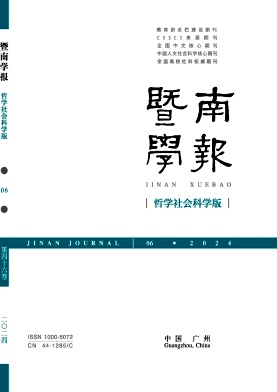
暨南学报(哲学社会科学版)杂志2024年第6期
-
- 乔恩·埃尔斯特对马克思主义政治哲学的分析与建构
- 贾可卿
- 作为当代分析马克思主义的重要代表人物,埃尔斯特对马克思主义的政治哲学做了如下分析与建构:(1)方法论个人主义和理性选择理论作为现代社会科学研究方法,有助于为马克思主义奠定微观基础并增强其解释力。(2)资本主义存在异化、剥削和低效三个严重缺陷,这三个缺陷构成了消灭资本主义的道德应然和历史必然。(3)基于资源禀赋的行为是划分阶级的标准,要形成阶级行动就必须消除集体行动中的“搭便车”现象。(4)资产阶级与统治者之间存在博弈,国家政权因而既具阶级性又有一定公共性。(5)共产主义蕴含两个层级的价值诉求:一是分配正义,二是人的自由发展和自我实现。(6)社会益品和负担的分配适用局部正义原则,按照单一规范进行分配不具现实可行性。"/>template{display:none;}.mag-rich-xref-fn { cursor: pointer;}//长视频$(document).ready(function(){if($("#showLongArticleVideo") && $("#showLongArticleVideo").length && $("#showLongArticleVideo").length>0){mag_ajax_update({ele_id:'showLongArticleVideo',url:mag_currentQikanUrl() + "/CN/article/showLongArticleVideo.do?id="+$("#articleId").val()});}});$(document).ready(function(){window.metaData = {"journal":{"issn":"1000-5072","qiKanMingCheng_CN":"暨南学报(哲学社会科学版)","id":2,"qiKanMingCheng_EN":"Jinan Journal"},"fundList_cn":["中国社会科学院基础研究学者资助项目“马克思主义视阈中的全球正义”(XJ2020013)。"],"article":{"keywordList_cn":["方法论个人主义","理性选择","阶级","正义"],"juan":"46","zhaiyao_cn":"作为当代分析马克思主义的重要代表人物,埃尔斯特对马克思主义的政治哲学做了如下分析与建构:(1)方法论个人主义和理性选择理论作为现代社会科学研究方法,有助于为马克思主义奠定微观基础并增强其解释力。(2)资本主义存在异化、剥削和低效三个严重缺陷,这三个缺陷构成了消灭资本主义的道德应然和历史必然。(3)基于资源禀赋的行为是划分阶级的标准,要形成阶级行动就必须消除集体行动中的“搭便车”现象。(4)资产阶级与统治者之间存在博弈,国家政权因而既具阶级性又有一定公共性。(5)共产主义蕴含两个层级的价值诉求:一是分配正义,二是人的自由发展和自我实现。(6)社会益品和负担的分配适用局部正义原则,按照单一规范进行分配不具现实可行性。","endNoteUrl_en":"https://jnxb.jnu.edu.cn/skb/EN/article/getTxtFile.do?fileType=EndNote&id=6996","reference":"","bibtexUrl_cn":"https://jnxb.jnu.edu.cn/skb/CN/article/getTxtFile.do?fileType=BibTeX&id=6996","abstractUrl_en":"https://jnxb.jnu.edu.cn/skb/EN/10.11778/j.jnxb.20230893","qi":"6","id":6996,"nian":2024,"bianHao":"1720771492204-1104792007","zuoZheEn_L":"JIA Keqing","juanUrl_en":"https://jnxb.jnu.edu.cn/skb/EN/Y2024","shouCiFaBuRiQi":"2024-07-12","qiShiYe":"1","qiUrl_cn":"https://jnxb.jnu.edu.cn/skb/CN/Y2024/V46/I6","lanMu_cn":"哲学·马克思主义研究","pdfSize":"1286","zuoZhe_CN":"贾可卿","risUrl_cn":"https://jnxb.jnu.edu.cn/skb/CN/article/getTxtFile.do?fileType=Ris&id=6996","title_cn":"乔恩·埃尔斯特对马克思主义政治哲学的分析与建构","doi":"10.11778/j.jnxb.20230893","jieShuYe":"14","keywordList_en":["methodological individualism","rational choice","class","justice"],"endNoteUrl_cn":"https://jnxb.jnu.edu.cn/skb/CN/article/getTxtFile.do?fileType=EndNote&id=6996","zhaiyao_en":"As one of the representative figures in the contemporary analysis of Marxism, Elster has used modern social science research methods such as methodological individualism and rational choice theory (game theory) to analyze Marxist political philosophy and establish a more reliable micro foundation for it.Methodological individualism attaches great importance to the characteristics and functions of individuals and emphasizes that only by analyzing the micro-level components and mechanisms of society can we make scientific explanations of macro-level social phenomena. However, there are some problems with this kind of methodological individualism, for example, a collective may have different qualities than an individual due to its organizational structure. Elster regards the game theory as the best embodiment of rational choice theory and uses it to explain complex social phenomena. Game analysis aligns more with the reality of dynamic changes, adding new analytical tools to the Marxist theory. It should be noted that there are many irrational factors in society, so the results brought by rational choice and game analysis are often uncertain.For Elster, Marx's critique of capitalism is based on three serious flaws: alienation, exploitation, and inefficiency. At the same time, Elster points out that the causes of capitalist problems have both generality and particularity, and the ills of capitalist society are not all caused by the capitalist system. Some of them are due to the nature of capitalist production, but some of them are due to the universal biological facts of mankind, and some of them are due to the inevitable problems in organizing production. It is a pragmatic approach to distinguish the problems caused by the capitalist system from the general problems existing in capitalist society.Elster proposes a new definition of class by combining “assets” and “actions”. This definition helps to distinguish different classes within ruled groups or ruling groups, but there is no clear logical relationship between assets and behavior. Under the effect of individual psychological mechanisms, people with the same assets may not have the same behavior, and people with the same behavior may not come from the same assets. Elster recognizes the role of class struggle in promoting the development of human society, but points out that class struggle is not always dominant. State power has not only class character but also certain independence and public character. The bureaucrat group and the capitalists both try to maximize their interests, and there is a game between them.Elster emphasizes the morality of Marxism and believes that Marx's expression of future communism contains two levels of value demands. The value appeal of the first level is distributive justice, and the value appeal of the second level is the free development and self-realization of human beings. In terms of the relationship between the two levels, the appeal of self-realization is higher than the appeal of distributive justice, which is the premise and guarantee of self-realization. Based on methodological individualism, rational choice, and game theory, Elster puts forward the view of local justice and expands the research horizon of distributive justice.","bibtexUrl_en":"https://jnxb.jnu.edu.cn/skb/EN/article/getTxtFile.do?fileType=BibTeX&id=6996","abstractUrl_cn":"https://jnxb.jnu.edu.cn/skb/CN/10.11778/j.jnxb.20230893","zuoZheCn_L":"贾可卿","juanUrl_cn":"https://jnxb.jnu.edu.cn/skb/CN/Y2024","lanMu_en":"","qiUrl_en":"https://jnxb.jnu.edu.cn/skb/EN/Y2024/V46/I6","zuoZhe_EN":"JIA Keqing","risUrl_en":"https://jnxb.jnu.edu.cn/skb/EN/article/getTxtFile.do?fileType=Ris&id=6996","title_en":"Jon Elster's Analysis and Construction of Marxist Political Philosophy","hasPdf":"true"},"authorNotes_cn":["贾可卿,中国社会科学院马克思主义研究院。"]};if(window.metaData && (!window.metaData.authorNotesCommon_cn && !window.metaData.authorNotesCorresp_cn && window.metaData.authorNotes_cn)){window.metaData.authorNotesCommon_cn = window.metaData.authorNotes_cn;}if(window.metaData && (!window.metaData.authorNotesCommon_en && !window.metaData.authorNotesCorresp_en && window.metaData.authorNotes_en)){window.metaData.authorNotesCommon_en = window.metaData.authorNotes_en;}var _nlmdtdXml = $("#article_nlmdtdXml").val();var magDir = _nlmdtdXml.replace(/\/[^\/]+$/,'');window.metaData.magDir = magDir;new mag_vue({ el: '#metaVue', //dataUrl: mag_currentQikanUrl() + '/EN/article/getRichHtmlJson.do?articleId='+$("#articleId").val(), data:window.metaData, loading:true, doTextFun:function(text){ return doDataJsonText(text); }, doAfterFun:function(selector,jsonData){doMagVueAfter(selector,jsonData);}});var pars = {attachType:'PDF',id:$("#articleId").val(),json:true};jQuery.post($("#mag-common-contextPath").val()+"/CN/article/showArticleFile.do?" + new Date().getTime(), pars, function(data){var json=null;if(data.match(/^\[json\].*/g)){json=eval("("+data.replace(/^\[json\]/g,"")+")");}if(json && json.status == 1){//有权限}else{//无权限$("#no-access-div").show();}});mag_ajax({url:mag_currentQikanUrl() + '/CN/article/getRichHtmlJson.do',data:{articleId:$("#articleId").val(),token:'b82045528cc948f495bd4f24dbe8462f',referer:document.referrer},dataType:"json",async:"false",success:function(json){if(json.richHtmlJson && json.richHtmlJson.article){if(json.trans){var _nlmdtdXmlCN = $("#article_nlmdtdXmlCN").val();var magDirCN = _nlmdtdXmlCN.replace(/\/[^\/]+$/,'');json.richHtmlJson.magDir=magDirCN;}else{json.richHtmlJson.magDir=magDir;}new mag_vue({ el: '#bodyVue', data:json.richHtmlJson, doTextFun:function(text){ return doDataJsonText(text); }, doAfterFun:function(selector,jsonData){doMagVueAfter(selector,jsonData);}});}}});//altmetricif($.trim($("#article_doi").val())!=''){$.ajax({url:'https://api.altmetric.com/v1/doi/'+$.trim($("#article_doi").val())+'?callback=altmetric_callback',//url:'https://api.altmetric.com/v1/doi/10.1007/s13238-016-0264-7?callback=altmetric_callback',dataType:'jsonp'});}mag_rich_menu(jQuery);$(function(){ $('#autoMenu').autoMenu();})$("#autoMenu").niceScroll({cursorcolor: "#ccc", //滚动条的颜色cursoropacitymax: 0, //滚动条的透明度,从0-1 touchbehavior: false, //使光标拖动滚动像在台式电脑触摸设备 true滚动条拖动不可用 cursorwidth: "6px", //滚动条的宽度 单位默认px cursorborder: "0", // 游标边框css定义 cursorborderradius: "3px", //滚动条两头的圆角 autohidemode: true, //是否隐藏滚动条 true的时候默认不显示滚动条,当鼠标经过的时候显示滚动条 zindex: "auto", //给滚动条设置z-index值 railvalign:'defaul',railpadding: {top: 0,right: -6,left: 0,bottom: 0}, //滚动条的位置});window.autoMenuFlag=true;$("#relatedArticles").niceScroll({cursorcolor: "#ccc", //滚动条的颜色cursoropacitymax: 0, //滚动条的透明度,从0-1 touchbehavior: false, //使光标拖动滚动像在台式电脑触摸设备 true滚动条拖动不可用 cursorwidth: "6px", //滚动条的宽度 单位默认px cursorborder: "0", // 游标边框css定义 cursorborderradius: "3px", //滚动条两头的圆角 autohidemode: true, //是否隐藏滚动条 true的时候默认不显示滚动条,当鼠标经过的时候显示滚动条 zindex: "auto", //给滚动条设置z-index值 railvalign:'defaul',railpadding: {top: 0,right: -6,left: 0,bottom: 0}, //滚动条的位置});//公式序号 居右jQuery(".mag-xml-disp-formula").each(function() {var _this = jQuery(this);var _label= _this.children("label");if(typeof(_label.html())!="undefined"){_this.children("label").remove();_this.wrap("");_this.parent().parent().append(""+_label.html()+"");}});$('body').click(function(){$('.daochu_div').hide();$('.qipao').hide();})$('.qipao').click(function(event){event.stopPropagation();})/*参考文献显示隐藏*/$('.biaotijiantoush1').click(function(event){if($(this).attr('class')=='glyphicon glyphicon-triangle-top biaotijiantoush biaotijiantoush1'){$(this).parents('.mag_main_zhengwen_left_div_ckwx_table_benwenyiny').next('.mag_main_zhengwen_left_div_ckwx_table_ckwx_xiangqing').stop().slideUp();$(this).attr('class','glyphicon glyphicon-triangle-bottom biaotijiantoush biaotijiantoush1');}else if($(this).attr('class')=='glyphicon glyphicon-triangle-bottom biaotijiantoush biaotijiantoush1'){$(this).parents('.mag_main_zhengwen_left_div_ckwx_table_benwenyiny').next('.mag_main_zhengwen_left_div_ckwx_table_ckwx_xiangqing').stop().slideDown();$(this).attr('class','glyphicon glyphicon-triangle-top biaotijiantoush biaotijiantoush1');}event.stopPropagation();});//加载补充材料mag_ajax_update({ele_id:'showArticle_suppls',url:mag_currentQikanUrl() + '/CN/article/showArticleSuppls.do',data:{articleId:$("#articleId").val()}});//加载专题mag_ajax_update({ele_id:'showArticle_subjects',url:mag_currentQikanUrl() + '/CN/subject/showSubjectListByArticle.do',data:{articleId:$("#articleId").val(),forwardJsp:'showArticle'}});//渲染公式mag_mathJax();});function altmetric_callback(json){if(json && json.score){if(json.score - parseInt(json.score) > 0){$("#altmetric-score").html(parseInt(json.score)+1);}else{$("#altmetric-score").html(parseInt(json.score));}$(".main_content_center_right_duoweidu_div").css("width","25%");$("#altmetric-a").show();$("#altmetric-a").attr("href",json.details_url);}}function richClickAuthor(name){var searchSQL = "((("+mag_advSearchValReplace(name)+"[Author]) AND 2J[Journal]) AND year[Order])";mag_request({url:mag_currentQikanUrl() + '/CN/searchresult',data:{searchSQL:searchSQL}});}function richClickKeyword(keyword){var searchSQL = "((("+mag_advSearchValReplace(keyword)+"[Keyword]) AND 2J[Journal]) AND year[Order])";mag_request({url:mag_currentQikanUrl() + '/CN/searchresult',data:{searchSQL:searchSQL}});}function mag_share(){$("#bShare_more_a").click();}function loadRelatedArticles(){if($("#showRelatedArticles") && $("#showRelatedArticles").length>0){//加载过了}else{mag_loading();mag_ajax_update({ele_id:'relatedArticles-content',url:mag_currentQikanUrl() + '/CN/article/relatedArticle.do',data:{id:$("#articleId").val(), forwardJsp:'showArticle'},complete:function(){mag_layer_close();}});}}function showMetrics(){mag_window_location(mag_currentQikanUrl() + '/CN/metrics/'+$("#articleId").val());}function piaofuFn(a,fnId){var content=''+$("#mag-rich-fn-"+fnId).html()+'';piaofu(a,content);}function huoqukuanduimg(){//}function doDataJsonText(text){var str = text;//var _nlmdtdXml = $("#article_nlmdtdXml").val();//var magDir = _nlmdtdXml.replace(/\/[^\/]+$/,'');str = str.replace(/";ss += "";var shuomingTitle = "";var shuomingContent = '';if(fig.titleCn && fig.titleCn!=''){shuomingTitle = fig.titleCn;if(fig.titleContentCn && fig.titleContentCn!=''){shuomingContent += fig.titleContentCn;}}if(shuomingTitle==''){if(fig.titleEn && fig.titleEn!=''){shuomingTitle = fig.titleEn;}if(fig.titleContentEn && fig.titleContentEn!=''){shuomingContent += fig.titleContentEn;}}else{if(fig.titleEn && fig.titleEn!=''){shuomingContent += ""+fig.titleEn+"
-
- 我国民族语言数据和语言知识服务的理念及实现途径
- 龙从军
- 民族语言数据和语言知识服务在人文社会研究、民族传统科技、文化保护传承以及中华文化基因探索方面发挥着重要作用。本文以民族语言数据与知识服务为出发点,构建了面向民族语言文化研究的专业数据资源和系列知识库。利用数字人文技术把民族语言学界的重要文献数据进行数字化处理,利用知识图谱技术把各领域知识关联起来,形成文献检索和知识服务平台,按照民族语言词典类、语言简志类、濒危语言类、语法标注类、参考语法类、论文类和其他类收录数据,文献数据库收入文献150多部,关联各民族语言中的语法范畴概念200多个,并对格范畴知识关联结果进行了分析。初步研究发现,民族语言数据的准确性、一致性和规范性值得关注;我国民族语言类型十分丰富,语言的多样性承载了文化的多样性,语言知识的关联性揭示了各民族语言文化之间的共性和差异,启发研究者对民族语言间的亲属关系和文化互鉴进行思考和探索。"/>template{display:none;}.mag-rich-xref-fn { cursor: pointer;}//长视频$(document).ready(function(){if($("#showLongArticleVideo") && $("#showLongArticleVideo").length && $("#showLongArticleVideo").length>0){mag_ajax_update({ele_id:'showLongArticleVideo',url:mag_currentQikanUrl() + "/CN/article/showLongArticleVideo.do?id="+$("#articleId").val()});}});$(document).ready(function(){window.metaData = {"journal":{"issn":"1000-5072","qiKanMingCheng_CN":"暨南学报(哲学社会科学版)","id":2,"qiKanMingCheng_EN":"Jinan Journal"},"fundList_cn":["国家社会科学基金重大项目“中国民族语言大规模语法标注文本在线检索系统研制与建设研究”(21&ZD304);中国社会科学院实验室孵化专项资助项目“基于民族语言多模态数据的共性特征计算研究”(2024SYFH008)。"],"article":{"keywordList_cn":["语言数据","语言知识","格范畴","知识服务","数字人文"],"juan":"46","zhaiyao_cn":"民族语言数据和语言知识服务在人文社会研究、民族传统科技、文化保护传承以及中华文化基因探索方面发挥着重要作用。本文以民族语言数据与知识服务为出发点,构建了面向民族语言文化研究的专业数据资源和系列知识库。利用数字人文技术把民族语言学界的重要文献数据进行数字化处理,利用知识图谱技术把各领域知识关联起来,形成文献检索和知识服务平台,按照民族语言词典类、语言简志类、濒危语言类、语法标注类、参考语法类、论文类和其他类收录数据,文献数据库收入文献150多部,关联各民族语言中的语法范畴概念200多个,并对格范畴知识关联结果进行了分析。初步研究发现,民族语言数据的准确性、一致性和规范性值得关注;我国民族语言类型十分丰富,语言的多样性承载了文化的多样性,语言知识的关联性揭示了各民族语言文化之间的共性和差异,启发研究者对民族语言间的亲属关系和文化互鉴进行思考和探索。","endNoteUrl_en":"https://jnxb.jnu.edu.cn/skb/EN/article/getTxtFile.do?fileType=EndNote&id=6997","reference":"","bibtexUrl_cn":"https://jnxb.jnu.edu.cn/skb/CN/article/getTxtFile.do?fileType=BibTeX&id=6997","abstractUrl_en":"https://jnxb.jnu.edu.cn/skb/EN/10.11778/j.jnxb.20240390","qi":"6","id":6997,"nian":2024,"bianHao":"1720771492833-1827036752","zuoZheEn_L":"LONG Congjun","juanUrl_en":"https://jnxb.jnu.edu.cn/skb/EN/Y2024","shouCiFaBuRiQi":"2024-07-12","qiShiYe":"15","qiUrl_cn":"https://jnxb.jnu.edu.cn/skb/CN/Y2024/V46/I6","lanMu_cn":"语言学·数字人文","pdfSize":"2691","zuoZhe_CN":"龙从军","risUrl_cn":"https://jnxb.jnu.edu.cn/skb/CN/article/getTxtFile.do?fileType=Ris&id=6997","title_cn":"我国民族语言数据和语言知识服务的理念及实现途径","doi":"10.11778/j.jnxb.20240390","jieShuYe":"30","keywordList_en":["language data","language knowledge","case category","knowledge service","Digital humanities"],"endNoteUrl_cn":"https://jnxb.jnu.edu.cn/skb/CN/article/getTxtFile.do?fileType=EndNote&id=6997","zhaiyao_en":"Before the advent of the era of large language models, ethnolinguists mainly obtained relevant research data by manually searching for various works that recorded ethnolinguistic words, and sentences. In the process from data acquisition to data collection, there are often many practical problems such as high difficulty in data collection, incomplete information acquisition, scattered data distribution, and no system. Nowadays, the processing of language data has entered the era of large models, and the above problems can be effectively solved by collecting, sorting, and saving data and systematizing the data into the database. However, due to the relative shortage of ethnic language resources, the access channels are not smooth, and the interpretation and analysis of relevant ethnic language data require strong language knowledgeability. As a result, the effect of a large model processing ethnic language data is not ideal. Up to now, there is no publicly used large-scale professional database of Chinese ethnic languages in academia. To make effective use of the advantages of large model processing of ethnic languages and solve various problems faced by large model processing of ethnic languages, actively building ethnic language data and language knowledge services with human-computer collaboration as the core should be an effective measure to carry out ethnic language research and inheritance in the Internet era. Ethnic language data and language knowledge services play an important role in humanities and social research, ethnic traditional science and technology, cultural protection and inheritance, and the exploration of Chinese cultural genes.Based on ethnic language data and knowledge service, this paper constructs professional data resources and a series of knowledge bases for ethnic language and culture research. Digital humanities technology is used to digitize important literature data in the field of ethnolinguistics, and knowledge graph technology is used to associate domain knowledge to form a literature retrieval and knowledge service platform. According to the national language dictionaries, language compendium, endangered languages, grammatical annotations, reference grammar, thesis, and other categories, more than 150 studies were collected from the literature database, more than 200 grammatical category concepts in different national languages were associated, and the results of case category knowledge association were analyzed.Combining the ethnic language data with the support of digital humanities technology can effectively solve the problems faced by ethnolinguists in collecting materials and analyzing corpus. The mining, mathematical statistics, analysis, and calculation of relevant data can facilitate the ethnolinguists to accurately and comprehensively grasp the combination and aggregation relations of phonetics and grammar within a certain ethnolinguistic system and the differences between cross-ethnolinguistic systems. Visualization of data analysis results can also effectively help ethnolinguists to systematically form regular cognition on phonetics, grammar, vocabulary, and other levels among one or more ethnic languages, and promote the in-depth development of related ethnolinguistic research fields. This paper proposes only a professional data and linguistic knowledge service model for ethnolinguistics research, in order to provide a reference for the implementation of the construction of ethnic language data and linguistic knowledge base. At the same time, we still find that the accuracy, consistency, and standardization of ethnic language data are worthy of attention; there are very rich types of ethnic languages in China, and the diversity of languages carries the diversity of cultures. The relevance of language knowledge reveals the commonalities and differences among ethnic languages and cultures and inspires researchers to think and explore the kinship of ethnic languages and cultural mutual learning.","bibtexUrl_en":"https://jnxb.jnu.edu.cn/skb/EN/article/getTxtFile.do?fileType=BibTeX&id=6997","abstractUrl_cn":"https://jnxb.jnu.edu.cn/skb/CN/10.11778/j.jnxb.20240390","zuoZheCn_L":"龙从军","juanUrl_cn":"https://jnxb.jnu.edu.cn/skb/CN/Y2024","lanMu_en":"","qiUrl_en":"https://jnxb.jnu.edu.cn/skb/EN/Y2024/V46/I6","zuoZhe_EN":"LONG Congjun","risUrl_en":"https://jnxb.jnu.edu.cn/skb/EN/article/getTxtFile.do?fileType=Ris&id=6997","title_en":"Concepts and Realization of National Language Data and Language Knowledge Service in China","hasPdf":"true"},"authorNotes_cn":["龙从军,中国社会科学院大学文学院、中国社会科学院民族学与人类学研究所 民族语言文化行为实验室。"]};if(window.metaData && (!window.metaData.authorNotesCommon_cn && !window.metaData.authorNotesCorresp_cn && window.metaData.authorNotes_cn)){window.metaData.authorNotesCommon_cn = window.metaData.authorNotes_cn;}if(window.metaData && (!window.metaData.authorNotesCommon_en && !window.metaData.authorNotesCorresp_en && window.metaData.authorNotes_en)){window.metaData.authorNotesCommon_en = window.metaData.authorNotes_en;}var _nlmdtdXml = $("#article_nlmdtdXml").val();var magDir = _nlmdtdXml.replace(/\/[^\/]+$/,'');window.metaData.magDir = magDir;new mag_vue({ el: '#metaVue', //dataUrl: mag_currentQikanUrl() + '/EN/article/getRichHtmlJson.do?articleId='+$("#articleId").val(), data:window.metaData, loading:true, doTextFun:function(text){ return doDataJsonText(text); }, doAfterFun:function(selector,jsonData){doMagVueAfter(selector,jsonData);}});var pars = {attachType:'PDF',id:$("#articleId").val(),json:true};jQuery.post($("#mag-common-contextPath").val()+"/CN/article/showArticleFile.do?" + new Date().getTime(), pars, function(data){var json=null;if(data.match(/^\[json\].*/g)){json=eval("("+data.replace(/^\[json\]/g,"")+")");}if(json && json.status == 1){//有权限}else{//无权限$("#no-access-div").show();}});mag_ajax({url:mag_currentQikanUrl() + '/CN/article/getRichHtmlJson.do',data:{articleId:$("#articleId").val(),token:'b7bebf9faa35491492dbc0a214864c58',referer:document.referrer},dataType:"json",async:"false",success:function(json){if(json.richHtmlJson && json.richHtmlJson.article){if(json.trans){var _nlmdtdXmlCN = $("#article_nlmdtdXmlCN").val();var magDirCN = _nlmdtdXmlCN.replace(/\/[^\/]+$/,'');json.richHtmlJson.magDir=magDirCN;}else{json.richHtmlJson.magDir=magDir;}new mag_vue({ el: '#bodyVue', data:json.richHtmlJson, doTextFun:function(text){ return doDataJsonText(text); }, doAfterFun:function(selector,jsonData){doMagVueAfter(selector,jsonData);}});}}});//altmetricif($.trim($("#article_doi").val())!=''){$.ajax({url:'https://api.altmetric.com/v1/doi/'+$.trim($("#article_doi").val())+'?callback=altmetric_callback',//url:'https://api.altmetric.com/v1/doi/10.1007/s13238-016-0264-7?callback=altmetric_callback',dataType:'jsonp'});}mag_rich_menu(jQuery);$(function(){ $('#autoMenu').autoMenu();})$("#autoMenu").niceScroll({cursorcolor: "#ccc", //滚动条的颜色cursoropacitymax: 0, //滚动条的透明度,从0-1 touchbehavior: false, //使光标拖动滚动像在台式电脑触摸设备 true滚动条拖动不可用 cursorwidth: "6px", //滚动条的宽度 单位默认px cursorborder: "0", // 游标边框css定义 cursorborderradius: "3px", //滚动条两头的圆角 autohidemode: true, //是否隐藏滚动条 true的时候默认不显示滚动条,当鼠标经过的时候显示滚动条 zindex: "auto", //给滚动条设置z-index值 railvalign:'defaul',railpadding: {top: 0,right: -6,left: 0,bottom: 0}, //滚动条的位置});window.autoMenuFlag=true;$("#relatedArticles").niceScroll({cursorcolor: "#ccc", //滚动条的颜色cursoropacitymax: 0, //滚动条的透明度,从0-1 touchbehavior: false, //使光标拖动滚动像在台式电脑触摸设备 true滚动条拖动不可用 cursorwidth: "6px", //滚动条的宽度 单位默认px cursorborder: "0", // 游标边框css定义 cursorborderradius: "3px", //滚动条两头的圆角 autohidemode: true, //是否隐藏滚动条 true的时候默认不显示滚动条,当鼠标经过的时候显示滚动条 zindex: "auto", //给滚动条设置z-index值 railvalign:'defaul',railpadding: {top: 0,right: -6,left: 0,bottom: 0}, //滚动条的位置});//公式序号 居右jQuery(".mag-xml-disp-formula").each(function() {var _this = jQuery(this);var _label= _this.children("label");if(typeof(_label.html())!="undefined"){_this.children("label").remove();_this.wrap("");_this.parent().parent().append(""+_label.html()+"");}});$('body').click(function(){$('.daochu_div').hide();$('.qipao').hide();})$('.qipao').click(function(event){event.stopPropagation();})/*参考文献显示隐藏*/$('.biaotijiantoush1').click(function(event){if($(this).attr('class')=='glyphicon glyphicon-triangle-top biaotijiantoush biaotijiantoush1'){$(this).parents('.mag_main_zhengwen_left_div_ckwx_table_benwenyiny').next('.mag_main_zhengwen_left_div_ckwx_table_ckwx_xiangqing').stop().slideUp();$(this).attr('class','glyphicon glyphicon-triangle-bottom biaotijiantoush biaotijiantoush1');}else if($(this).attr('class')=='glyphicon glyphicon-triangle-bottom biaotijiantoush biaotijiantoush1'){$(this).parents('.mag_main_zhengwen_left_div_ckwx_table_benwenyiny').next('.mag_main_zhengwen_left_div_ckwx_table_ckwx_xiangqing').stop().slideDown();$(this).attr('class','glyphicon glyphicon-triangle-top biaotijiantoush biaotijiantoush1');}event.stopPropagation();});//加载补充材料mag_ajax_update({ele_id:'showArticle_suppls',url:mag_currentQikanUrl() + '/CN/article/showArticleSuppls.do',data:{articleId:$("#articleId").val()}});//加载专题mag_ajax_update({ele_id:'showArticle_subjects',url:mag_currentQikanUrl() + '/CN/subject/showSubjectListByArticle.do',data:{articleId:$("#articleId").val(),forwardJsp:'showArticle'}});//渲染公式mag_mathJax();});function altmetric_callback(json){if(json && json.score){if(json.score - parseInt(json.score) > 0){$("#altmetric-score").html(parseInt(json.score)+1);}else{$("#altmetric-score").html(parseInt(json.score));}$(".main_content_center_right_duoweidu_div").css("width","25%");$("#altmetric-a").show();$("#altmetric-a").attr("href",json.details_url);}}function richClickAuthor(name){var searchSQL = "((("+mag_advSearchValReplace(name)+"[Author]) AND 2J[Journal]) AND year[Order])";mag_request({url:mag_currentQikanUrl() + '/CN/searchresult',data:{searchSQL:searchSQL}});}function richClickKeyword(keyword){var searchSQL = "((("+mag_advSearchValReplace(keyword)+"[Keyword]) AND 2J[Journal]) AND year[Order])";mag_request({url:mag_currentQikanUrl() + '/CN/searchresult',data:{searchSQL:searchSQL}});}function mag_share(){$("#bShare_more_a").click();}function loadRelatedArticles(){if($("#showRelatedArticles") && $("#showRelatedArticles").length>0){//加载过了}else{mag_loading();mag_ajax_update({ele_id:'relatedArticles-content',url:mag_currentQikanUrl() + '/CN/article/relatedArticle.do',data:{id:$("#articleId").val(), forwardJsp:'showArticle'},complete:function(){mag_layer_close();}});}}function showMetrics(){mag_window_location(mag_currentQikanUrl() + '/CN/metrics/'+$("#articleId").val());}function piaofuFn(a,fnId){var content=''+$("#mag-rich-fn-"+fnId).html()+'';piaofu(a,content);}function huoqukuanduimg(){//}function doDataJsonText(text){var str = text;//var _nlmdtdXml = $("#article_nlmdtdXml").val();//var magDir = _nlmdtdXml.replace(/\/[^\/]+$/,'');str = str.replace(/";ss += "";var shuomingTitle = "";var shuomingContent = '';if(fig.titleCn && fig.titleCn!=''){shuomingTitle = fig.titleCn;if(fig.titleContentCn && fig.titleContentCn!=''){shuomingContent += fig.titleContentCn;}}if(shuomingTitle==''){if(fig.titleEn && fig.titleEn!=''){shuomingTitle = fig.titleEn;}if(fig.titleContentEn && fig.titleContentEn!=''){shuomingContent += fig.titleContentEn;}}else{if(fig.titleEn && fig.titleEn!=''){shuomingContent += ""+fig.titleEn+"
-
- 我国民族语言文献文本数字化识别问题——基于OCR及其工具
- 范俊军, 刘贤娴
- 我国少数民族语言文献数量庞大,文字种类繁多,内容涵盖政治、经济、法律、历史、文学、艺术、宗教、天文、地理、医药等领域,是中华民族文化知识的重要组成部分。构建各民族文献文本数据,使之应用于自然语言处理和人工智能,能有效促进中华优秀传统知识创新性传承,促进知识社会化,是对各民族语言古文献和现代书报刊进行文字识别和文本转换数据构建的基础。国内早期OCR技术虽然解决了几种主要少数民族文字识别的问题,但因字符为非Unicode基本集编码而弃用。当前OCR技术已能较好识别蒙、藏、维、哈、朝等文种文献,但在处理我国汉文与少数民族文字混排图像文本时仍然效果不佳。因此应推进少数民族语言文献OCR识别技术创新。我国少数民族语言文献现行活态文字有十多种,其中非拉丁字系的文字有11种,OCR技术应重点解决这类少数民族语言字系的抄本、刻版和铅字印刷文本,以及汉文与民族文字混排文本的识别问题,研发开放的多功能工具和平台。在此基础上,进一步开展少数民族语言文献文本大规模数据构建,以促进我国语言科学研究和自然语言处理的创新发展。"/>template{display:none;}.mag-rich-xref-fn { cursor: pointer;}//长视频$(document).ready(function(){if($("#showLongArticleVideo") && $("#showLongArticleVideo").length && $("#showLongArticleVideo").length>0){mag_ajax_update({ele_id:'showLongArticleVideo',url:mag_currentQikanUrl() + "/CN/article/showLongArticleVideo.do?id="+$("#articleId").val()});}});$(document).ready(function(){window.metaData = {"journal":{"issn":"1000-5072","qiKanMingCheng_CN":"暨南学报(哲学社会科学版)","id":2,"qiKanMingCheng_EN":"Jinan Journal"},"article":{"keywordList_cn":["少数民族语言","民族文献","文本识别","OCR","数据构建","数字人文"],"juan":"46","zhaiyao_cn":"我国少数民族语言文献数量庞大,文字种类繁多,内容涵盖政治、经济、法律、历史、文学、艺术、宗教、天文、地理、医药等领域,是中华民族文化知识的重要组成部分。构建各民族文献文本数据,使之应用于自然语言处理和人工智能,能有效促进中华优秀传统知识创新性传承,促进知识社会化,是对各民族语言古文献和现代书报刊进行文字识别和文本转换数据构建的基础。国内早期OCR技术虽然解决了几种主要少数民族文字识别的问题,但因字符为非Unicode基本集编码而弃用。当前OCR技术已能较好识别蒙、藏、维、哈、朝等文种文献,但在处理我国汉文与少数民族文字混排图像文本时仍然效果不佳。因此应推进少数民族语言文献OCR识别技术创新。我国少数民族语言文献现行活态文字有十多种,其中非拉丁字系的文字有11种,OCR技术应重点解决这类少数民族语言字系的抄本、刻版和铅字印刷文本,以及汉文与民族文字混排文本的识别问题,研发开放的多功能工具和平台。在此基础上,进一步开展少数民族语言文献文本大规模数据构建,以促进我国语言科学研究和自然语言处理的创新发展。","endNoteUrl_en":"https://jnxb.jnu.edu.cn/skb/EN/article/getTxtFile.do?fileType=EndNote&id=6998","reference":"","bibtexUrl_cn":"https://jnxb.jnu.edu.cn/skb/CN/article/getTxtFile.do?fileType=BibTeX&id=6998","abstractUrl_en":"https://jnxb.jnu.edu.cn/skb/EN/10.11778/j.jnxb.20241011","qi":"6","id":6998,"nian":2024,"bianHao":"1720771493171-33693479","zuoZheEn_L":"FAN Junjun, LIU Xianxian","juanUrl_en":"https://jnxb.jnu.edu.cn/skb/EN/Y2024","shouCiFaBuRiQi":"2024-07-12","qiShiYe":"31","qiUrl_cn":"https://jnxb.jnu.edu.cn/skb/CN/Y2024/V46/I6","lanMu_cn":"语言学·数字人文","pdfSize":"1297","zuoZhe_CN":"范俊军, 刘贤娴","risUrl_cn":"https://jnxb.jnu.edu.cn/skb/CN/article/getTxtFile.do?fileType=Ris&id=6998","title_cn":"我国民族语言文献文本数字化识别问题——基于OCR及其工具","doi":"10.11778/j.jnxb.20241011","jieShuYe":"45","keywordList_en":["ethno-languages","ethnic documents","text recognition","OCR","data construction","Digital humanities"],"endNoteUrl_cn":"https://jnxb.jnu.edu.cn/skb/CN/article/getTxtFile.do?fileType=EndNote&id=6998","zhaiyao_en":"China has over 130 minority languages and more than 10 minority scripts. These have preserved a wealth of ethnic language documents, including a large number of ancient manuscripts and modern printed documents. These records capture the long-standing civilization of the Chinese nation and the knowledge and practices of various ethnic groups in their production and daily life. The content covers a wide range of areas, including politics, economics, law, history, literature, art, religion, medicine, astronomy, and geography, reflecting the exchange, integration, and innovation of various ethnic cultures. Fully utilizing contemporary data science and artificial intelligence (AI) to innovate text recognition technology for minority language documents and achieving the digitization of massive amounts of literature is of great historical and cultural significance, and practical political significance. This effort is crucial for the scientific protection of Chinese minority language document resources and the inheritance of excellent Chinese traditional knowledge and cultural spirit.Collecting and organizing minority language books, newspapers, and manuscripts for large-scale text recognition and digitization is a crucial source for building natural language processing (NLP) and AI datasets. The digitization of minority language documents involves two fundamental tasks: (1) compiling and cataloging various documents to create indexed data; and (2) performing optical character recognition (OCR) on the content of these documents to convert them into computer-processable text files. The recognition of minority language text is the prerequisite for the digitization of document content, while OCR text recognition is key to constructing large-scale corpora and knowledge text data in China's native languages. Efficient document OCR recognition technology has broad applications. It enables publishers to transition from passively receiving manuscripts to actively creating knowledge content, maximizing content production potential. Additionally, it facilitates the extraction of text data such as characters, words, sentences, and paragraphs from vast social language landscapes, addressing the issue of entity name corpora in NLP tasks. Through OCR technology, a large number of language examples and corpora in linguistic works can be automatically extracted and annotated. This enables the large-scale integration and utilization of discrete corpora in mixed-language documents of various minority languages and Chinese, driving a data-oriented shift in linguistic research in China.The text recognition of minority language documents involves two key technologies: the accuracy of single-language recognition, and the differentiation and recognition of texts in documents with mixed scripts. Currently, the OCR technology in China performs well in recognizing documents in Mongolian, Tibetan, Uighur, Kazakh, Korean, and other languages, but it performs poorly at the application level in recognizing mixed-language documents. Therefore, the R&D of text recognition technology for minority language documents in China currently focuses on four main tasks: (1) Solving the text recognition of ancient documents in minority languages; (2) Addressing the recognition and extraction of mixed scripts involving multiple minority languages, the coexistence of Chinese characters and minority scripts, and various linguistic works in minority languages; (3) Advancing the OCR recognition and simultaneous digitization of single-language documents in minority languages; (4) Rapidly developing various tools and integrated platforms for the text recognition of minority language documents in China. To accomplish these tasks, interdisciplinary research that combines linguistics and contemporary AI science is necessary.","bibtexUrl_en":"https://jnxb.jnu.edu.cn/skb/EN/article/getTxtFile.do?fileType=BibTeX&id=6998","abstractUrl_cn":"https://jnxb.jnu.edu.cn/skb/CN/10.11778/j.jnxb.20241011","zuoZheCn_L":"范俊军, 刘贤娴","juanUrl_cn":"https://jnxb.jnu.edu.cn/skb/CN/Y2024","lanMu_en":"","qiUrl_en":"https://jnxb.jnu.edu.cn/skb/EN/Y2024/V46/I6","zuoZhe_EN":"FAN Junjun, LIU Xianxian","risUrl_en":"https://jnxb.jnu.edu.cn/skb/EN/article/getTxtFile.do?fileType=Ris&id=6998","title_en":"Digital Recognition of Minority Language Documents in China—Based on OCR and its ways","hasPdf":"true"},"authorNotes_cn":["范俊军、刘贤娴,暨南大学文学院。"]};if(window.metaData && (!window.metaData.authorNotesCommon_cn && !window.metaData.authorNotesCorresp_cn && window.metaData.authorNotes_cn)){window.metaData.authorNotesCommon_cn = window.metaData.authorNotes_cn;}if(window.metaData && (!window.metaData.authorNotesCommon_en && !window.metaData.authorNotesCorresp_en && window.metaData.authorNotes_en)){window.metaData.authorNotesCommon_en = window.metaData.authorNotes_en;}var _nlmdtdXml = $("#article_nlmdtdXml").val();var magDir = _nlmdtdXml.replace(/\/[^\/]+$/,'');window.metaData.magDir = magDir;new mag_vue({ el: '#metaVue', //dataUrl: mag_currentQikanUrl() + '/EN/article/getRichHtmlJson.do?articleId='+$("#articleId").val(), data:window.metaData, loading:true, doTextFun:function(text){ return doDataJsonText(text); }, doAfterFun:function(selector,jsonData){doMagVueAfter(selector,jsonData);}});var pars = {attachType:'PDF',id:$("#articleId").val(),json:true};jQuery.post($("#mag-common-contextPath").val()+"/CN/article/showArticleFile.do?" + new Date().getTime(), pars, function(data){var json=null;if(data.match(/^\[json\].*/g)){json=eval("("+data.replace(/^\[json\]/g,"")+")");}if(json && json.status == 1){//有权限}else{//无权限$("#no-access-div").show();}});mag_ajax({url:mag_currentQikanUrl() + '/CN/article/getRichHtmlJson.do',data:{articleId:$("#articleId").val(),token:'8a55c7e3dd2840209c3674d56a420d2b',referer:document.referrer},dataType:"json",async:"false",success:function(json){if(json.richHtmlJson && json.richHtmlJson.article){if(json.trans){var _nlmdtdXmlCN = $("#article_nlmdtdXmlCN").val();var magDirCN = _nlmdtdXmlCN.replace(/\/[^\/]+$/,'');json.richHtmlJson.magDir=magDirCN;}else{json.richHtmlJson.magDir=magDir;}new mag_vue({ el: '#bodyVue', data:json.richHtmlJson, doTextFun:function(text){ return doDataJsonText(text); }, doAfterFun:function(selector,jsonData){doMagVueAfter(selector,jsonData);}});}}});//altmetricif($.trim($("#article_doi").val())!=''){$.ajax({url:'https://api.altmetric.com/v1/doi/'+$.trim($("#article_doi").val())+'?callback=altmetric_callback',//url:'https://api.altmetric.com/v1/doi/10.1007/s13238-016-0264-7?callback=altmetric_callback',dataType:'jsonp'});}mag_rich_menu(jQuery);$(function(){ $('#autoMenu').autoMenu();})$("#autoMenu").niceScroll({cursorcolor: "#ccc", //滚动条的颜色cursoropacitymax: 0, //滚动条的透明度,从0-1 touchbehavior: false, //使光标拖动滚动像在台式电脑触摸设备 true滚动条拖动不可用 cursorwidth: "6px", //滚动条的宽度 单位默认px cursorborder: "0", // 游标边框css定义 cursorborderradius: "3px", //滚动条两头的圆角 autohidemode: true, //是否隐藏滚动条 true的时候默认不显示滚动条,当鼠标经过的时候显示滚动条 zindex: "auto", //给滚动条设置z-index值 railvalign:'defaul',railpadding: {top: 0,right: -6,left: 0,bottom: 0}, //滚动条的位置});window.autoMenuFlag=true;$("#relatedArticles").niceScroll({cursorcolor: "#ccc", //滚动条的颜色cursoropacitymax: 0, //滚动条的透明度,从0-1 touchbehavior: false, //使光标拖动滚动像在台式电脑触摸设备 true滚动条拖动不可用 cursorwidth: "6px", //滚动条的宽度 单位默认px cursorborder: "0", // 游标边框css定义 cursorborderradius: "3px", //滚动条两头的圆角 autohidemode: true, //是否隐藏滚动条 true的时候默认不显示滚动条,当鼠标经过的时候显示滚动条 zindex: "auto", //给滚动条设置z-index值 railvalign:'defaul',railpadding: {top: 0,right: -6,left: 0,bottom: 0}, //滚动条的位置});//公式序号 居右jQuery(".mag-xml-disp-formula").each(function() {var _this = jQuery(this);var _label= _this.children("label");if(typeof(_label.html())!="undefined"){_this.children("label").remove();_this.wrap("");_this.parent().parent().append(""+_label.html()+"");}});$('body').click(function(){$('.daochu_div').hide();$('.qipao').hide();})$('.qipao').click(function(event){event.stopPropagation();})/*参考文献显示隐藏*/$('.biaotijiantoush1').click(function(event){if($(this).attr('class')=='glyphicon glyphicon-triangle-top biaotijiantoush biaotijiantoush1'){$(this).parents('.mag_main_zhengwen_left_div_ckwx_table_benwenyiny').next('.mag_main_zhengwen_left_div_ckwx_table_ckwx_xiangqing').stop().slideUp();$(this).attr('class','glyphicon glyphicon-triangle-bottom biaotijiantoush biaotijiantoush1');}else if($(this).attr('class')=='glyphicon glyphicon-triangle-bottom biaotijiantoush biaotijiantoush1'){$(this).parents('.mag_main_zhengwen_left_div_ckwx_table_benwenyiny').next('.mag_main_zhengwen_left_div_ckwx_table_ckwx_xiangqing').stop().slideDown();$(this).attr('class','glyphicon glyphicon-triangle-top biaotijiantoush biaotijiantoush1');}event.stopPropagation();});//加载补充材料mag_ajax_update({ele_id:'showArticle_suppls',url:mag_currentQikanUrl() + '/CN/article/showArticleSuppls.do',data:{articleId:$("#articleId").val()}});//加载专题mag_ajax_update({ele_id:'showArticle_subjects',url:mag_currentQikanUrl() + '/CN/subject/showSubjectListByArticle.do',data:{articleId:$("#articleId").val(),forwardJsp:'showArticle'}});//渲染公式mag_mathJax();});function altmetric_callback(json){if(json && json.score){if(json.score - parseInt(json.score) > 0){$("#altmetric-score").html(parseInt(json.score)+1);}else{$("#altmetric-score").html(parseInt(json.score));}$(".main_content_center_right_duoweidu_div").css("width","25%");$("#altmetric-a").show();$("#altmetric-a").attr("href",json.details_url);}}function richClickAuthor(name){var searchSQL = "((("+mag_advSearchValReplace(name)+"[Author]) AND 2J[Journal]) AND year[Order])";mag_request({url:mag_currentQikanUrl() + '/CN/searchresult',data:{searchSQL:searchSQL}});}function richClickKeyword(keyword){var searchSQL = "((("+mag_advSearchValReplace(keyword)+"[Keyword]) AND 2J[Journal]) AND year[Order])";mag_request({url:mag_currentQikanUrl() + '/CN/searchresult',data:{searchSQL:searchSQL}});}function mag_share(){$("#bShare_more_a").click();}function loadRelatedArticles(){if($("#showRelatedArticles") && $("#showRelatedArticles").length>0){//加载过了}else{mag_loading();mag_ajax_update({ele_id:'relatedArticles-content',url:mag_currentQikanUrl() + '/CN/article/relatedArticle.do',data:{id:$("#articleId").val(), forwardJsp:'showArticle'},complete:function(){mag_layer_close();}});}}function showMetrics(){mag_window_location(mag_currentQikanUrl() + '/CN/metrics/'+$("#articleId").val());}function piaofuFn(a,fnId){var content=''+$("#mag-rich-fn-"+fnId).html()+'';piaofu(a,content);}function huoqukuanduimg(){//}function doDataJsonText(text){var str = text;//var _nlmdtdXml = $("#article_nlmdtdXml").val();//var magDir = _nlmdtdXml.replace(/\/[^\/]+$/,'');str = str.replace(/";ss += "";var shuomingTitle = "";var shuomingContent = '';if(fig.titleCn && fig.titleCn!=''){shuomingTitle = fig.titleCn;if(fig.titleContentCn && fig.titleContentCn!=''){shuomingContent += fig.titleContentCn;}}if(shuomingTitle==''){if(fig.titleEn && fig.titleEn!=''){shuomingTitle = fig.titleEn;}if(fig.titleContentEn && fig.titleContentEn!=''){shuomingContent += fig.titleContentEn;}}else{if(fig.titleEn && fig.titleEn!=''){shuomingContent += ""+fig.titleEn+"
-
- 正名实责:民事检察和解的定位与实施
- 胡思博
- 民事检察和解具有定分止争、维护审判权威和协助审判权实现、适度纠错与及时结案的功能。对于完全正确的生效判决和调解书、存在非重大性错误的生效判决及部分符合抗诉条件时的生效判决均可适用于民事检察和解。民事检察和解协议不具有强制执行力,不得损害原生效判决的既判力,当事人不自动履行时也不得作为另诉的依据。欲赋予民事检察和解协议强制执行力,则应将其纳入司法确认程序,通过人民法院以审判权加以确认。"/>template{display:none;}.mag-rich-xref-fn { cursor: pointer;}//长视频$(document).ready(function(){if($("#showLongArticleVideo") && $("#showLongArticleVideo").length && $("#showLongArticleVideo").length>0){mag_ajax_update({ele_id:'showLongArticleVideo',url:mag_currentQikanUrl() + "/CN/article/showLongArticleVideo.do?id="+$("#articleId").val()});}});$(document).ready(function(){window.metaData = {"journal":{"issn":"1000-5072","qiKanMingCheng_CN":"暨南学报(哲学社会科学版)","id":2,"qiKanMingCheng_EN":"Jinan Journal"},"fundList_cn":["中国政法大学科研创新引导专项项目“检察机关打击虚假诉讼的程序构造”(21ZFY82003)。"],"article":{"keywordList_cn":["民事检察监督","民事检察和解","判决既判力","和解协议司法确认"],"juan":"46","zhaiyao_cn":"民事检察和解具有定分止争、维护审判权威和协助审判权实现、适度纠错与及时结案的功能。对于完全正确的生效判决和调解书、存在非重大性错误的生效判决及部分符合抗诉条件时的生效判决均可适用于民事检察和解。民事检察和解协议不具有强制执行力,不得损害原生效判决的既判力,当事人不自动履行时也不得作为另诉的依据。欲赋予民事检察和解协议强制执行力,则应将其纳入司法确认程序,通过人民法院以审判权加以确认。","endNoteUrl_en":"https://jnxb.jnu.edu.cn/skb/EN/article/getTxtFile.do?fileType=EndNote&id=6999","reference":"","bibtexUrl_cn":"https://jnxb.jnu.edu.cn/skb/CN/article/getTxtFile.do?fileType=BibTeX&id=6999","abstractUrl_en":"https://jnxb.jnu.edu.cn/skb/EN/10.11778/j.jnxb.20231000","qi":"6","id":6999,"nian":2024,"bianHao":"1720771493465-509658342","zuoZheEn_L":"HU Sibo","juanUrl_en":"https://jnxb.jnu.edu.cn/skb/EN/Y2024","shouCiFaBuRiQi":"2024-07-12","qiShiYe":"46","qiUrl_cn":"https://jnxb.jnu.edu.cn/skb/CN/Y2024/V46/I6","lanMu_cn":"法学·诉讼法","pdfSize":"1192","zuoZhe_CN":"胡思博","risUrl_cn":"https://jnxb.jnu.edu.cn/skb/CN/article/getTxtFile.do?fileType=Ris&id=6999","title_cn":"正名实责:民事检察和解的定位与实施","doi":"10.11778/j.jnxb.20231000","jieShuYe":"57","keywordList_en":["civil procuratorial supervision","civil procuratorial reconciliation","res judicata","judicial confirmation of settlement agreement"],"endNoteUrl_cn":"https://jnxb.jnu.edu.cn/skb/CN/article/getTxtFile.do?fileType=EndNote&id=6999","zhaiyao_en":"As a kind of procuratorial supervision method gradually developed from judicial practice, civil procuratorial reconciliation has always been in dispute due to the unclear nature, unclear scope, and uncertainty of the effectiveness. The legislation has not yet been clarified, and the relevant judicial interpretations have not designed specific rules for it. Therefore, accurately grasping the functional attributes of civil procuratorial reconciliation can guide the smooth implementation of the relevant reconciliation work.In contrast to previous studies, this paper puts forward four-tier viewpoints. First, civil prosecution reconciliation has the function of settling disputes, maintaining judicial authority, assisting the realization of judicial power, moderately correcting errors and timely settling a lawsuit. Secondly, the civil procuratorial reconciliation can be applied to the effective judgment and reconciliation agreement that are completely correct, the effective judgment that has immaterial errors, and the effective judgment that partially meets the conditions of protest. Thirdly, the scope of civil rights and obligations that can be negotiated in the civil procuratorial reconciliation agreement cannot exceed the scope of the effective judgment, and the plaintiff's claim in the first instance determines the object of the civil procuratorial reconciliation. Fourth, the civil procuratorial reconciliation agreement does not have enforceability and shall not damage the res judicata of original effective judgment, and that the parties do not automatically perform shall not be used as the basis for another lawsuit. To give civil procuratorial reconciliation agreements enforceability, they should be incorporated into the judicial confirmation procedure and confirmed by the people's courts through their judicial power.This paper provides theoretical guidance and operational norms for the justification of the civil procuratorial reconciliation system and clarifies the boundaries and position of various works carried out by procuratorial organs such as reconciliation, protest, and retrial procuratorial suggestions. At the same time, through the coordination and connection of the relationship between the civil procuratorial reconciliation agreement and the effective judgment, the respective tasks of the procuratorial supervision power and the judicial power are clearer and the relationship between them is smoother.","bibtexUrl_en":"https://jnxb.jnu.edu.cn/skb/EN/article/getTxtFile.do?fileType=BibTeX&id=6999","abstractUrl_cn":"https://jnxb.jnu.edu.cn/skb/CN/10.11778/j.jnxb.20231000","zuoZheCn_L":"胡思博","juanUrl_cn":"https://jnxb.jnu.edu.cn/skb/CN/Y2024","lanMu_en":"","qiUrl_en":"https://jnxb.jnu.edu.cn/skb/EN/Y2024/V46/I6","zuoZhe_EN":"HU Sibo","risUrl_en":"https://jnxb.jnu.edu.cn/skb/EN/article/getTxtFile.do?fileType=Ris&id=6999","title_en":"Functional Attribute and Operation Method of Civil Procuratorial Reconciliation","hasPdf":"true"},"authorNotes_cn":["胡思博,中国政法大学诉讼法学研究院、最高人民检察院与中国政法大学共建检察基础理论研究基地。"]};if(window.metaData && (!window.metaData.authorNotesCommon_cn && !window.metaData.authorNotesCorresp_cn && window.metaData.authorNotes_cn)){window.metaData.authorNotesCommon_cn = window.metaData.authorNotes_cn;}if(window.metaData && (!window.metaData.authorNotesCommon_en && !window.metaData.authorNotesCorresp_en && window.metaData.authorNotes_en)){window.metaData.authorNotesCommon_en = window.metaData.authorNotes_en;}var _nlmdtdXml = $("#article_nlmdtdXml").val();var magDir = _nlmdtdXml.replace(/\/[^\/]+$/,'');window.metaData.magDir = magDir;new mag_vue({ el: '#metaVue', //dataUrl: mag_currentQikanUrl() + '/EN/article/getRichHtmlJson.do?articleId='+$("#articleId").val(), data:window.metaData, loading:true, doTextFun:function(text){ return doDataJsonText(text); }, doAfterFun:function(selector,jsonData){doMagVueAfter(selector,jsonData);}});var pars = {attachType:'PDF',id:$("#articleId").val(),json:true};jQuery.post($("#mag-common-contextPath").val()+"/CN/article/showArticleFile.do?" + new Date().getTime(), pars, function(data){var json=null;if(data.match(/^\[json\].*/g)){json=eval("("+data.replace(/^\[json\]/g,"")+")");}if(json && json.status == 1){//有权限}else{//无权限$("#no-access-div").show();}});mag_ajax({url:mag_currentQikanUrl() + '/CN/article/getRichHtmlJson.do',data:{articleId:$("#articleId").val(),token:'ddc209a49a1f4a9db07d519dd9999ba3',referer:document.referrer},dataType:"json",async:"false",success:function(json){if(json.richHtmlJson && json.richHtmlJson.article){if(json.trans){var _nlmdtdXmlCN = $("#article_nlmdtdXmlCN").val();var magDirCN = _nlmdtdXmlCN.replace(/\/[^\/]+$/,'');json.richHtmlJson.magDir=magDirCN;}else{json.richHtmlJson.magDir=magDir;}new mag_vue({ el: '#bodyVue', data:json.richHtmlJson, doTextFun:function(text){ return doDataJsonText(text); }, doAfterFun:function(selector,jsonData){doMagVueAfter(selector,jsonData);}});}}});//altmetricif($.trim($("#article_doi").val())!=''){$.ajax({url:'https://api.altmetric.com/v1/doi/'+$.trim($("#article_doi").val())+'?callback=altmetric_callback',//url:'https://api.altmetric.com/v1/doi/10.1007/s13238-016-0264-7?callback=altmetric_callback',dataType:'jsonp'});}mag_rich_menu(jQuery);$(function(){ $('#autoMenu').autoMenu();})$("#autoMenu").niceScroll({cursorcolor: "#ccc", //滚动条的颜色cursoropacitymax: 0, //滚动条的透明度,从0-1 touchbehavior: false, //使光标拖动滚动像在台式电脑触摸设备 true滚动条拖动不可用 cursorwidth: "6px", //滚动条的宽度 单位默认px cursorborder: "0", // 游标边框css定义 cursorborderradius: "3px", //滚动条两头的圆角 autohidemode: true, //是否隐藏滚动条 true的时候默认不显示滚动条,当鼠标经过的时候显示滚动条 zindex: "auto", //给滚动条设置z-index值 railvalign:'defaul',railpadding: {top: 0,right: -6,left: 0,bottom: 0}, //滚动条的位置});window.autoMenuFlag=true;$("#relatedArticles").niceScroll({cursorcolor: "#ccc", //滚动条的颜色cursoropacitymax: 0, //滚动条的透明度,从0-1 touchbehavior: false, //使光标拖动滚动像在台式电脑触摸设备 true滚动条拖动不可用 cursorwidth: "6px", //滚动条的宽度 单位默认px cursorborder: "0", // 游标边框css定义 cursorborderradius: "3px", //滚动条两头的圆角 autohidemode: true, //是否隐藏滚动条 true的时候默认不显示滚动条,当鼠标经过的时候显示滚动条 zindex: "auto", //给滚动条设置z-index值 railvalign:'defaul',railpadding: {top: 0,right: -6,left: 0,bottom: 0}, //滚动条的位置});//公式序号 居右jQuery(".mag-xml-disp-formula").each(function() {var _this = jQuery(this);var _label= _this.children("label");if(typeof(_label.html())!="undefined"){_this.children("label").remove();_this.wrap("");_this.parent().parent().append(""+_label.html()+"");}});$('body').click(function(){$('.daochu_div').hide();$('.qipao').hide();})$('.qipao').click(function(event){event.stopPropagation();})/*参考文献显示隐藏*/$('.biaotijiantoush1').click(function(event){if($(this).attr('class')=='glyphicon glyphicon-triangle-top biaotijiantoush biaotijiantoush1'){$(this).parents('.mag_main_zhengwen_left_div_ckwx_table_benwenyiny').next('.mag_main_zhengwen_left_div_ckwx_table_ckwx_xiangqing').stop().slideUp();$(this).attr('class','glyphicon glyphicon-triangle-bottom biaotijiantoush biaotijiantoush1');}else if($(this).attr('class')=='glyphicon glyphicon-triangle-bottom biaotijiantoush biaotijiantoush1'){$(this).parents('.mag_main_zhengwen_left_div_ckwx_table_benwenyiny').next('.mag_main_zhengwen_left_div_ckwx_table_ckwx_xiangqing').stop().slideDown();$(this).attr('class','glyphicon glyphicon-triangle-top biaotijiantoush biaotijiantoush1');}event.stopPropagation();});//加载补充材料mag_ajax_update({ele_id:'showArticle_suppls',url:mag_currentQikanUrl() + '/CN/article/showArticleSuppls.do',data:{articleId:$("#articleId").val()}});//加载专题mag_ajax_update({ele_id:'showArticle_subjects',url:mag_currentQikanUrl() + '/CN/subject/showSubjectListByArticle.do',data:{articleId:$("#articleId").val(),forwardJsp:'showArticle'}});//渲染公式mag_mathJax();});function altmetric_callback(json){if(json && json.score){if(json.score - parseInt(json.score) > 0){$("#altmetric-score").html(parseInt(json.score)+1);}else{$("#altmetric-score").html(parseInt(json.score));}$(".main_content_center_right_duoweidu_div").css("width","25%");$("#altmetric-a").show();$("#altmetric-a").attr("href",json.details_url);}}function richClickAuthor(name){var searchSQL = "((("+mag_advSearchValReplace(name)+"[Author]) AND 2J[Journal]) AND year[Order])";mag_request({url:mag_currentQikanUrl() + '/CN/searchresult',data:{searchSQL:searchSQL}});}function richClickKeyword(keyword){var searchSQL = "((("+mag_advSearchValReplace(keyword)+"[Keyword]) AND 2J[Journal]) AND year[Order])";mag_request({url:mag_currentQikanUrl() + '/CN/searchresult',data:{searchSQL:searchSQL}});}function mag_share(){$("#bShare_more_a").click();}function loadRelatedArticles(){if($("#showRelatedArticles") && $("#showRelatedArticles").length>0){//加载过了}else{mag_loading();mag_ajax_update({ele_id:'relatedArticles-content',url:mag_currentQikanUrl() + '/CN/article/relatedArticle.do',data:{id:$("#articleId").val(), forwardJsp:'showArticle'},complete:function(){mag_layer_close();}});}}function showMetrics(){mag_window_location(mag_currentQikanUrl() + '/CN/metrics/'+$("#articleId").val());}function piaofuFn(a,fnId){var content=''+$("#mag-rich-fn-"+fnId).html()+'';piaofu(a,content);}function huoqukuanduimg(){//}function doDataJsonText(text){var str = text;//var _nlmdtdXml = $("#article_nlmdtdXml").val();//var magDir = _nlmdtdXml.replace(/\/[^\/]+$/,'');str = str.replace(/";ss += "";var shuomingTitle = "";var shuomingContent = '';if(fig.titleCn && fig.titleCn!=''){shuomingTitle = fig.titleCn;if(fig.titleContentCn && fig.titleContentCn!=''){shuomingContent += fig.titleContentCn;}}if(shuomingTitle==''){if(fig.titleEn && fig.titleEn!=''){shuomingTitle = fig.titleEn;}if(fig.titleContentEn && fig.titleContentEn!=''){shuomingContent += fig.titleContentEn;}}else{if(fig.titleEn && fig.titleEn!=''){shuomingContent += ""+fig.titleEn+"
-
- 检察听证的二元功能与程序优化
- 李子龙
- 检察听证作为新时期检察办案的重要组成部分,能够有效地实现诉源治理的目标。检察听证不仅帮助检察官解决案件争议点确保检察决定的准确与公正,而且通过释法说理起到息诉罢访的作用,兼具内部与外部二元功能。我国实践中检察听证功能存在优化的空间,检察听证在听证案件的适用,听证人员的构成以及论证说理等程序运行方面弱化了程序功能。优化检察听证程序需以二元功能为导向,规范听证案件范围提高听证质量,借由听证组成人员的对向性结构实现“听”与“证”的有效互动,繁简有序地充实论证说理内容避免程序形式化。"/>template{display:none;}.mag-rich-xref-fn { cursor: pointer;}//长视频$(document).ready(function(){if($("#showLongArticleVideo") && $("#showLongArticleVideo").length && $("#showLongArticleVideo").length>0){mag_ajax_update({ele_id:'showLongArticleVideo',url:mag_currentQikanUrl() + "/CN/article/showLongArticleVideo.do?id="+$("#articleId").val()});}});$(document).ready(function(){window.metaData = {"journal":{"issn":"1000-5072","qiKanMingCheng_CN":"暨南学报(哲学社会科学版)","id":2,"qiKanMingCheng_EN":"Jinan Journal"},"fundList_cn":["国家社会科学基金社科学术社团主题学术活动“司法腐败与政法系统教育整顿研究”(22STA027)。"],"article":{"keywordList_cn":["检察听证","内部功能","外部功能","诉源治理"],"juan":"46","zhaiyao_cn":"检察听证作为新时期检察办案的重要组成部分,能够有效地实现诉源治理的目标。检察听证不仅帮助检察官解决案件争议点确保检察决定的准确与公正,而且通过释法说理起到息诉罢访的作用,兼具内部与外部二元功能。我国实践中检察听证功能存在优化的空间,检察听证在听证案件的适用,听证人员的构成以及论证说理等程序运行方面弱化了程序功能。优化检察听证程序需以二元功能为导向,规范听证案件范围提高听证质量,借由听证组成人员的对向性结构实现“听”与“证”的有效互动,繁简有序地充实论证说理内容避免程序形式化。","endNoteUrl_en":"https://jnxb.jnu.edu.cn/skb/EN/article/getTxtFile.do?fileType=EndNote&id=7000","reference":"","bibtexUrl_cn":"https://jnxb.jnu.edu.cn/skb/CN/article/getTxtFile.do?fileType=BibTeX&id=7000","abstractUrl_en":"https://jnxb.jnu.edu.cn/skb/EN/10.11778/j.jnxb.20230056","qi":"6","id":7000,"nian":2024,"bianHao":"1720771493967-824848367","zuoZheEn_L":"LI Zilong","juanUrl_en":"https://jnxb.jnu.edu.cn/skb/EN/Y2024","shouCiFaBuRiQi":"2024-07-12","qiShiYe":"58","qiUrl_cn":"https://jnxb.jnu.edu.cn/skb/CN/Y2024/V46/I6","lanMu_cn":"法学·诉讼法","pdfSize":"1194","zuoZhe_CN":"李子龙","risUrl_cn":"https://jnxb.jnu.edu.cn/skb/CN/article/getTxtFile.do?fileType=Ris&id=7000","title_cn":"检察听证的二元功能与程序优化","doi":"10.11778/j.jnxb.20230056","jieShuYe":"70","keywordList_en":["procuratorial hearing","internal function","external function","governance of the litigation source"],"endNoteUrl_cn":"https://jnxb.jnu.edu.cn/skb/CN/article/getTxtFile.do?fileType=EndNote&id=7000","zhaiyao_en":"As an important part of procuratorial organs handling cases in the new period, the procuratorial hearing procedure has gradually changed the conventional procedure. Procuratorial hearing has both internal and external dual functions, which help to achieve the governance of litigation sources. However, theoretical basic research of the procuratorial hearing procedure is insufficient, and existing research has not made a systematic analysis of the dual function theory. Against the background, this paper proposes the theory of the dual function of the procuratorial hearing by sorting out the development of procuratorial hearing procedure, which enriches the theoretical foundation of procuratorial hearing procedure and helps to improve the procuratorial hearing procedure.Through practical investigation and analysis of the cases on the China Procuratorial Hearing Network (jctz.12309.gov.cn), it can be found that there is room for optimization of the application of procuratorial hearing procedures, such as lack of standardization for which cases can be applied to procuratorial hearing procedures, the composition of hearing members in some cases is not reasonable, and the arguments in the hearing are inadequate.Based on existing research and the dual function theory of procuratorial hearing, this paper puts forward suggestions to improve the procuratorial hearing procedure. First of all, it is necessary to regulate the scope of cases from the perspective of playing the dual function of the procuratorial hearing procedure. Secondly, under the guidance of the dual function theory of procuratorial hearing, we can analyze the directional structure of hearing members. Finally, guided by the dual function theory of procuratorial hearing, we can improve the argumentation link in the process of procuratorial hearing.","bibtexUrl_en":"https://jnxb.jnu.edu.cn/skb/EN/article/getTxtFile.do?fileType=BibTeX&id=7000","abstractUrl_cn":"https://jnxb.jnu.edu.cn/skb/CN/10.11778/j.jnxb.20230056","zuoZheCn_L":"李子龙","juanUrl_cn":"https://jnxb.jnu.edu.cn/skb/CN/Y2024","lanMu_en":"","qiUrl_en":"https://jnxb.jnu.edu.cn/skb/EN/Y2024/V46/I6","zuoZhe_EN":"LI Zilong","risUrl_en":"https://jnxb.jnu.edu.cn/skb/EN/article/getTxtFile.do?fileType=Ris&id=7000","title_en":"Dual Function and Procedure Optimization of Procuratorial Hearing","hasPdf":"true"},"authorNotes_cn":["李子龙,北京工商大学法学院讲师,清华大学中国司法研究中心(最高人民检察院司法案例研究基地)研究员。"]};if(window.metaData && (!window.metaData.authorNotesCommon_cn && !window.metaData.authorNotesCorresp_cn && window.metaData.authorNotes_cn)){window.metaData.authorNotesCommon_cn = window.metaData.authorNotes_cn;}if(window.metaData && (!window.metaData.authorNotesCommon_en && !window.metaData.authorNotesCorresp_en && window.metaData.authorNotes_en)){window.metaData.authorNotesCommon_en = window.metaData.authorNotes_en;}var _nlmdtdXml = $("#article_nlmdtdXml").val();var magDir = _nlmdtdXml.replace(/\/[^\/]+$/,'');window.metaData.magDir = magDir;new mag_vue({ el: '#metaVue', //dataUrl: mag_currentQikanUrl() + '/EN/article/getRichHtmlJson.do?articleId='+$("#articleId").val(), data:window.metaData, loading:true, doTextFun:function(text){ return doDataJsonText(text); }, doAfterFun:function(selector,jsonData){doMagVueAfter(selector,jsonData);}});var pars = {attachType:'PDF',id:$("#articleId").val(),json:true};jQuery.post($("#mag-common-contextPath").val()+"/CN/article/showArticleFile.do?" + new Date().getTime(), pars, function(data){var json=null;if(data.match(/^\[json\].*/g)){json=eval("("+data.replace(/^\[json\]/g,"")+")");}if(json && json.status == 1){//有权限}else{//无权限$("#no-access-div").show();}});mag_ajax({url:mag_currentQikanUrl() + '/CN/article/getRichHtmlJson.do',data:{articleId:$("#articleId").val(),token:'c5a4c0d2558c424c854da967ae877743',referer:document.referrer},dataType:"json",async:"false",success:function(json){if(json.richHtmlJson && json.richHtmlJson.article){if(json.trans){var _nlmdtdXmlCN = $("#article_nlmdtdXmlCN").val();var magDirCN = _nlmdtdXmlCN.replace(/\/[^\/]+$/,'');json.richHtmlJson.magDir=magDirCN;}else{json.richHtmlJson.magDir=magDir;}new mag_vue({ el: '#bodyVue', data:json.richHtmlJson, doTextFun:function(text){ return doDataJsonText(text); }, doAfterFun:function(selector,jsonData){doMagVueAfter(selector,jsonData);}});}}});//altmetricif($.trim($("#article_doi").val())!=''){$.ajax({url:'https://api.altmetric.com/v1/doi/'+$.trim($("#article_doi").val())+'?callback=altmetric_callback',//url:'https://api.altmetric.com/v1/doi/10.1007/s13238-016-0264-7?callback=altmetric_callback',dataType:'jsonp'});}mag_rich_menu(jQuery);$(function(){ $('#autoMenu').autoMenu();})$("#autoMenu").niceScroll({cursorcolor: "#ccc", //滚动条的颜色cursoropacitymax: 0, //滚动条的透明度,从0-1 touchbehavior: false, //使光标拖动滚动像在台式电脑触摸设备 true滚动条拖动不可用 cursorwidth: "6px", //滚动条的宽度 单位默认px cursorborder: "0", // 游标边框css定义 cursorborderradius: "3px", //滚动条两头的圆角 autohidemode: true, //是否隐藏滚动条 true的时候默认不显示滚动条,当鼠标经过的时候显示滚动条 zindex: "auto", //给滚动条设置z-index值 railvalign:'defaul',railpadding: {top: 0,right: -6,left: 0,bottom: 0}, //滚动条的位置});window.autoMenuFlag=true;$("#relatedArticles").niceScroll({cursorcolor: "#ccc", //滚动条的颜色cursoropacitymax: 0, //滚动条的透明度,从0-1 touchbehavior: false, //使光标拖动滚动像在台式电脑触摸设备 true滚动条拖动不可用 cursorwidth: "6px", //滚动条的宽度 单位默认px cursorborder: "0", // 游标边框css定义 cursorborderradius: "3px", //滚动条两头的圆角 autohidemode: true, //是否隐藏滚动条 true的时候默认不显示滚动条,当鼠标经过的时候显示滚动条 zindex: "auto", //给滚动条设置z-index值 railvalign:'defaul',railpadding: {top: 0,right: -6,left: 0,bottom: 0}, //滚动条的位置});//公式序号 居右jQuery(".mag-xml-disp-formula").each(function() {var _this = jQuery(this);var _label= _this.children("label");if(typeof(_label.html())!="undefined"){_this.children("label").remove();_this.wrap("");_this.parent().parent().append(""+_label.html()+"");}});$('body').click(function(){$('.daochu_div').hide();$('.qipao').hide();})$('.qipao').click(function(event){event.stopPropagation();})/*参考文献显示隐藏*/$('.biaotijiantoush1').click(function(event){if($(this).attr('class')=='glyphicon glyphicon-triangle-top biaotijiantoush biaotijiantoush1'){$(this).parents('.mag_main_zhengwen_left_div_ckwx_table_benwenyiny').next('.mag_main_zhengwen_left_div_ckwx_table_ckwx_xiangqing').stop().slideUp();$(this).attr('class','glyphicon glyphicon-triangle-bottom biaotijiantoush biaotijiantoush1');}else if($(this).attr('class')=='glyphicon glyphicon-triangle-bottom biaotijiantoush biaotijiantoush1'){$(this).parents('.mag_main_zhengwen_left_div_ckwx_table_benwenyiny').next('.mag_main_zhengwen_left_div_ckwx_table_ckwx_xiangqing').stop().slideDown();$(this).attr('class','glyphicon glyphicon-triangle-top biaotijiantoush biaotijiantoush1');}event.stopPropagation();});//加载补充材料mag_ajax_update({ele_id:'showArticle_suppls',url:mag_currentQikanUrl() + '/CN/article/showArticleSuppls.do',data:{articleId:$("#articleId").val()}});//加载专题mag_ajax_update({ele_id:'showArticle_subjects',url:mag_currentQikanUrl() + '/CN/subject/showSubjectListByArticle.do',data:{articleId:$("#articleId").val(),forwardJsp:'showArticle'}});//渲染公式mag_mathJax();});function altmetric_callback(json){if(json && json.score){if(json.score - parseInt(json.score) > 0){$("#altmetric-score").html(parseInt(json.score)+1);}else{$("#altmetric-score").html(parseInt(json.score));}$(".main_content_center_right_duoweidu_div").css("width","25%");$("#altmetric-a").show();$("#altmetric-a").attr("href",json.details_url);}}function richClickAuthor(name){var searchSQL = "((("+mag_advSearchValReplace(name)+"[Author]) AND 2J[Journal]) AND year[Order])";mag_request({url:mag_currentQikanUrl() + '/CN/searchresult',data:{searchSQL:searchSQL}});}function richClickKeyword(keyword){var searchSQL = "((("+mag_advSearchValReplace(keyword)+"[Keyword]) AND 2J[Journal]) AND year[Order])";mag_request({url:mag_currentQikanUrl() + '/CN/searchresult',data:{searchSQL:searchSQL}});}function mag_share(){$("#bShare_more_a").click();}function loadRelatedArticles(){if($("#showRelatedArticles") && $("#showRelatedArticles").length>0){//加载过了}else{mag_loading();mag_ajax_update({ele_id:'relatedArticles-content',url:mag_currentQikanUrl() + '/CN/article/relatedArticle.do',data:{id:$("#articleId").val(), forwardJsp:'showArticle'},complete:function(){mag_layer_close();}});}}function showMetrics(){mag_window_location(mag_currentQikanUrl() + '/CN/metrics/'+$("#articleId").val());}function piaofuFn(a,fnId){var content=''+$("#mag-rich-fn-"+fnId).html()+'';piaofu(a,content);}function huoqukuanduimg(){//}function doDataJsonText(text){var str = text;//var _nlmdtdXml = $("#article_nlmdtdXml").val();//var magDir = _nlmdtdXml.replace(/\/[^\/]+$/,'');str = str.replace(/";ss += "";var shuomingTitle = "";var shuomingContent = '';if(fig.titleCn && fig.titleCn!=''){shuomingTitle = fig.titleCn;if(fig.titleContentCn && fig.titleContentCn!=''){shuomingContent += fig.titleContentCn;}}if(shuomingTitle==''){if(fig.titleEn && fig.titleEn!=''){shuomingTitle = fig.titleEn;}if(fig.titleContentEn && fig.titleContentEn!=''){shuomingContent += fig.titleContentEn;}}else{if(fig.titleEn && fig.titleEn!=''){shuomingContent += ""+fig.titleEn+"
-
- 中国概念的知识再造与全球旅行:国际传播视角下的概念地理
- 马立明
- 作为话语基础性要素的概念,由于带有高度凝练性、抽象性等特点,是人类认识世界的锚,也是文化交流的元话语,构成了当下国际传播的底层逻辑。从本质来看,国际传播的过程就是产生自不同地理空间之概念的交流与竞争的过程。中国学界的百年历程,经历了吸纳西方概念、依赖西方概念的过程,但今日逐渐“文化觉醒”,并且重视自身的概念供给。在“概念地理”的视野看来,经历知识再造的中国概念如何出海,成为中国对外传播的核心话语,助力于当下的国际传播实践,将是本文关注的议题所在。"/>template{display:none;}.mag-rich-xref-fn { cursor: pointer;}//长视频$(document).ready(function(){if($("#showLongArticleVideo") && $("#showLongArticleVideo").length && $("#showLongArticleVideo").length>0){mag_ajax_update({ele_id:'showLongArticleVideo',url:mag_currentQikanUrl() + "/CN/article/showLongArticleVideo.do?id="+$("#articleId").val()});}});$(document).ready(function(){window.metaData = {"journal":{"issn":"1000-5072","qiKanMingCheng_CN":"暨南学报(哲学社会科学版)","id":2,"qiKanMingCheng_EN":"Jinan Journal"},"fundList_cn":["国家社会科学基金重大招标项目“媒体深度融合发展与新时代社会治理创新模式研究”(XJ2020013)。"],"article":{"keywordList_cn":["国际传播","概念地理","知识重构","中国自主知识体系","中国概念出海"],"juan":"46","zhaiyao_cn":"作为话语基础性要素的概念,由于带有高度凝练性、抽象性等特点,是人类认识世界的锚,也是文化交流的元话语,构成了当下国际传播的底层逻辑。从本质来看,国际传播的过程就是产生自不同地理空间之概念的交流与竞争的过程。中国学界的百年历程,经历了吸纳西方概念、依赖西方概念的过程,但今日逐渐“文化觉醒”,并且重视自身的概念供给。在“概念地理”的视野看来,经历知识再造的中国概念如何出海,成为中国对外传播的核心话语,助力于当下的国际传播实践,将是本文关注的议题所在。","endNoteUrl_en":"https://jnxb.jnu.edu.cn/skb/EN/article/getTxtFile.do?fileType=EndNote&id=7001","reference":"","bibtexUrl_cn":"https://jnxb.jnu.edu.cn/skb/CN/article/getTxtFile.do?fileType=BibTeX&id=7001","abstractUrl_en":"https://jnxb.jnu.edu.cn/skb/EN/10.11778/j.jnxb.20241159","qi":"6","id":7001,"nian":2024,"bianHao":"1720771494303-622374934","zuoZheEn_L":"MA Liming","juanUrl_en":"https://jnxb.jnu.edu.cn/skb/EN/Y2024","shouCiFaBuRiQi":"2024-07-12","qiShiYe":"71","qiUrl_cn":"https://jnxb.jnu.edu.cn/skb/CN/Y2024/V46/I6","lanMu_cn":"新闻传播学·国际传播","pdfSize":"1348","zuoZhe_CN":"马立明","risUrl_cn":"https://jnxb.jnu.edu.cn/skb/CN/article/getTxtFile.do?fileType=Ris&id=7001","title_cn":"中国概念的知识再造与全球旅行:国际传播视角下的概念地理","doi":"10.11778/j.jnxb.20241159","jieShuYe":"85","keywordList_en":["international communication","geography of concepts","knowledge reconstruction","Chinese independent knowledge system","Chinese concepts travel abroad"],"endNoteUrl_cn":"https://jnxb.jnu.edu.cn/skb/CN/article/getTxtFile.do?fileType=EndNote&id=7001","zhaiyao_en":"The current situation of “international aphasia” and “communication disability” faced by Chinese discourse in global expression reflects not only the problems of poor communication mechanisms and insufficient effectiveness but also the “no word available” caused by the lack of relevant local knowledge concepts, which significantly affects the effect of China's international communication The current mission of international communication forces us to revisit the current production and supply of local concepts. Therefore, this study aims to clarify the status, role, and value of local concepts in international communication.This study draws inspiration from the study of conceptual history, creatively proposing the academic field of “conceptual geography”, focusing on the spatial dimension of conceptual change, and seeking corresponding theoretical support from international communication, global history, and geopolitics. The core viewpoint of this study is that we should dialectically view China's academic journey over the past century while recognizing the academic dependence on the West during this process, which has led to the current dilemma of “no word available”.This study further proposes the necessity of knowledge reconstruction of Chinese local concepts, by searching for conceptual resources from historical time and space and “living words” from social practice. These words are likely to be in a “free” state and Chinese scholars must systematize and academicize them, constructing a knowledge system centered on Chinese local concepts to ensure the effective supply of Chinese concepts in international communication.According to Edward Wadie Said's “theoretical travel” perspective, if the Chinese concept has universality and meets audiences' preferences in other cultural circles, it has the conditions for “global travel”. At present, some local concepts in China, such as “common prosperity” and “targeted poverty alleviation”, have received widespread attention overseas, especially in developing countries. However, the export of the Chinese concept may be suppressed by the discourse of Western countries or supported by the discourse of Southern countries. China can establish a “discourse alliance” with other developing countries. The international communication of China's stories can be achieved when the Chinese local concepts can guarantee “words available”.","bibtexUrl_en":"https://jnxb.jnu.edu.cn/skb/EN/article/getTxtFile.do?fileType=BibTeX&id=7001","abstractUrl_cn":"https://jnxb.jnu.edu.cn/skb/CN/10.11778/j.jnxb.20241159","zuoZheCn_L":"马立明","juanUrl_cn":"https://jnxb.jnu.edu.cn/skb/CN/Y2024","lanMu_en":"","qiUrl_en":"https://jnxb.jnu.edu.cn/skb/EN/Y2024/V46/I6","zuoZhe_EN":"MA Liming","risUrl_en":"https://jnxb.jnu.edu.cn/skb/EN/article/getTxtFile.do?fileType=Ris&id=7001","title_en":"Knowledge Reconstruction and Global Travel of Chinese Concepts: “Geography of Concepts” from the Perspective of International Communication","hasPdf":"true"},"authorNotes_cn":["马立明,暨南大学新闻与传播学院。"]};if(window.metaData && (!window.metaData.authorNotesCommon_cn && !window.metaData.authorNotesCorresp_cn && window.metaData.authorNotes_cn)){window.metaData.authorNotesCommon_cn = window.metaData.authorNotes_cn;}if(window.metaData && (!window.metaData.authorNotesCommon_en && !window.metaData.authorNotesCorresp_en && window.metaData.authorNotes_en)){window.metaData.authorNotesCommon_en = window.metaData.authorNotes_en;}var _nlmdtdXml = $("#article_nlmdtdXml").val();var magDir = _nlmdtdXml.replace(/\/[^\/]+$/,'');window.metaData.magDir = magDir;new mag_vue({ el: '#metaVue', //dataUrl: mag_currentQikanUrl() + '/EN/article/getRichHtmlJson.do?articleId='+$("#articleId").val(), data:window.metaData, loading:true, doTextFun:function(text){ return doDataJsonText(text); }, doAfterFun:function(selector,jsonData){doMagVueAfter(selector,jsonData);}});var pars = {attachType:'PDF',id:$("#articleId").val(),json:true};jQuery.post($("#mag-common-contextPath").val()+"/CN/article/showArticleFile.do?" + new Date().getTime(), pars, function(data){var json=null;if(data.match(/^\[json\].*/g)){json=eval("("+data.replace(/^\[json\]/g,"")+")");}if(json && json.status == 1){//有权限}else{//无权限$("#no-access-div").show();}});mag_ajax({url:mag_currentQikanUrl() + '/CN/article/getRichHtmlJson.do',data:{articleId:$("#articleId").val(),token:'10493111d12b4ac28aee4c57c9eb560f',referer:document.referrer},dataType:"json",async:"false",success:function(json){if(json.richHtmlJson && json.richHtmlJson.article){if(json.trans){var _nlmdtdXmlCN = $("#article_nlmdtdXmlCN").val();var magDirCN = _nlmdtdXmlCN.replace(/\/[^\/]+$/,'');json.richHtmlJson.magDir=magDirCN;}else{json.richHtmlJson.magDir=magDir;}new mag_vue({ el: '#bodyVue', data:json.richHtmlJson, doTextFun:function(text){ return doDataJsonText(text); }, doAfterFun:function(selector,jsonData){doMagVueAfter(selector,jsonData);}});}}});//altmetricif($.trim($("#article_doi").val())!=''){$.ajax({url:'https://api.altmetric.com/v1/doi/'+$.trim($("#article_doi").val())+'?callback=altmetric_callback',//url:'https://api.altmetric.com/v1/doi/10.1007/s13238-016-0264-7?callback=altmetric_callback',dataType:'jsonp'});}mag_rich_menu(jQuery);$(function(){ $('#autoMenu').autoMenu();})$("#autoMenu").niceScroll({cursorcolor: "#ccc", //滚动条的颜色cursoropacitymax: 0, //滚动条的透明度,从0-1 touchbehavior: false, //使光标拖动滚动像在台式电脑触摸设备 true滚动条拖动不可用 cursorwidth: "6px", //滚动条的宽度 单位默认px cursorborder: "0", // 游标边框css定义 cursorborderradius: "3px", //滚动条两头的圆角 autohidemode: true, //是否隐藏滚动条 true的时候默认不显示滚动条,当鼠标经过的时候显示滚动条 zindex: "auto", //给滚动条设置z-index值 railvalign:'defaul',railpadding: {top: 0,right: -6,left: 0,bottom: 0}, //滚动条的位置});window.autoMenuFlag=true;$("#relatedArticles").niceScroll({cursorcolor: "#ccc", //滚动条的颜色cursoropacitymax: 0, //滚动条的透明度,从0-1 touchbehavior: false, //使光标拖动滚动像在台式电脑触摸设备 true滚动条拖动不可用 cursorwidth: "6px", //滚动条的宽度 单位默认px cursorborder: "0", // 游标边框css定义 cursorborderradius: "3px", //滚动条两头的圆角 autohidemode: true, //是否隐藏滚动条 true的时候默认不显示滚动条,当鼠标经过的时候显示滚动条 zindex: "auto", //给滚动条设置z-index值 railvalign:'defaul',railpadding: {top: 0,right: -6,left: 0,bottom: 0}, //滚动条的位置});//公式序号 居右jQuery(".mag-xml-disp-formula").each(function() {var _this = jQuery(this);var _label= _this.children("label");if(typeof(_label.html())!="undefined"){_this.children("label").remove();_this.wrap("");_this.parent().parent().append(""+_label.html()+"");}});$('body').click(function(){$('.daochu_div').hide();$('.qipao').hide();})$('.qipao').click(function(event){event.stopPropagation();})/*参考文献显示隐藏*/$('.biaotijiantoush1').click(function(event){if($(this).attr('class')=='glyphicon glyphicon-triangle-top biaotijiantoush biaotijiantoush1'){$(this).parents('.mag_main_zhengwen_left_div_ckwx_table_benwenyiny').next('.mag_main_zhengwen_left_div_ckwx_table_ckwx_xiangqing').stop().slideUp();$(this).attr('class','glyphicon glyphicon-triangle-bottom biaotijiantoush biaotijiantoush1');}else if($(this).attr('class')=='glyphicon glyphicon-triangle-bottom biaotijiantoush biaotijiantoush1'){$(this).parents('.mag_main_zhengwen_left_div_ckwx_table_benwenyiny').next('.mag_main_zhengwen_left_div_ckwx_table_ckwx_xiangqing').stop().slideDown();$(this).attr('class','glyphicon glyphicon-triangle-top biaotijiantoush biaotijiantoush1');}event.stopPropagation();});//加载补充材料mag_ajax_update({ele_id:'showArticle_suppls',url:mag_currentQikanUrl() + '/CN/article/showArticleSuppls.do',data:{articleId:$("#articleId").val()}});//加载专题mag_ajax_update({ele_id:'showArticle_subjects',url:mag_currentQikanUrl() + '/CN/subject/showSubjectListByArticle.do',data:{articleId:$("#articleId").val(),forwardJsp:'showArticle'}});//渲染公式mag_mathJax();});function altmetric_callback(json){if(json && json.score){if(json.score - parseInt(json.score) > 0){$("#altmetric-score").html(parseInt(json.score)+1);}else{$("#altmetric-score").html(parseInt(json.score));}$(".main_content_center_right_duoweidu_div").css("width","25%");$("#altmetric-a").show();$("#altmetric-a").attr("href",json.details_url);}}function richClickAuthor(name){var searchSQL = "((("+mag_advSearchValReplace(name)+"[Author]) AND 2J[Journal]) AND year[Order])";mag_request({url:mag_currentQikanUrl() + '/CN/searchresult',data:{searchSQL:searchSQL}});}function richClickKeyword(keyword){var searchSQL = "((("+mag_advSearchValReplace(keyword)+"[Keyword]) AND 2J[Journal]) AND year[Order])";mag_request({url:mag_currentQikanUrl() + '/CN/searchresult',data:{searchSQL:searchSQL}});}function mag_share(){$("#bShare_more_a").click();}function loadRelatedArticles(){if($("#showRelatedArticles") && $("#showRelatedArticles").length>0){//加载过了}else{mag_loading();mag_ajax_update({ele_id:'relatedArticles-content',url:mag_currentQikanUrl() + '/CN/article/relatedArticle.do',data:{id:$("#articleId").val(), forwardJsp:'showArticle'},complete:function(){mag_layer_close();}});}}function showMetrics(){mag_window_location(mag_currentQikanUrl() + '/CN/metrics/'+$("#articleId").val());}function piaofuFn(a,fnId){var content=''+$("#mag-rich-fn-"+fnId).html()+'';piaofu(a,content);}function huoqukuanduimg(){//}function doDataJsonText(text){var str = text;//var _nlmdtdXml = $("#article_nlmdtdXml").val();//var magDir = _nlmdtdXml.replace(/\/[^\/]+$/,'');str = str.replace(/";ss += "";var shuomingTitle = "";var shuomingContent = '';if(fig.titleCn && fig.titleCn!=''){shuomingTitle = fig.titleCn;if(fig.titleContentCn && fig.titleContentCn!=''){shuomingContent += fig.titleContentCn;}}if(shuomingTitle==''){if(fig.titleEn && fig.titleEn!=''){shuomingTitle = fig.titleEn;}if(fig.titleContentEn && fig.titleContentEn!=''){shuomingContent += fig.titleContentEn;}}else{if(fig.titleEn && fig.titleEn!=''){shuomingContent += ""+fig.titleEn+"
-
- 数字时代法国对外视听传媒发展策略研究: 国际传播的法国经验
- 李海南
- 对外视听传媒肩负着维护国家文化利益和构建国家形象的重要使命,数字时代的到来为法国对外文化的传播创造了新的机遇,也提供了新的挑战。作为传统的文化输出大国,法国在顺应数字革命、升级对外文化传播方面走在探索的前沿。具体来说,法国对外传媒视听基于该国历史、国际政治和新技术革命背景,从新定位、新机制、新产业、新体系等维度进行了革新。“法国经验”对我国对外视听传媒的发展有一定借鉴意义,启发我国要利用数字时代传播规律,在发展新时代对外传播事业过程中,发扬数字文化精神、推动文化合作和传媒自主相结合,强化数字协调能力、推动国家引导和市场自发相结合,强化数字发展方向、推动有形传播和无形传播相结合,搭建数字整合平台,推动协作性和一致性相结合。"/>template{display:none;}.mag-rich-xref-fn { cursor: pointer;}//长视频$(document).ready(function(){if($("#showLongArticleVideo") && $("#showLongArticleVideo").length && $("#showLongArticleVideo").length>0){mag_ajax_update({ele_id:'showLongArticleVideo',url:mag_currentQikanUrl() + "/CN/article/showLongArticleVideo.do?id="+$("#articleId").val()});}});$(document).ready(function(){window.metaData = {"journal":{"issn":"1000-5072","qiKanMingCheng_CN":"暨南学报(哲学社会科学版)","id":2,"qiKanMingCheng_EN":"Jinan Journal"},"fundList_cn":["山东省社会科学规划研究项目“文化传播视域下法国公共电视台与中国中央电视台文化节目比较研究”(19DXWJ06)。"],"article":{"keywordList_cn":["数字时代","对外视听传媒","发展策略","现实启示","国际传播"],"juan":"46","zhaiyao_cn":"对外视听传媒肩负着维护国家文化利益和构建国家形象的重要使命,数字时代的到来为法国对外文化的传播创造了新的机遇,也提供了新的挑战。作为传统的文化输出大国,法国在顺应数字革命、升级对外文化传播方面走在探索的前沿。具体来说,法国对外传媒视听基于该国历史、国际政治和新技术革命背景,从新定位、新机制、新产业、新体系等维度进行了革新。“法国经验”对我国对外视听传媒的发展有一定借鉴意义,启发我国要利用数字时代传播规律,在发展新时代对外传播事业过程中,发扬数字文化精神、推动文化合作和传媒自主相结合,强化数字协调能力、推动国家引导和市场自发相结合,强化数字发展方向、推动有形传播和无形传播相结合,搭建数字整合平台,推动协作性和一致性相结合。","endNoteUrl_en":"https://jnxb.jnu.edu.cn/skb/EN/article/getTxtFile.do?fileType=EndNote&id=7002","reference":"","bibtexUrl_cn":"https://jnxb.jnu.edu.cn/skb/CN/article/getTxtFile.do?fileType=BibTeX&id=7002","abstractUrl_en":"https://jnxb.jnu.edu.cn/skb/EN/10.11778/j.jnxb.20240650","qi":"6","id":7002,"nian":2024,"bianHao":"1720771494622-159562076","zuoZheEn_L":"LI Hainan","juanUrl_en":"https://jnxb.jnu.edu.cn/skb/EN/Y2024","shouCiFaBuRiQi":"2024-07-12","qiShiYe":"86","qiUrl_cn":"https://jnxb.jnu.edu.cn/skb/CN/Y2024/V46/I6","lanMu_cn":"新闻传播学·国际传播","pdfSize":"1228","zuoZhe_CN":"李海南","risUrl_cn":"https://jnxb.jnu.edu.cn/skb/CN/article/getTxtFile.do?fileType=Ris&id=7002","title_cn":"数字时代法国对外视听传媒发展策略研究: 国际传播的法国经验","doi":"10.11778/j.jnxb.20240650","jieShuYe":"101","keywordList_en":["digital age","audiovisual media for foreign audiences","development strategy","practical enlightenment","International communication"],"endNoteUrl_cn":"https://jnxb.jnu.edu.cn/skb/CN/article/getTxtFile.do?fileType=EndNote&id=7002","zhaiyao_en":"This study examines the important role of French audiovisual media in protecting the country's cultural interests and shaping its national image, especially the opportunities and challenges of France's foreign cultural communication in the context of the digital age. With globalization and the rapid development of information technology, digital media have become an important channel for national cultural communication. As a traditional cultural exporter, France's cultural policy and communication strategy have been adjusted and upgraded accordingly in the face of the digital revolution. Combined with the historical background and real conditions of France in cultural communication, this paper analyzes in depth its cultural communication mechanism and strategy in the digital age, providing reference for China's foreign cultural communication.This paper reveals the effective strategies and practical effects of France's foreign cultural communication in the context of the digital age and explores its unique position and role in global cultural exchange. It summarizes France's experience and achievements in cultural communication by analyzing how it has revolutionized itself in terms of new positioning, new mechanism, new industry, and new system based on its history, international politics, and new technological revolution, thus promoting global cultural diversity and cross-cultural dialogue. The “French experience” has certain reference significance for the development of China's foreign audiovisual media, inspiring China to make use of the laws of communication in the digital age, carry forward the spirit of digital culture, promote the combination of cultural cooperation and media autonomy, strengthen the capacity of digital coordination, promote the combination of tangible and intangible communication, and set up a digital integration platform to promote the combination of collaboration and consistency.The research methods of this paper mainly include literature analysis, case study, and comparative study. Firstly, through reading and sorting out relevant literature, this paper introduces the historical background and current situation of France's foreign cultural communication. Secondly, representative cases of France in cultural communication are selected for in-depth analysis to reveal its successful experience and existing problems. Finally, through the comparison with China's cultural communication strategy, this paper finds out the advantages and shortcomings of France's cultural communication in the digital age. During the research process, the combination of theory and practice is emphasized, with both macro-analysis of policies and strategies and micro-examination of specific implementation processes.Through the above methods, this study mainly draws the following conclusions: first, France has significantly improved the quality and effect of its cultural communication in the digital age by integrating cultural resources and making use of new technologies; second, France actively promotes linguistic dissemination and cultural diversity and enhances its international influence by promoting the French language and culture through a variety of channels and platforms; third, France focuses on strengthening international cooperation to optimize the structure of the cultural market and emphasizes the combination of state guidance and market-led forces to promote intercultural dialogue and balanced cultural trade, achieving remarkable results. Overall, France's cultural communication strategy in the digital age is highly adaptive and innovative and has built an efficient digital integration and communication platform. The experience not only provides useful experience and inspiration for other countries but also provides a new reference paradigm for the development of global digital culture.Finally, this paper provides an outlook on the future research direction and application prospects. In the future, with the continuous progress of technology and the deepening of globalization, foreign cultural communication will face more challenges and opportunities. The deepening of international cultural exchanges and the strengthening of intercultural dialogue will require more innovation and cooperation among countries at the policy and practice levels. The experience of France shows that it is only through continuous exploration and efforts that it can be invincible in the global cultural competition.","bibtexUrl_en":"https://jnxb.jnu.edu.cn/skb/EN/article/getTxtFile.do?fileType=BibTeX&id=7002","abstractUrl_cn":"https://jnxb.jnu.edu.cn/skb/CN/10.11778/j.jnxb.20240650","zuoZheCn_L":"李海南","juanUrl_cn":"https://jnxb.jnu.edu.cn/skb/CN/Y2024","lanMu_en":"","qiUrl_en":"https://jnxb.jnu.edu.cn/skb/EN/Y2024/V46/I6","zuoZhe_EN":"LI Hainan","risUrl_en":"https://jnxb.jnu.edu.cn/skb/EN/article/getTxtFile.do?fileType=Ris&id=7002","title_en":"Strategies for the Development of French Audiovisual Media in the Digital Age: The French experience of international communication","hasPdf":"true"},"authorNotes_cn":["李海南,中国海洋大学外国语学院。"]};if(window.metaData && (!window.metaData.authorNotesCommon_cn && !window.metaData.authorNotesCorresp_cn && window.metaData.authorNotes_cn)){window.metaData.authorNotesCommon_cn = window.metaData.authorNotes_cn;}if(window.metaData && (!window.metaData.authorNotesCommon_en && !window.metaData.authorNotesCorresp_en && window.metaData.authorNotes_en)){window.metaData.authorNotesCommon_en = window.metaData.authorNotes_en;}var _nlmdtdXml = $("#article_nlmdtdXml").val();var magDir = _nlmdtdXml.replace(/\/[^\/]+$/,'');window.metaData.magDir = magDir;new mag_vue({ el: '#metaVue', //dataUrl: mag_currentQikanUrl() + '/EN/article/getRichHtmlJson.do?articleId='+$("#articleId").val(), data:window.metaData, loading:true, doTextFun:function(text){ return doDataJsonText(text); }, doAfterFun:function(selector,jsonData){doMagVueAfter(selector,jsonData);}});var pars = {attachType:'PDF',id:$("#articleId").val(),json:true};jQuery.post($("#mag-common-contextPath").val()+"/CN/article/showArticleFile.do?" + new Date().getTime(), pars, function(data){var json=null;if(data.match(/^\[json\].*/g)){json=eval("("+data.replace(/^\[json\]/g,"")+")");}if(json && json.status == 1){//有权限}else{//无权限$("#no-access-div").show();}});mag_ajax({url:mag_currentQikanUrl() + '/CN/article/getRichHtmlJson.do',data:{articleId:$("#articleId").val(),token:'5f7f189ed63346b69795dedcceb6a98e',referer:document.referrer},dataType:"json",async:"false",success:function(json){if(json.richHtmlJson && json.richHtmlJson.article){if(json.trans){var _nlmdtdXmlCN = $("#article_nlmdtdXmlCN").val();var magDirCN = _nlmdtdXmlCN.replace(/\/[^\/]+$/,'');json.richHtmlJson.magDir=magDirCN;}else{json.richHtmlJson.magDir=magDir;}new mag_vue({ el: '#bodyVue', data:json.richHtmlJson, doTextFun:function(text){ return doDataJsonText(text); }, doAfterFun:function(selector,jsonData){doMagVueAfter(selector,jsonData);}});}}});//altmetricif($.trim($("#article_doi").val())!=''){$.ajax({url:'https://api.altmetric.com/v1/doi/'+$.trim($("#article_doi").val())+'?callback=altmetric_callback',//url:'https://api.altmetric.com/v1/doi/10.1007/s13238-016-0264-7?callback=altmetric_callback',dataType:'jsonp'});}mag_rich_menu(jQuery);$(function(){ $('#autoMenu').autoMenu();})$("#autoMenu").niceScroll({cursorcolor: "#ccc", //滚动条的颜色cursoropacitymax: 0, //滚动条的透明度,从0-1 touchbehavior: false, //使光标拖动滚动像在台式电脑触摸设备 true滚动条拖动不可用 cursorwidth: "6px", //滚动条的宽度 单位默认px cursorborder: "0", // 游标边框css定义 cursorborderradius: "3px", //滚动条两头的圆角 autohidemode: true, //是否隐藏滚动条 true的时候默认不显示滚动条,当鼠标经过的时候显示滚动条 zindex: "auto", //给滚动条设置z-index值 railvalign:'defaul',railpadding: {top: 0,right: -6,left: 0,bottom: 0}, //滚动条的位置});window.autoMenuFlag=true;$("#relatedArticles").niceScroll({cursorcolor: "#ccc", //滚动条的颜色cursoropacitymax: 0, //滚动条的透明度,从0-1 touchbehavior: false, //使光标拖动滚动像在台式电脑触摸设备 true滚动条拖动不可用 cursorwidth: "6px", //滚动条的宽度 单位默认px cursorborder: "0", // 游标边框css定义 cursorborderradius: "3px", //滚动条两头的圆角 autohidemode: true, //是否隐藏滚动条 true的时候默认不显示滚动条,当鼠标经过的时候显示滚动条 zindex: "auto", //给滚动条设置z-index值 railvalign:'defaul',railpadding: {top: 0,right: -6,left: 0,bottom: 0}, //滚动条的位置});//公式序号 居右jQuery(".mag-xml-disp-formula").each(function() {var _this = jQuery(this);var _label= _this.children("label");if(typeof(_label.html())!="undefined"){_this.children("label").remove();_this.wrap("");_this.parent().parent().append(""+_label.html()+"");}});$('body').click(function(){$('.daochu_div').hide();$('.qipao').hide();})$('.qipao').click(function(event){event.stopPropagation();})/*参考文献显示隐藏*/$('.biaotijiantoush1').click(function(event){if($(this).attr('class')=='glyphicon glyphicon-triangle-top biaotijiantoush biaotijiantoush1'){$(this).parents('.mag_main_zhengwen_left_div_ckwx_table_benwenyiny').next('.mag_main_zhengwen_left_div_ckwx_table_ckwx_xiangqing').stop().slideUp();$(this).attr('class','glyphicon glyphicon-triangle-bottom biaotijiantoush biaotijiantoush1');}else if($(this).attr('class')=='glyphicon glyphicon-triangle-bottom biaotijiantoush biaotijiantoush1'){$(this).parents('.mag_main_zhengwen_left_div_ckwx_table_benwenyiny').next('.mag_main_zhengwen_left_div_ckwx_table_ckwx_xiangqing').stop().slideDown();$(this).attr('class','glyphicon glyphicon-triangle-top biaotijiantoush biaotijiantoush1');}event.stopPropagation();});//加载补充材料mag_ajax_update({ele_id:'showArticle_suppls',url:mag_currentQikanUrl() + '/CN/article/showArticleSuppls.do',data:{articleId:$("#articleId").val()}});//加载专题mag_ajax_update({ele_id:'showArticle_subjects',url:mag_currentQikanUrl() + '/CN/subject/showSubjectListByArticle.do',data:{articleId:$("#articleId").val(),forwardJsp:'showArticle'}});//渲染公式mag_mathJax();});function altmetric_callback(json){if(json && json.score){if(json.score - parseInt(json.score) > 0){$("#altmetric-score").html(parseInt(json.score)+1);}else{$("#altmetric-score").html(parseInt(json.score));}$(".main_content_center_right_duoweidu_div").css("width","25%");$("#altmetric-a").show();$("#altmetric-a").attr("href",json.details_url);}}function richClickAuthor(name){var searchSQL = "((("+mag_advSearchValReplace(name)+"[Author]) AND 2J[Journal]) AND year[Order])";mag_request({url:mag_currentQikanUrl() + '/CN/searchresult',data:{searchSQL:searchSQL}});}function richClickKeyword(keyword){var searchSQL = "((("+mag_advSearchValReplace(keyword)+"[Keyword]) AND 2J[Journal]) AND year[Order])";mag_request({url:mag_currentQikanUrl() + '/CN/searchresult',data:{searchSQL:searchSQL}});}function mag_share(){$("#bShare_more_a").click();}function loadRelatedArticles(){if($("#showRelatedArticles") && $("#showRelatedArticles").length>0){//加载过了}else{mag_loading();mag_ajax_update({ele_id:'relatedArticles-content',url:mag_currentQikanUrl() + '/CN/article/relatedArticle.do',data:{id:$("#articleId").val(), forwardJsp:'showArticle'},complete:function(){mag_layer_close();}});}}function showMetrics(){mag_window_location(mag_currentQikanUrl() + '/CN/metrics/'+$("#articleId").val());}function piaofuFn(a,fnId){var content=''+$("#mag-rich-fn-"+fnId).html()+'';piaofu(a,content);}function huoqukuanduimg(){//}function doDataJsonText(text){var str = text;//var _nlmdtdXml = $("#article_nlmdtdXml").val();//var magDir = _nlmdtdXml.replace(/\/[^\/]+$/,'');str = str.replace(/";ss += "";var shuomingTitle = "";var shuomingContent = '';if(fig.titleCn && fig.titleCn!=''){shuomingTitle = fig.titleCn;if(fig.titleContentCn && fig.titleContentCn!=''){shuomingContent += fig.titleContentCn;}}if(shuomingTitle==''){if(fig.titleEn && fig.titleEn!=''){shuomingTitle = fig.titleEn;}if(fig.titleContentEn && fig.titleContentEn!=''){shuomingContent += fig.titleContentEn;}}else{if(fig.titleEn && fig.titleEn!=''){shuomingContent += ""+fig.titleEn+"
-
- 学术期刊传播力的中国自主知识体系探究
- 邹雅嘉, 李晶晶, 陈林
- 随着全球化的深入发展,知识体系的自主性和创新性对于一个国家的长远发展具有至关重要的意义。学术期刊是知识创新和学术交流的重要载体,汇聚展示最新研究成果和学术思想,为中国自主知识体系构建提供丰富的思想资源和知识基础。因此,中国自主知识体系构建与学术期刊传播力之间存在着密切的关系。增强学术期刊的传播力,加快推广学术新观点和新成果,引领学术研究方向,可有力推动中国自主知识体系的发展和完善。基于知识共享理论,根据学术期刊的生产流程和媒介传播力的评估方法,学术期刊传播力可以通过以下三个维度来衡量,为此,文章分别在知识创造维度、知识传播维度以及知识共享维度给出了十一项指标及其解释定义。文章认为:(1)学术期刊传播力的提升是一个系统工程,需要内容创新、品牌建设和新媒体技术三方面的共同努力;(2)学术期刊传播力需要具备更广泛的扩散潜能;(3)学术期刊传播力的增强本质上也是为了构建一个更大的学术共同体平台。"/>template{display:none;}.mag-rich-xref-fn { cursor: pointer;}//长视频$(document).ready(function(){if($("#showLongArticleVideo") && $("#showLongArticleVideo").length && $("#showLongArticleVideo").length>0){mag_ajax_update({ele_id:'showLongArticleVideo',url:mag_currentQikanUrl() + "/CN/article/showLongArticleVideo.do?id="+$("#articleId").val()});}});$(document).ready(function(){window.metaData = {"journal":{"issn":"1000-5072","qiKanMingCheng_CN":"暨南学报(哲学社会科学版)","id":2,"qiKanMingCheng_EN":"Jinan Journal"},"fundList_cn":["广东省高水平科技期刊建设项目“科技期刊出版伦理规范化建设模块构建研究”(2024B1212110008)。"],"article":{"keywordList_cn":["传播力","学术期刊","中国自主知识体系构建","知识共享"],"juan":"46","zhaiyao_cn":"随着全球化的深入发展,知识体系的自主性和创新性对于一个国家的长远发展具有至关重要的意义。学术期刊是知识创新和学术交流的重要载体,汇聚展示最新研究成果和学术思想,为中国自主知识体系构建提供丰富的思想资源和知识基础。因此,中国自主知识体系构建与学术期刊传播力之间存在着密切的关系。增强学术期刊的传播力,加快推广学术新观点和新成果,引领学术研究方向,可有力推动中国自主知识体系的发展和完善。基于知识共享理论,根据学术期刊的生产流程和媒介传播力的评估方法,学术期刊传播力可以通过以下三个维度来衡量,为此,文章分别在知识创造维度、知识传播维度以及知识共享维度给出了十一项指标及其解释定义。文章认为:(1)学术期刊传播力的提升是一个系统工程,需要内容创新、品牌建设和新媒体技术三方面的共同努力;(2)学术期刊传播力需要具备更广泛的扩散潜能;(3)学术期刊传播力的增强本质上也是为了构建一个更大的学术共同体平台。","endNoteUrl_en":"https://jnxb.jnu.edu.cn/skb/EN/article/getTxtFile.do?fileType=EndNote&id=7003","reference":"","bibtexUrl_cn":"https://jnxb.jnu.edu.cn/skb/CN/article/getTxtFile.do?fileType=BibTeX&id=7003","abstractUrl_en":"https://jnxb.jnu.edu.cn/skb/EN/10.11778/j.jnxb.20231413","qi":"6","id":7003,"nian":2024,"bianHao":"1720771494934-805250146","zuoZheEn_L":"ZOU Yajia, LI Jingjing, CHEN Lin","juanUrl_en":"https://jnxb.jnu.edu.cn/skb/EN/Y2024","shouCiFaBuRiQi":"2024-07-12","qiShiYe":"102","qiUrl_cn":"https://jnxb.jnu.edu.cn/skb/CN/Y2024/V46/I6","lanMu_cn":"新闻传播学·国际传播","pdfSize":"1373","zuoZhe_CN":"邹雅嘉, 李晶晶, 陈林","risUrl_cn":"https://jnxb.jnu.edu.cn/skb/CN/article/getTxtFile.do?fileType=Ris&id=7003","title_cn":"学术期刊传播力的中国自主知识体系探究","doi":"10.11778/j.jnxb.20231413","jieShuYe":"114","keywordList_en":["dissemination power","academic journals","constructing China's independent knowledge system","knowledge sharing"],"endNoteUrl_cn":"https://jnxb.jnu.edu.cn/skb/CN/article/getTxtFile.do?fileType=EndNote&id=7003","zhaiyao_en":"The construction of China's independent knowledge system is an important issue. The enhancement of academic journal dissemination power is indispensable for the construction of China's independent knowledge system. A strong academic journal dissemination power can quickly introduce domestic scholars' innovative views and research findings to the international stage, enhancing China's academic influence. Academic journals, as important platforms for academic exchange and knowledge sharing, can promote the widespread dissemination and application of academic achievements, thereby improving China's independent knowledge system. Moreover, the enhancement of academic journal dissemination power can attract more excellent academic resources and talents, providing strong support for the construction of China's independent knowledge system. Strengthening academic journal construction and enhancing its dissemination power is of great significance for the construction of China's independent knowledge system.Based on the theory of knowledge sharing, the dissemination power of academic journals can be measured in three dimensions according to the production process of academic journals and the evaluation method of media dissemination power. Eleven indicators and their explanations and definitions are given in the three dimensions of knowledge creation, knowledge dissemination, and knowledge sharing. In the dimension of knowledge creation, we can measure the dissemination power of academic journals using brand effect, quality, timeliness, and diversity. In the dimension of knowledge dissemination, we can measure the dissemination power of academic journals using visibility, citation rate and reprint rate, media convergence ability, and internationalization. In the dimension of knowledge sharing, we can measure the dissemination power of academic journals using interactivity and accessibility.The innovation of this paper lies in the following aspects: (1) There are fewer systematic studies on the dissemination power of academic journals in China, while this paper proposes to evaluate the dissemination power of academic journals from the perspective of the formation elements of knowledge sharing, enriching and expanding related theoretical research. (2) An attempt is made to propose an evaluation system for the dissemination power of academic journals, and relevant dimensions are explained and defined, which has strong practical guides. In addition, this paper faces some limitations in the research process, the most obvious of which is the lack of statistical data, and the robustness of the evaluation system needs further verification. Therefore, we plan to improve the study in the future to ensure comprehensiveness and accuracy.","bibtexUrl_en":"https://jnxb.jnu.edu.cn/skb/EN/article/getTxtFile.do?fileType=BibTeX&id=7003","abstractUrl_cn":"https://jnxb.jnu.edu.cn/skb/CN/10.11778/j.jnxb.20231413","zuoZheCn_L":"邹雅嘉, 李晶晶, 陈林","juanUrl_cn":"https://jnxb.jnu.edu.cn/skb/CN/Y2024","lanMu_en":"","qiUrl_en":"https://jnxb.jnu.edu.cn/skb/EN/Y2024/V46/I6","zuoZhe_EN":"ZOU Yajia, LI Jingjing, CHEN Lin","risUrl_en":"https://jnxb.jnu.edu.cn/skb/EN/article/getTxtFile.do?fileType=Ris&id=7003","title_en":"Revising the Chinese Independent Knowledge System for Academic Journal Dissemination","hasPdf":"true"},"authorNotes_cn":["邹雅嘉、李晶晶、陈林,暨南大学学报编辑部。"]};if(window.metaData && (!window.metaData.authorNotesCommon_cn && !window.metaData.authorNotesCorresp_cn && window.metaData.authorNotes_cn)){window.metaData.authorNotesCommon_cn = window.metaData.authorNotes_cn;}if(window.metaData && (!window.metaData.authorNotesCommon_en && !window.metaData.authorNotesCorresp_en && window.metaData.authorNotes_en)){window.metaData.authorNotesCommon_en = window.metaData.authorNotes_en;}var _nlmdtdXml = $("#article_nlmdtdXml").val();var magDir = _nlmdtdXml.replace(/\/[^\/]+$/,'');window.metaData.magDir = magDir;new mag_vue({ el: '#metaVue', //dataUrl: mag_currentQikanUrl() + '/EN/article/getRichHtmlJson.do?articleId='+$("#articleId").val(), data:window.metaData, loading:true, doTextFun:function(text){ return doDataJsonText(text); }, doAfterFun:function(selector,jsonData){doMagVueAfter(selector,jsonData);}});var pars = {attachType:'PDF',id:$("#articleId").val(),json:true};jQuery.post($("#mag-common-contextPath").val()+"/CN/article/showArticleFile.do?" + new Date().getTime(), pars, function(data){var json=null;if(data.match(/^\[json\].*/g)){json=eval("("+data.replace(/^\[json\]/g,"")+")");}if(json && json.status == 1){//有权限}else{//无权限$("#no-access-div").show();}});mag_ajax({url:mag_currentQikanUrl() + '/CN/article/getRichHtmlJson.do',data:{articleId:$("#articleId").val(),token:'032d1f70ba9d40a1af371d5e6eb2058b',referer:document.referrer},dataType:"json",async:"false",success:function(json){if(json.richHtmlJson && json.richHtmlJson.article){if(json.trans){var _nlmdtdXmlCN = $("#article_nlmdtdXmlCN").val();var magDirCN = _nlmdtdXmlCN.replace(/\/[^\/]+$/,'');json.richHtmlJson.magDir=magDirCN;}else{json.richHtmlJson.magDir=magDir;}new mag_vue({ el: '#bodyVue', data:json.richHtmlJson, doTextFun:function(text){ return doDataJsonText(text); }, doAfterFun:function(selector,jsonData){doMagVueAfter(selector,jsonData);}});}}});//altmetricif($.trim($("#article_doi").val())!=''){$.ajax({url:'https://api.altmetric.com/v1/doi/'+$.trim($("#article_doi").val())+'?callback=altmetric_callback',//url:'https://api.altmetric.com/v1/doi/10.1007/s13238-016-0264-7?callback=altmetric_callback',dataType:'jsonp'});}mag_rich_menu(jQuery);$(function(){ $('#autoMenu').autoMenu();})$("#autoMenu").niceScroll({cursorcolor: "#ccc", //滚动条的颜色cursoropacitymax: 0, //滚动条的透明度,从0-1 touchbehavior: false, //使光标拖动滚动像在台式电脑触摸设备 true滚动条拖动不可用 cursorwidth: "6px", //滚动条的宽度 单位默认px cursorborder: "0", // 游标边框css定义 cursorborderradius: "3px", //滚动条两头的圆角 autohidemode: true, //是否隐藏滚动条 true的时候默认不显示滚动条,当鼠标经过的时候显示滚动条 zindex: "auto", //给滚动条设置z-index值 railvalign:'defaul',railpadding: {top: 0,right: -6,left: 0,bottom: 0}, //滚动条的位置});window.autoMenuFlag=true;$("#relatedArticles").niceScroll({cursorcolor: "#ccc", //滚动条的颜色cursoropacitymax: 0, //滚动条的透明度,从0-1 touchbehavior: false, //使光标拖动滚动像在台式电脑触摸设备 true滚动条拖动不可用 cursorwidth: "6px", //滚动条的宽度 单位默认px cursorborder: "0", // 游标边框css定义 cursorborderradius: "3px", //滚动条两头的圆角 autohidemode: true, //是否隐藏滚动条 true的时候默认不显示滚动条,当鼠标经过的时候显示滚动条 zindex: "auto", //给滚动条设置z-index值 railvalign:'defaul',railpadding: {top: 0,right: -6,left: 0,bottom: 0}, //滚动条的位置});//公式序号 居右jQuery(".mag-xml-disp-formula").each(function() {var _this = jQuery(this);var _label= _this.children("label");if(typeof(_label.html())!="undefined"){_this.children("label").remove();_this.wrap("");_this.parent().parent().append(""+_label.html()+"");}});$('body').click(function(){$('.daochu_div').hide();$('.qipao').hide();})$('.qipao').click(function(event){event.stopPropagation();})/*参考文献显示隐藏*/$('.biaotijiantoush1').click(function(event){if($(this).attr('class')=='glyphicon glyphicon-triangle-top biaotijiantoush biaotijiantoush1'){$(this).parents('.mag_main_zhengwen_left_div_ckwx_table_benwenyiny').next('.mag_main_zhengwen_left_div_ckwx_table_ckwx_xiangqing').stop().slideUp();$(this).attr('class','glyphicon glyphicon-triangle-bottom biaotijiantoush biaotijiantoush1');}else if($(this).attr('class')=='glyphicon glyphicon-triangle-bottom biaotijiantoush biaotijiantoush1'){$(this).parents('.mag_main_zhengwen_left_div_ckwx_table_benwenyiny').next('.mag_main_zhengwen_left_div_ckwx_table_ckwx_xiangqing').stop().slideDown();$(this).attr('class','glyphicon glyphicon-triangle-top biaotijiantoush biaotijiantoush1');}event.stopPropagation();});//加载补充材料mag_ajax_update({ele_id:'showArticle_suppls',url:mag_currentQikanUrl() + '/CN/article/showArticleSuppls.do',data:{articleId:$("#articleId").val()}});//加载专题mag_ajax_update({ele_id:'showArticle_subjects',url:mag_currentQikanUrl() + '/CN/subject/showSubjectListByArticle.do',data:{articleId:$("#articleId").val(),forwardJsp:'showArticle'}});//渲染公式mag_mathJax();});function altmetric_callback(json){if(json && json.score){if(json.score - parseInt(json.score) > 0){$("#altmetric-score").html(parseInt(json.score)+1);}else{$("#altmetric-score").html(parseInt(json.score));}$(".main_content_center_right_duoweidu_div").css("width","25%");$("#altmetric-a").show();$("#altmetric-a").attr("href",json.details_url);}}function richClickAuthor(name){var searchSQL = "((("+mag_advSearchValReplace(name)+"[Author]) AND 2J[Journal]) AND year[Order])";mag_request({url:mag_currentQikanUrl() + '/CN/searchresult',data:{searchSQL:searchSQL}});}function richClickKeyword(keyword){var searchSQL = "((("+mag_advSearchValReplace(keyword)+"[Keyword]) AND 2J[Journal]) AND year[Order])";mag_request({url:mag_currentQikanUrl() + '/CN/searchresult',data:{searchSQL:searchSQL}});}function mag_share(){$("#bShare_more_a").click();}function loadRelatedArticles(){if($("#showRelatedArticles") && $("#showRelatedArticles").length>0){//加载过了}else{mag_loading();mag_ajax_update({ele_id:'relatedArticles-content',url:mag_currentQikanUrl() + '/CN/article/relatedArticle.do',data:{id:$("#articleId").val(), forwardJsp:'showArticle'},complete:function(){mag_layer_close();}});}}function showMetrics(){mag_window_location(mag_currentQikanUrl() + '/CN/metrics/'+$("#articleId").val());}function piaofuFn(a,fnId){var content=''+$("#mag-rich-fn-"+fnId).html()+'';piaofu(a,content);}function huoqukuanduimg(){//}function doDataJsonText(text){var str = text;//var _nlmdtdXml = $("#article_nlmdtdXml").val();//var magDir = _nlmdtdXml.replace(/\/[^\/]+$/,'');str = str.replace(/";ss += "";var shuomingTitle = "";var shuomingContent = '';if(fig.titleCn && fig.titleCn!=''){shuomingTitle = fig.titleCn;if(fig.titleContentCn && fig.titleContentCn!=''){shuomingContent += fig.titleContentCn;}}if(shuomingTitle==''){if(fig.titleEn && fig.titleEn!=''){shuomingTitle = fig.titleEn;}if(fig.titleContentEn && fig.titleContentEn!=''){shuomingContent += fig.titleContentEn;}}else{if(fig.titleEn && fig.titleEn!=''){shuomingContent += ""+fig.titleEn+"
-
- 未来产业与战略性新兴产业的创新与新质生产力:理论逻辑和实践路径
- 沈梓鑫, 江飞涛
- 当前随着新一轮科技革命和产业变革深入推进,颠覆性技术创新成果不断涌现,前沿技术驱动的新兴产业代表科技创新和产业发展的重要方向,我国的生产力水平在新劳动资料、新生产工具和新劳动对象的组合下呈现新的质态,新质生产力成为推动新发展阶段经济增长的新动能。包括战略性新兴产业和未来产业在内的新兴产业具有颠覆性技术创新驱动、产业布局前瞻性强、市场和组织不确定性高、技术赶超机会多等特征,是新质生产力形成的重要载体。由于新兴产业创新与新质生产力形成在技术来源、要素组合和产业基础上存在高度的一致性,因此围绕新兴产业创新的技术策源和制度设计成为新质生产力形成机制的重要动力和主要内容。在演化经济学分析范式下,新兴产业激进创新的扩散依赖于核心要素、基础设施和经济组织三个要素的协同演化,在培育新质生产力目标的导向下,未来我国产业战略应着力于促进新型生产要素的积累利用,加速新型基础设施的完善升级,积极推动生产组织方式的变革,前瞻谋划未来产业的布局等方面。"/>template{display:none;}.mag-rich-xref-fn { cursor: pointer;}//长视频$(document).ready(function(){if($("#showLongArticleVideo") && $("#showLongArticleVideo").length && $("#showLongArticleVideo").length>0){mag_ajax_update({ele_id:'showLongArticleVideo',url:mag_currentQikanUrl() + "/CN/article/showLongArticleVideo.do?id="+$("#articleId").val()});}});$(document).ready(function(){window.metaData = {"journal":{"issn":"1000-5072","qiKanMingCheng_CN":"暨南学报(哲学社会科学版)","id":2,"qiKanMingCheng_EN":"Jinan Journal"},"fundList_cn":["国家社会科学基金一般项目“数字经济和实体经济深度融合机制的政治经济学研究”(21BJL076)。"],"article":{"keywordList_cn":["新兴产业","未来产业","创新","颠覆性技术","新质生产力"],"juan":"46","zhaiyao_cn":"当前随着新一轮科技革命和产业变革深入推进,颠覆性技术创新成果不断涌现,前沿技术驱动的新兴产业代表科技创新和产业发展的重要方向,我国的生产力水平在新劳动资料、新生产工具和新劳动对象的组合下呈现新的质态,新质生产力成为推动新发展阶段经济增长的新动能。包括战略性新兴产业和未来产业在内的新兴产业具有颠覆性技术创新驱动、产业布局前瞻性强、市场和组织不确定性高、技术赶超机会多等特征,是新质生产力形成的重要载体。由于新兴产业创新与新质生产力形成在技术来源、要素组合和产业基础上存在高度的一致性,因此围绕新兴产业创新的技术策源和制度设计成为新质生产力形成机制的重要动力和主要内容。在演化经济学分析范式下,新兴产业激进创新的扩散依赖于核心要素、基础设施和经济组织三个要素的协同演化,在培育新质生产力目标的导向下,未来我国产业战略应着力于促进新型生产要素的积累利用,加速新型基础设施的完善升级,积极推动生产组织方式的变革,前瞻谋划未来产业的布局等方面。","endNoteUrl_en":"https://jnxb.jnu.edu.cn/skb/EN/article/getTxtFile.do?fileType=EndNote&id=7006","reference":"","bibtexUrl_cn":"https://jnxb.jnu.edu.cn/skb/CN/article/getTxtFile.do?fileType=BibTeX&id=7006","articleType":"","abstractUrl_en":"https://jnxb.jnu.edu.cn/skb/EN/10.11778/j.jnxb.20240242","qi":"6","id":7006,"nian":2024,"bianHao":"1720771496138-19570598","zuoZheEn_L":"SHEN Zixin, JIANG Feitao","juanUrl_en":"https://jnxb.jnu.edu.cn/skb/EN/Y2024","shouCiFaBuRiQi":"2024-07-12","qiShiYe":"115","qiUrl_cn":"https://jnxb.jnu.edu.cn/skb/CN/Y2024/V46/I6","lanMu_cn":"经济学·新质生产力","pdfSize":"1219","zuoZhe_CN":"沈梓鑫, 江飞涛","risUrl_cn":"https://jnxb.jnu.edu.cn/skb/CN/article/getTxtFile.do?fileType=Ris&id=7006","title_cn":"未来产业与战略性新兴产业的创新与新质生产力:理论逻辑和实践路径","doi":"10.11778/j.jnxb.20240242","jieShuYe":"129","keywordList_en":["emerging industries"," Future industries","innovation","disruptive technology","new quality productive forces"],"endNoteUrl_cn":"https://jnxb.jnu.edu.cn/skb/CN/article/getTxtFile.do?fileType=EndNote&id=7006","zhaiyao_en":"“New quality productive forces” is an important concept proposed by General Secretary Xi Jinping during his inspection in Heilongjiang in 2023. From a theoretical perspective, General Secretary Xi Jinping's important exposition on new quality productive forces is the inheritance and development of the Marxist productivity theory. It contains rich innovation categories and connotation characteristics and provides scientific theoretical guidance and action guidelines for comprehensively grasping the breakthrough direction of a new round of scientific and technological revolution in the new era and promoting high-quality development of productive forces.This paper analyzes the theoretical logic and practical path of promoting the formation of new quality productive forces through innovation in emerging industries in the framework of evolutionary economics. Based on defining the scope of emerging industries, the paper summarizes the connotation and main characteristics of innovation in emerging industries, and explains the logical relationship between innovation in emerging industries and the formation of new quality productive forces from the perspective of evolutionary economic theory, and then proposes the main path to promote new quality productive forces through innovation in emerging industries at a practical level, exploring the focus of Chinese future industrial strategy and specific industrial policy choices under the guidance of cultivating new quality productive forces.Compared with existing research, the possible marginal contributions of this paper are as follows. Firstly, this paper introduces the analytical perspective of the technological economics paradigm of evolutionary economics and believes that emerging industries including strategic emerging industries and future industries are characterized by disruptive technological innovation-driven, forward-looking industrial layout, high market and organizational uncertainty, and more opportunities for technological catch-up. As the leading industries of the technological revolution wave, the process of emerging industries growing into leading industries and even pillar industries through disruptive technological innovation is essentially the process of cultivating new quality productive forces. Secondly, in terms of theoretical logic, it is found that there is a high degree of consistency between the innovation of emerging industries and the formation of new quality productive forces based on technological sources, factor combinations, and industrial foundations. It is proposed that the technological source and institutional design of emerging industry innovation should be regarded as an important driving force for the formation of new quality productive forces and the main content of institutional improvement. Thirdly, in terms of practical paths, since the diffusion of radical innovation in emerging industries depends on the co-evolution of three elements: core elements, infrastructure, and economic organization, Chinese future industrial strategy should focus on promoting the accumulation and utilization of new production factors, accelerating the improvement and upgrading of new infrastructure, actively introducing changes in production organization methods, and forward-looking planning of future industrial layout, thus promoting the formation and development of new quality productive forces.This paper provides a new approach for the academic and policy circles to deepen their understanding of the logical relationship between innovation in emerging industries and the formation of new quality productive forces. It will help promote the smooth replacement of traditional productive forces with new quality productive forces while promoting the transformation of the technological and economic paradigm in China and provide useful theoretical research viewpoints and applied policy recommendations.","bibtexUrl_en":"https://jnxb.jnu.edu.cn/skb/EN/article/getTxtFile.do?fileType=BibTeX&id=7006","abstractUrl_cn":"https://jnxb.jnu.edu.cn/skb/CN/10.11778/j.jnxb.20240242","zuoZheCn_L":"沈梓鑫, 江飞涛","juanUrl_cn":"https://jnxb.jnu.edu.cn/skb/CN/Y2024","lanMu_en":"","qiUrl_en":"https://jnxb.jnu.edu.cn/skb/EN/Y2024/V46/I6","zuoZhe_EN":"SHEN Zixin, JIANG Feitao","risUrl_en":"https://jnxb.jnu.edu.cn/skb/EN/article/getTxtFile.do?fileType=Ris&id=7006","title_en":"Innovation in Future Industries and Emerging Sectors of Strategic Importance, and New Quality Productive Forces: Theoretical Logic and Practical Path","hasPdf":"true"},"authorNotes_cn":["沈梓鑫,中国社会科学院数量经济与技术经济研究所、中国社会科学院经济大数据与政策评估实验室;江飞涛,中国社会科学院工业经济研究所。"]};if(window.metaData && (!window.metaData.authorNotesCommon_cn && !window.metaData.authorNotesCorresp_cn && window.metaData.authorNotes_cn)){window.metaData.authorNotesCommon_cn = window.metaData.authorNotes_cn;}if(window.metaData && (!window.metaData.authorNotesCommon_en && !window.metaData.authorNotesCorresp_en && window.metaData.authorNotes_en)){window.metaData.authorNotesCommon_en = window.metaData.authorNotes_en;}var _nlmdtdXml = $("#article_nlmdtdXml").val();var magDir = _nlmdtdXml.replace(/\/[^\/]+$/,'');window.metaData.magDir = magDir;new mag_vue({ el: '#metaVue', //dataUrl: mag_currentQikanUrl() + '/EN/article/getRichHtmlJson.do?articleId='+$("#articleId").val(), data:window.metaData, loading:true, doTextFun:function(text){ return doDataJsonText(text); }, doAfterFun:function(selector,jsonData){doMagVueAfter(selector,jsonData);}});var pars = {attachType:'PDF',id:$("#articleId").val(),json:true};jQuery.post($("#mag-common-contextPath").val()+"/CN/article/showArticleFile.do?" + new Date().getTime(), pars, function(data){var json=null;if(data.match(/^\[json\].*/g)){json=eval("("+data.replace(/^\[json\]/g,"")+")");}if(json && json.status == 1){//有权限}else{//无权限$("#no-access-div").show();}});mag_ajax({url:mag_currentQikanUrl() + '/CN/article/getRichHtmlJson.do',data:{articleId:$("#articleId").val(),token:'8377dedea25e4486a8c87994fd1228ea',referer:document.referrer},dataType:"json",async:"false",success:function(json){if(json.richHtmlJson && json.richHtmlJson.article){if(json.trans){var _nlmdtdXmlCN = $("#article_nlmdtdXmlCN").val();var magDirCN = _nlmdtdXmlCN.replace(/\/[^\/]+$/,'');json.richHtmlJson.magDir=magDirCN;}else{json.richHtmlJson.magDir=magDir;}new mag_vue({ el: '#bodyVue', data:json.richHtmlJson, doTextFun:function(text){ return doDataJsonText(text); }, doAfterFun:function(selector,jsonData){doMagVueAfter(selector,jsonData);}});}}});//altmetricif($.trim($("#article_doi").val())!=''){$.ajax({url:'https://api.altmetric.com/v1/doi/'+$.trim($("#article_doi").val())+'?callback=altmetric_callback',//url:'https://api.altmetric.com/v1/doi/10.1007/s13238-016-0264-7?callback=altmetric_callback',dataType:'jsonp'});}mag_rich_menu(jQuery);$(function(){ $('#autoMenu').autoMenu();})$("#autoMenu").niceScroll({cursorcolor: "#ccc", //滚动条的颜色cursoropacitymax: 0, //滚动条的透明度,从0-1 touchbehavior: false, //使光标拖动滚动像在台式电脑触摸设备 true滚动条拖动不可用 cursorwidth: "6px", //滚动条的宽度 单位默认px cursorborder: "0", // 游标边框css定义 cursorborderradius: "3px", //滚动条两头的圆角 autohidemode: true, //是否隐藏滚动条 true的时候默认不显示滚动条,当鼠标经过的时候显示滚动条 zindex: "auto", //给滚动条设置z-index值 railvalign:'defaul',railpadding: {top: 0,right: -6,left: 0,bottom: 0}, //滚动条的位置});window.autoMenuFlag=true;$("#relatedArticles").niceScroll({cursorcolor: "#ccc", //滚动条的颜色cursoropacitymax: 0, //滚动条的透明度,从0-1 touchbehavior: false, //使光标拖动滚动像在台式电脑触摸设备 true滚动条拖动不可用 cursorwidth: "6px", //滚动条的宽度 单位默认px cursorborder: "0", // 游标边框css定义 cursorborderradius: "3px", //滚动条两头的圆角 autohidemode: true, //是否隐藏滚动条 true的时候默认不显示滚动条,当鼠标经过的时候显示滚动条 zindex: "auto", //给滚动条设置z-index值 railvalign:'defaul',railpadding: {top: 0,right: -6,left: 0,bottom: 0}, //滚动条的位置});//公式序号 居右jQuery(".mag-xml-disp-formula").each(function() {var _this = jQuery(this);var _label= _this.children("label");if(typeof(_label.html())!="undefined"){_this.children("label").remove();_this.wrap("");_this.parent().parent().append(""+_label.html()+"");}});$('body').click(function(){$('.daochu_div').hide();$('.qipao').hide();})$('.qipao').click(function(event){event.stopPropagation();})/*参考文献显示隐藏*/$('.biaotijiantoush1').click(function(event){if($(this).attr('class')=='glyphicon glyphicon-triangle-top biaotijiantoush biaotijiantoush1'){$(this).parents('.mag_main_zhengwen_left_div_ckwx_table_benwenyiny').next('.mag_main_zhengwen_left_div_ckwx_table_ckwx_xiangqing').stop().slideUp();$(this).attr('class','glyphicon glyphicon-triangle-bottom biaotijiantoush biaotijiantoush1');}else if($(this).attr('class')=='glyphicon glyphicon-triangle-bottom biaotijiantoush biaotijiantoush1'){$(this).parents('.mag_main_zhengwen_left_div_ckwx_table_benwenyiny').next('.mag_main_zhengwen_left_div_ckwx_table_ckwx_xiangqing').stop().slideDown();$(this).attr('class','glyphicon glyphicon-triangle-top biaotijiantoush biaotijiantoush1');}event.stopPropagation();});//加载补充材料mag_ajax_update({ele_id:'showArticle_suppls',url:mag_currentQikanUrl() + '/CN/article/showArticleSuppls.do',data:{articleId:$("#articleId").val()}});//加载专题mag_ajax_update({ele_id:'showArticle_subjects',url:mag_currentQikanUrl() + '/CN/subject/showSubjectListByArticle.do',data:{articleId:$("#articleId").val(),forwardJsp:'showArticle'}});//渲染公式mag_mathJax();});function altmetric_callback(json){if(json && json.score){if(json.score - parseInt(json.score) > 0){$("#altmetric-score").html(parseInt(json.score)+1);}else{$("#altmetric-score").html(parseInt(json.score));}$(".main_content_center_right_duoweidu_div").css("width","25%");$("#altmetric-a").show();$("#altmetric-a").attr("href",json.details_url);}}function richClickAuthor(name){var searchSQL = "((("+mag_advSearchValReplace(name)+"[Author]) AND 2J[Journal]) AND year[Order])";mag_request({url:mag_currentQikanUrl() + '/CN/searchresult',data:{searchSQL:searchSQL}});}function richClickKeyword(keyword){var searchSQL = "((("+mag_advSearchValReplace(keyword)+"[Keyword]) AND 2J[Journal]) AND year[Order])";mag_request({url:mag_currentQikanUrl() + '/CN/searchresult',data:{searchSQL:searchSQL}});}function mag_share(){$("#bShare_more_a").click();}function loadRelatedArticles(){if($("#showRelatedArticles") && $("#showRelatedArticles").length>0){//加载过了}else{mag_loading();mag_ajax_update({ele_id:'relatedArticles-content',url:mag_currentQikanUrl() + '/CN/article/relatedArticle.do',data:{id:$("#articleId").val(), forwardJsp:'showArticle'},complete:function(){mag_layer_close();}});}}function showMetrics(){mag_window_location(mag_currentQikanUrl() + '/CN/metrics/'+$("#articleId").val());}function piaofuFn(a,fnId){var content=''+$("#mag-rich-fn-"+fnId).html()+'';piaofu(a,content);}function huoqukuanduimg(){//}function doDataJsonText(text){var str = text;//var _nlmdtdXml = $("#article_nlmdtdXml").val();//var magDir = _nlmdtdXml.replace(/\/[^\/]+$/,'');str = str.replace(/";ss += "";var shuomingTitle = "";var shuomingContent = '';if(fig.titleCn && fig.titleCn!=''){shuomingTitle = fig.titleCn;if(fig.titleContentCn && fig.titleContentCn!=''){shuomingContent += fig.titleContentCn;}}if(shuomingTitle==''){if(fig.titleEn && fig.titleEn!=''){shuomingTitle = fig.titleEn;}if(fig.titleContentEn && fig.titleContentEn!=''){shuomingContent += fig.titleContentEn;}}else{if(fig.titleEn && fig.titleEn!=''){shuomingContent += ""+fig.titleEn+"
-
- 新质生产力如何助力能源体系变革?——兼论新型能源体系构建
- 陈星星, 任羽菲
- 加快培育发展新质生产力是能源体系变革,推动能源科技实现高水平发展的重要机遇,是保障国家能源安全的必由之路。“十四五”规划以来,中国能源制度从加快构建现代能源体系为核心,到进一步提出加快建设新型能源体系,能源制度变迁显著推动了中国能源体系绿色转型。以新一轮科技革命为代表的新质生产力,为能源体系建设发展提供了重要战略机遇,也是中国能源体系建设迈向高质量发展的关键抉择。新质生产力如何为能源体系变革提供持续动力,在供给侧与需求侧的牵引下实现能源体系产业跃迁,对未来能源体系建设发展具有重要意义。本文根据马克思主义生产力理论和马克思价值链分工思想,通过梳理中国能源制度的发展变迁和阶段特征,系统分析新质生产力在能源体系变革中的关键作用。在分析新型能源体系产业链全局供需关系现状的基础上,从体制侧、供给侧、需求侧和技术侧的角度,系统研究光伏、风电和新能源汽车三大支柱产业,在关键原材料和核心技术方面的壁垒、安全隐患和制约因素。研究表明,要落实统筹协调的机制改革,做好新型能源体系的“顶层设计”,激发能源产业的新质生产力。通过建立集约高效的跨区通道,优化能源供需体系,形成能源供给的新质生产力。加快释放冗余产能,推动产业融合发展,打造能源协同的新质生产力。提升自主可控水平,突破数字能源技术,发展数字能源的新质生产力。"/>template{display:none;}.mag-rich-xref-fn { cursor: pointer;}//长视频$(document).ready(function(){if($("#showLongArticleVideo") && $("#showLongArticleVideo").length && $("#showLongArticleVideo").length>0){mag_ajax_update({ele_id:'showLongArticleVideo',url:mag_currentQikanUrl() + "/CN/article/showLongArticleVideo.do?id="+$("#articleId").val()});}});$(document).ready(function(){window.metaData = {"journal":{"issn":"1000-5072","qiKanMingCheng_CN":"暨南学报(哲学社会科学版)","id":2,"qiKanMingCheng_EN":"Jinan Journal"},"fundList_cn":["中国社会科学院智库基础研究项目“‘双碳’背景下新型能源体系建设研究”(23ZKJC073);国家社会科学基金项目“增强国内大循环内生动力和可靠性与提升国际循环质量和水平研究”(22VRC082);国家社会科学基金重大项目“区域协同推进碳达峰碳中和路径与政策研究”(22ZDA114)。"],"article":{"keywordList_cn":["新质生产力","新型能源体系"," 产业链","数字能源","能源新质生产力"],"juan":"46","zhaiyao_cn":"加快培育发展新质生产力是能源体系变革,推动能源科技实现高水平发展的重要机遇,是保障国家能源安全的必由之路。“十四五”规划以来,中国能源制度从加快构建现代能源体系为核心,到进一步提出加快建设新型能源体系,能源制度变迁显著推动了中国能源体系绿色转型。以新一轮科技革命为代表的新质生产力,为能源体系建设发展提供了重要战略机遇,也是中国能源体系建设迈向高质量发展的关键抉择。新质生产力如何为能源体系变革提供持续动力,在供给侧与需求侧的牵引下实现能源体系产业跃迁,对未来能源体系建设发展具有重要意义。本文根据马克思主义生产力理论和马克思价值链分工思想,通过梳理中国能源制度的发展变迁和阶段特征,系统分析新质生产力在能源体系变革中的关键作用。在分析新型能源体系产业链全局供需关系现状的基础上,从体制侧、供给侧、需求侧和技术侧的角度,系统研究光伏、风电和新能源汽车三大支柱产业,在关键原材料和核心技术方面的壁垒、安全隐患和制约因素。研究表明,要落实统筹协调的机制改革,做好新型能源体系的“顶层设计”,激发能源产业的新质生产力。通过建立集约高效的跨区通道,优化能源供需体系,形成能源供给的新质生产力。加快释放冗余产能,推动产业融合发展,打造能源协同的新质生产力。提升自主可控水平,突破数字能源技术,发展数字能源的新质生产力。","endNoteUrl_en":"https://jnxb.jnu.edu.cn/skb/EN/article/getTxtFile.do?fileType=EndNote&id=7004","reference":"","bibtexUrl_cn":"https://jnxb.jnu.edu.cn/skb/CN/article/getTxtFile.do?fileType=BibTeX&id=7004","articleType":"","abstractUrl_en":"https://jnxb.jnu.edu.cn/skb/EN/10.11778/j.jnxb.20240954","qi":"6","id":7004,"nian":2024,"bianHao":"1720771495273-1593479797","zuoZheEn_L":"CHEN Xingxing, REN Yufei","juanUrl_en":"https://jnxb.jnu.edu.cn/skb/EN/Y2024","shouCiFaBuRiQi":"2024-07-12","qiShiYe":"130","qiUrl_cn":"https://jnxb.jnu.edu.cn/skb/CN/Y2024/V46/I6","lanMu_cn":"经济学·新质生产力","pdfSize":"1777","zuoZhe_CN":"陈星星, 任羽菲","risUrl_cn":"https://jnxb.jnu.edu.cn/skb/CN/article/getTxtFile.do?fileType=Ris&id=7004","title_cn":"新质生产力如何助力能源体系变革?——兼论新型能源体系构建","doi":"10.11778/j.jnxb.20240954","jieShuYe":"148","keywordList_en":["new quality productive forces","new energy system","industrial chains","digital energy","new quality productive forces of energy"],"endNoteUrl_cn":"https://jnxb.jnu.edu.cn/skb/CN/article/getTxtFile.do?fileType=EndNote&id=7004","zhaiyao_en":"With the intensification of global climate change and the growing resource depletion, promoting energy system transformation and achieving the “dual carbon” goals have become crucial strategic objectives for China's development. New quality productive forces, as the product of the modern scientific and technological revolution, are the key driving forces for the transformation of the energy system. In recent years, while accelerating the construction of a modern energy system, China has further proposed the task of accelerating the construction of a new energy system to achieve a green, low-carbon transition and high-quality development of the energy system. However, in the process of constructing the new energy system, effectively cultivating and leveraging new quality productive forces, optimizing the energy supply-demand structure, and enhancing overall productivity remain significant challenges and uncertainties.This study is based on the Marxist theory of productive forces and the concept of value chain division of labor. It systematically analyzes the development and characteristics of China's energy system and delves into the critical role of new quality productive forces in the transformation of the energy system. From four perspectives of the mechanism reform, supply-side, demand-side, and technology-side, this study comprehensively examines the barriers, safety hazards, and constraints of the three pillar industries: photovoltaics, wind power, and new energy vehicles, concerning key raw materials and core technologies. By analyzing the overall supply-demand relationship of the new energy system's industry chain, this study proposes a series of policy recommendations aimed at cultivating new quality productive forces and promoting the formation and development of the new energy system.This paper expands on existing research in the following aspects. First, this study combines the Marxist theory of productive forces and the concept of value chain division of labor to systematically analyze the role of new quality productive forces in the transformation of the new energy system, thereby expanding the research perspective of energy economics. Second, through detailed data analysis, this study reveals the specific performance of the photovoltaic, wind power, and new energy vehicle industries in terms of production factor optimization, technological innovation, and resource integration, providing a scientific basis for policy formulation. Third, this study proposes a series of policy suggestions, such as implementing coordinated mechanism reforms, establishing efficient inter-regional corridors, accelerating the release of redundant capacity, and enhancing autonomy and control, providing clear guidance for governments and enterprises in the construction of the new energy system.This study has significant theoretical and practical implications. Theoretically, by introducing the concept of new quality productive forces, this study deepens the understanding of the driving mechanisms behind the transformation of the energy system and enriches the application of the Marxist theory of productive forces. Practically, the proposed policy suggestions provide concrete pathways for China to achieve its “dual carbon” goals and construct a high-quality new energy system. This study aims to offer theoretical support and policy advice for the construction and development of China's new energy system, promote energy technology innovation and industrial upgrading, and realize the strategic goal of green, low-carbon, and high-quality development.","bibtexUrl_en":"https://jnxb.jnu.edu.cn/skb/EN/article/getTxtFile.do?fileType=BibTeX&id=7004","abstractUrl_cn":"https://jnxb.jnu.edu.cn/skb/CN/10.11778/j.jnxb.20240954","zuoZheCn_L":"陈星星, 任羽菲","juanUrl_cn":"https://jnxb.jnu.edu.cn/skb/CN/Y2024","lanMu_en":"","qiUrl_en":"https://jnxb.jnu.edu.cn/skb/EN/Y2024/V46/I6","zuoZhe_EN":"CHEN Xingxing, REN Yufei","risUrl_en":"https://jnxb.jnu.edu.cn/skb/EN/article/getTxtFile.do?fileType=Ris&id=7004","title_en":"How New Quality Productive Forces Promote Energy System Transformation: A Study on the Construction of the Industrial Chain of the New Energy System","hasPdf":"true"},"authorNotes_cn":["陈星星,中国社会科学院大学应用经济学院、中国社会科学院数量经济与技术经济研究所、中国数量经济学会;任羽菲,华北电力大学经济与管理学院。"]};if(window.metaData && (!window.metaData.authorNotesCommon_cn && !window.metaData.authorNotesCorresp_cn && window.metaData.authorNotes_cn)){window.metaData.authorNotesCommon_cn = window.metaData.authorNotes_cn;}if(window.metaData && (!window.metaData.authorNotesCommon_en && !window.metaData.authorNotesCorresp_en && window.metaData.authorNotes_en)){window.metaData.authorNotesCommon_en = window.metaData.authorNotes_en;}var _nlmdtdXml = $("#article_nlmdtdXml").val();var magDir = _nlmdtdXml.replace(/\/[^\/]+$/,'');window.metaData.magDir = magDir;new mag_vue({ el: '#metaVue', //dataUrl: mag_currentQikanUrl() + '/EN/article/getRichHtmlJson.do?articleId='+$("#articleId").val(), data:window.metaData, loading:true, doTextFun:function(text){ return doDataJsonText(text); }, doAfterFun:function(selector,jsonData){doMagVueAfter(selector,jsonData);}});var pars = {attachType:'PDF',id:$("#articleId").val(),json:true};jQuery.post($("#mag-common-contextPath").val()+"/CN/article/showArticleFile.do?" + new Date().getTime(), pars, function(data){var json=null;if(data.match(/^\[json\].*/g)){json=eval("("+data.replace(/^\[json\]/g,"")+")");}if(json && json.status == 1){//有权限}else{//无权限$("#no-access-div").show();}});mag_ajax({url:mag_currentQikanUrl() + '/CN/article/getRichHtmlJson.do',data:{articleId:$("#articleId").val(),token:'482bd8e3a1e44002942311bbc47a1515',referer:document.referrer},dataType:"json",async:"false",success:function(json){if(json.richHtmlJson && json.richHtmlJson.article){if(json.trans){var _nlmdtdXmlCN = $("#article_nlmdtdXmlCN").val();var magDirCN = _nlmdtdXmlCN.replace(/\/[^\/]+$/,'');json.richHtmlJson.magDir=magDirCN;}else{json.richHtmlJson.magDir=magDir;}new mag_vue({ el: '#bodyVue', data:json.richHtmlJson, doTextFun:function(text){ return doDataJsonText(text); }, doAfterFun:function(selector,jsonData){doMagVueAfter(selector,jsonData);}});}}});//altmetricif($.trim($("#article_doi").val())!=''){$.ajax({url:'https://api.altmetric.com/v1/doi/'+$.trim($("#article_doi").val())+'?callback=altmetric_callback',//url:'https://api.altmetric.com/v1/doi/10.1007/s13238-016-0264-7?callback=altmetric_callback',dataType:'jsonp'});}mag_rich_menu(jQuery);$(function(){ $('#autoMenu').autoMenu();})$("#autoMenu").niceScroll({cursorcolor: "#ccc", //滚动条的颜色cursoropacitymax: 0, //滚动条的透明度,从0-1 touchbehavior: false, //使光标拖动滚动像在台式电脑触摸设备 true滚动条拖动不可用 cursorwidth: "6px", //滚动条的宽度 单位默认px cursorborder: "0", // 游标边框css定义 cursorborderradius: "3px", //滚动条两头的圆角 autohidemode: true, //是否隐藏滚动条 true的时候默认不显示滚动条,当鼠标经过的时候显示滚动条 zindex: "auto", //给滚动条设置z-index值 railvalign:'defaul',railpadding: {top: 0,right: -6,left: 0,bottom: 0}, //滚动条的位置});window.autoMenuFlag=true;$("#relatedArticles").niceScroll({cursorcolor: "#ccc", //滚动条的颜色cursoropacitymax: 0, //滚动条的透明度,从0-1 touchbehavior: false, //使光标拖动滚动像在台式电脑触摸设备 true滚动条拖动不可用 cursorwidth: "6px", //滚动条的宽度 单位默认px cursorborder: "0", // 游标边框css定义 cursorborderradius: "3px", //滚动条两头的圆角 autohidemode: true, //是否隐藏滚动条 true的时候默认不显示滚动条,当鼠标经过的时候显示滚动条 zindex: "auto", //给滚动条设置z-index值 railvalign:'defaul',railpadding: {top: 0,right: -6,left: 0,bottom: 0}, //滚动条的位置});//公式序号 居右jQuery(".mag-xml-disp-formula").each(function() {var _this = jQuery(this);var _label= _this.children("label");if(typeof(_label.html())!="undefined"){_this.children("label").remove();_this.wrap("");_this.parent().parent().append(""+_label.html()+"");}});$('body').click(function(){$('.daochu_div').hide();$('.qipao').hide();})$('.qipao').click(function(event){event.stopPropagation();})/*参考文献显示隐藏*/$('.biaotijiantoush1').click(function(event){if($(this).attr('class')=='glyphicon glyphicon-triangle-top biaotijiantoush biaotijiantoush1'){$(this).parents('.mag_main_zhengwen_left_div_ckwx_table_benwenyiny').next('.mag_main_zhengwen_left_div_ckwx_table_ckwx_xiangqing').stop().slideUp();$(this).attr('class','glyphicon glyphicon-triangle-bottom biaotijiantoush biaotijiantoush1');}else if($(this).attr('class')=='glyphicon glyphicon-triangle-bottom biaotijiantoush biaotijiantoush1'){$(this).parents('.mag_main_zhengwen_left_div_ckwx_table_benwenyiny').next('.mag_main_zhengwen_left_div_ckwx_table_ckwx_xiangqing').stop().slideDown();$(this).attr('class','glyphicon glyphicon-triangle-top biaotijiantoush biaotijiantoush1');}event.stopPropagation();});//加载补充材料mag_ajax_update({ele_id:'showArticle_suppls',url:mag_currentQikanUrl() + '/CN/article/showArticleSuppls.do',data:{articleId:$("#articleId").val()}});//加载专题mag_ajax_update({ele_id:'showArticle_subjects',url:mag_currentQikanUrl() + '/CN/subject/showSubjectListByArticle.do',data:{articleId:$("#articleId").val(),forwardJsp:'showArticle'}});//渲染公式mag_mathJax();});function altmetric_callback(json){if(json && json.score){if(json.score - parseInt(json.score) > 0){$("#altmetric-score").html(parseInt(json.score)+1);}else{$("#altmetric-score").html(parseInt(json.score));}$(".main_content_center_right_duoweidu_div").css("width","25%");$("#altmetric-a").show();$("#altmetric-a").attr("href",json.details_url);}}function richClickAuthor(name){var searchSQL = "((("+mag_advSearchValReplace(name)+"[Author]) AND 2J[Journal]) AND year[Order])";mag_request({url:mag_currentQikanUrl() + '/CN/searchresult',data:{searchSQL:searchSQL}});}function richClickKeyword(keyword){var searchSQL = "((("+mag_advSearchValReplace(keyword)+"[Keyword]) AND 2J[Journal]) AND year[Order])";mag_request({url:mag_currentQikanUrl() + '/CN/searchresult',data:{searchSQL:searchSQL}});}function mag_share(){$("#bShare_more_a").click();}function loadRelatedArticles(){if($("#showRelatedArticles") && $("#showRelatedArticles").length>0){//加载过了}else{mag_loading();mag_ajax_update({ele_id:'relatedArticles-content',url:mag_currentQikanUrl() + '/CN/article/relatedArticle.do',data:{id:$("#articleId").val(), forwardJsp:'showArticle'},complete:function(){mag_layer_close();}});}}function showMetrics(){mag_window_location(mag_currentQikanUrl() + '/CN/metrics/'+$("#articleId").val());}function piaofuFn(a,fnId){var content=''+$("#mag-rich-fn-"+fnId).html()+'';piaofu(a,content);}function huoqukuanduimg(){//}function doDataJsonText(text){var str = text;//var _nlmdtdXml = $("#article_nlmdtdXml").val();//var magDir = _nlmdtdXml.replace(/\/[^\/]+$/,'');str = str.replace(/";ss += "";var shuomingTitle = "";var shuomingContent = '';if(fig.titleCn && fig.titleCn!=''){shuomingTitle = fig.titleCn;if(fig.titleContentCn && fig.titleContentCn!=''){shuomingContent += fig.titleContentCn;}}if(shuomingTitle==''){if(fig.titleEn && fig.titleEn!=''){shuomingTitle = fig.titleEn;}if(fig.titleContentEn && fig.titleContentEn!=''){shuomingContent += fig.titleContentEn;}}else{if(fig.titleEn && fig.titleEn!=''){shuomingContent += ""+fig.titleEn+"
-
- 新质生产力、数字金融与中国式乡村治理现代化
- 陈洁, 张钰
- 基于2013—2022年中国31个省(自治区、直辖市)面板数据,探究数字金融对中国式乡村治理现代化的影响机制与空间效应。研究结果表明:数字金融能够显著驱动中国式乡村治理现代化。中介效应检验结果显示,新质生产力是数字金融推动中国式乡村治理现代化发展的重要路径。异质性检验发现,数字金融对数字经济发达地区、东部地区、城镇化发展水平和农业发展水平较低地区中国式乡村治理现代化的影响更强。空间效应检验发现,数字金融不仅能够驱动本省中国式乡村治理现代化发展,而且对相邻省份存在空间溢出效应。"/>template{display:none;}.mag-rich-xref-fn { cursor: pointer;}//长视频$(document).ready(function(){if($("#showLongArticleVideo") && $("#showLongArticleVideo").length && $("#showLongArticleVideo").length>0){mag_ajax_update({ele_id:'showLongArticleVideo',url:mag_currentQikanUrl() + "/CN/article/showLongArticleVideo.do?id="+$("#articleId").val()});}});$(document).ready(function(){window.metaData = {"journal":{"issn":"1000-5072","qiKanMingCheng_CN":"暨南学报(哲学社会科学版)","id":2,"qiKanMingCheng_EN":"Jinan Journal"},"fundList_cn":["国家社会科学基金重大项目“现代文化产业体系和市场体系的协同发展研究”(20ZDA064)。"],"article":{"keywordList_cn":["数字金融","中国式乡村治理现代化","乡村振兴","新质生产力"],"juan":"46","zhaiyao_cn":"基于2013—2022年中国31个省(自治区、直辖市)面板数据,探究数字金融对中国式乡村治理现代化的影响机制与空间效应。研究结果表明:数字金融能够显著驱动中国式乡村治理现代化。中介效应检验结果显示,新质生产力是数字金融推动中国式乡村治理现代化发展的重要路径。异质性检验发现,数字金融对数字经济发达地区、东部地区、城镇化发展水平和农业发展水平较低地区中国式乡村治理现代化的影响更强。空间效应检验发现,数字金融不仅能够驱动本省中国式乡村治理现代化发展,而且对相邻省份存在空间溢出效应。","endNoteUrl_en":"https://jnxb.jnu.edu.cn/skb/EN/article/getTxtFile.do?fileType=EndNote&id=7005","reference":"","bibtexUrl_cn":"https://jnxb.jnu.edu.cn/skb/CN/article/getTxtFile.do?fileType=BibTeX&id=7005","articleType":"","abstractUrl_en":"https://jnxb.jnu.edu.cn/skb/EN/10.11778/j.jnxb.20240393","qi":"6","id":7005,"nian":2024,"bianHao":"1720771495568-1076807277","zuoZheEn_L":"CHEN Jie, ZHANG Yu","juanUrl_en":"https://jnxb.jnu.edu.cn/skb/EN/Y2024","shouCiFaBuRiQi":"2024-07-12","qiShiYe":"149","qiUrl_cn":"https://jnxb.jnu.edu.cn/skb/CN/Y2024/V46/I6","lanMu_cn":"经济学·新质生产力","pdfSize":"1237","zuoZhe_CN":"陈洁, 张钰","risUrl_cn":"https://jnxb.jnu.edu.cn/skb/CN/article/getTxtFile.do?fileType=Ris&id=7005","title_cn":"新质生产力、数字金融与中国式乡村治理现代化","doi":"10.11778/j.jnxb.20240393","jieShuYe":"164","keywordList_en":["digital finance","modernization of Chinese-style rural governance","rural revitalization","new quality productivity"],"endNoteUrl_cn":"https://jnxb.jnu.edu.cn/skb/CN/article/getTxtFile.do?fileType=EndNote&id=7005","zhaiyao_en":"Digital finance is beneficial for expanding the breadth and depth of financial services, and has important value in accelerating the cultivation of new quality productive forces and promoting the modernization of Chinese rural governance. In this context, exploring the impact of digital finance on the modernization of Chinese rural governance has become a core issue. However, there is currently little literature examining the impact of digital finance on the modernization of Chinese rural governance, and even fewer scholars have included new quality productive forces in their research, which provides an opportunity for this study.Based on the China Statistical Yearbook, China Rural Statistical Yearbook, China Statistical Yearbook (County-level), China Statistical Yearbook on Environment, China Statistical Yearbook on Science and Technology, Wind database, and EPS database, This article selects panel data from 31 provincial-level regions in China from 2013 to 2022, draws on the research results of Wang et al. (2023) and Li (2023), and uses the entropy method to calculate the comprehensive index of modernization of Chinese rural governance, so as to investigate the impact of digital finance on the modernization of Chinese rural governance, and the mechanism of the role of new quality productive forces in it. Empirical research shows that digital finance can significantly drive the modernization of Chinese rural governance, and after considering the effects of changing the calculation methods of the dependent variables, two-stage least squares method, dynamic panel model, etc., the research conclusions remain robust. Heterogeneity analysis shows that the impact of digital finance on the modernization of Chinese rural governance is heterogeneous in terms of digital economy, region, urbanization, and agricultural industry development. Further analysis indicates that there is a spatial spillover effect of digital finance on the modernization of Chinese rural governance. From a regional perspective, in the eastern and central regions, digital finance can promote the modernization of Chinese rural governance in the region and neighboring regions, while in the western and northeastern regions, digital finance has a more significantly positive impact on the modernization of Chinese rural governance, with a weaker impact on neighboring regions.This article innovatively expands on existing literature in the following aspects. Firstly, it incorporates digital finance, new quality productive forces, and modernization of Chinese rural governance into the same framework for research, and conducts mechanism analysis from a new perspective of new quality productive forces to supplement research gaps in related fields. Secondly, it divides the sample of 31 provincial-level regions according to the level of digital economy development, geographical location, urbanization level, and agricultural development level to explore the heterogeneous impact of digital finance on the modernization of Chinese rural governance, providing reference for promoting the modernization of Chinese rural governance in all aspects. Thirdly, it uses the spatial Durbin model to subdivide the eastern, central, western, and northeastern regions to explore the spatial spillover effects of digital finance on the modernization of Chinese rural governance, hoping to provide targeted ideas and strategies for achieving modernization of Chinese rural governance.To some extent, this article reveals the internal mechanism between digital finance, new quality productive forces, and the modernization of Chinese rural governance, which is conducive for relevant government departments to formulate more targeted and reasonable policy recommendations for rural revitalization and rural governance under the guidance of the report to the 20th National Congress of the Communist Party of China, consolidate policy support for accelerating the modernization of Chinese rural governance in the digital era, and further promote the implementation of Chinese modernization.","bibtexUrl_en":"https://jnxb.jnu.edu.cn/skb/EN/article/getTxtFile.do?fileType=BibTeX&id=7005","abstractUrl_cn":"https://jnxb.jnu.edu.cn/skb/CN/10.11778/j.jnxb.20240393","zuoZheCn_L":"陈洁, 张钰","juanUrl_cn":"https://jnxb.jnu.edu.cn/skb/CN/Y2024","lanMu_en":"","qiUrl_en":"https://jnxb.jnu.edu.cn/skb/EN/Y2024/V46/I6","zuoZhe_EN":"CHEN Jie, ZHANG Yu","risUrl_en":"https://jnxb.jnu.edu.cn/skb/EN/article/getTxtFile.do?fileType=Ris&id=7005","title_en":"New Quality Productive Forces, Digital Finance, and Modernization of Chinese Rural Governance","hasPdf":"true"},"authorNotes_cn":["陈洁,山东大学马克思主义学院、山东大学乡村振兴研究中心;张钰,山东大学乡村振兴研究中心。"]};if(window.metaData && (!window.metaData.authorNotesCommon_cn && !window.metaData.authorNotesCorresp_cn && window.metaData.authorNotes_cn)){window.metaData.authorNotesCommon_cn = window.metaData.authorNotes_cn;}if(window.metaData && (!window.metaData.authorNotesCommon_en && !window.metaData.authorNotesCorresp_en && window.metaData.authorNotes_en)){window.metaData.authorNotesCommon_en = window.metaData.authorNotes_en;}var _nlmdtdXml = $("#article_nlmdtdXml").val();var magDir = _nlmdtdXml.replace(/\/[^\/]+$/,'');window.metaData.magDir = magDir;new mag_vue({ el: '#metaVue', //dataUrl: mag_currentQikanUrl() + '/EN/article/getRichHtmlJson.do?articleId='+$("#articleId").val(), data:window.metaData, loading:true, doTextFun:function(text){ return doDataJsonText(text); }, doAfterFun:function(selector,jsonData){doMagVueAfter(selector,jsonData);}});var pars = {attachType:'PDF',id:$("#articleId").val(),json:true};jQuery.post($("#mag-common-contextPath").val()+"/CN/article/showArticleFile.do?" + new Date().getTime(), pars, function(data){var json=null;if(data.match(/^\[json\].*/g)){json=eval("("+data.replace(/^\[json\]/g,"")+")");}if(json && json.status == 1){//有权限}else{//无权限$("#no-access-div").show();}});mag_ajax({url:mag_currentQikanUrl() + '/CN/article/getRichHtmlJson.do',data:{articleId:$("#articleId").val(),token:'661bb4e623724120947a0c33cfdfecab',referer:document.referrer},dataType:"json",async:"false",success:function(json){if(json.richHtmlJson && json.richHtmlJson.article){if(json.trans){var _nlmdtdXmlCN = $("#article_nlmdtdXmlCN").val();var magDirCN = _nlmdtdXmlCN.replace(/\/[^\/]+$/,'');json.richHtmlJson.magDir=magDirCN;}else{json.richHtmlJson.magDir=magDir;}new mag_vue({ el: '#bodyVue', data:json.richHtmlJson, doTextFun:function(text){ return doDataJsonText(text); }, doAfterFun:function(selector,jsonData){doMagVueAfter(selector,jsonData);}});}}});//altmetricif($.trim($("#article_doi").val())!=''){$.ajax({url:'https://api.altmetric.com/v1/doi/'+$.trim($("#article_doi").val())+'?callback=altmetric_callback',//url:'https://api.altmetric.com/v1/doi/10.1007/s13238-016-0264-7?callback=altmetric_callback',dataType:'jsonp'});}mag_rich_menu(jQuery);$(function(){ $('#autoMenu').autoMenu();})$("#autoMenu").niceScroll({cursorcolor: "#ccc", //滚动条的颜色cursoropacitymax: 0, //滚动条的透明度,从0-1 touchbehavior: false, //使光标拖动滚动像在台式电脑触摸设备 true滚动条拖动不可用 cursorwidth: "6px", //滚动条的宽度 单位默认px cursorborder: "0", // 游标边框css定义 cursorborderradius: "3px", //滚动条两头的圆角 autohidemode: true, //是否隐藏滚动条 true的时候默认不显示滚动条,当鼠标经过的时候显示滚动条 zindex: "auto", //给滚动条设置z-index值 railvalign:'defaul',railpadding: {top: 0,right: -6,left: 0,bottom: 0}, //滚动条的位置});window.autoMenuFlag=true;$("#relatedArticles").niceScroll({cursorcolor: "#ccc", //滚动条的颜色cursoropacitymax: 0, //滚动条的透明度,从0-1 touchbehavior: false, //使光标拖动滚动像在台式电脑触摸设备 true滚动条拖动不可用 cursorwidth: "6px", //滚动条的宽度 单位默认px cursorborder: "0", // 游标边框css定义 cursorborderradius: "3px", //滚动条两头的圆角 autohidemode: true, //是否隐藏滚动条 true的时候默认不显示滚动条,当鼠标经过的时候显示滚动条 zindex: "auto", //给滚动条设置z-index值 railvalign:'defaul',railpadding: {top: 0,right: -6,left: 0,bottom: 0}, //滚动条的位置});//公式序号 居右jQuery(".mag-xml-disp-formula").each(function() {var _this = jQuery(this);var _label= _this.children("label");if(typeof(_label.html())!="undefined"){_this.children("label").remove();_this.wrap("");_this.parent().parent().append(""+_label.html()+"");}});$('body').click(function(){$('.daochu_div').hide();$('.qipao').hide();})$('.qipao').click(function(event){event.stopPropagation();})/*参考文献显示隐藏*/$('.biaotijiantoush1').click(function(event){if($(this).attr('class')=='glyphicon glyphicon-triangle-top biaotijiantoush biaotijiantoush1'){$(this).parents('.mag_main_zhengwen_left_div_ckwx_table_benwenyiny').next('.mag_main_zhengwen_left_div_ckwx_table_ckwx_xiangqing').stop().slideUp();$(this).attr('class','glyphicon glyphicon-triangle-bottom biaotijiantoush biaotijiantoush1');}else if($(this).attr('class')=='glyphicon glyphicon-triangle-bottom biaotijiantoush biaotijiantoush1'){$(this).parents('.mag_main_zhengwen_left_div_ckwx_table_benwenyiny').next('.mag_main_zhengwen_left_div_ckwx_table_ckwx_xiangqing').stop().slideDown();$(this).attr('class','glyphicon glyphicon-triangle-top biaotijiantoush biaotijiantoush1');}event.stopPropagation();});//加载补充材料mag_ajax_update({ele_id:'showArticle_suppls',url:mag_currentQikanUrl() + '/CN/article/showArticleSuppls.do',data:{articleId:$("#articleId").val()}});//加载专题mag_ajax_update({ele_id:'showArticle_subjects',url:mag_currentQikanUrl() + '/CN/subject/showSubjectListByArticle.do',data:{articleId:$("#articleId").val(),forwardJsp:'showArticle'}});//渲染公式mag_mathJax();});function altmetric_callback(json){if(json && json.score){if(json.score - parseInt(json.score) > 0){$("#altmetric-score").html(parseInt(json.score)+1);}else{$("#altmetric-score").html(parseInt(json.score));}$(".main_content_center_right_duoweidu_div").css("width","25%");$("#altmetric-a").show();$("#altmetric-a").attr("href",json.details_url);}}function richClickAuthor(name){var searchSQL = "((("+mag_advSearchValReplace(name)+"[Author]) AND 2J[Journal]) AND year[Order])";mag_request({url:mag_currentQikanUrl() + '/CN/searchresult',data:{searchSQL:searchSQL}});}function richClickKeyword(keyword){var searchSQL = "((("+mag_advSearchValReplace(keyword)+"[Keyword]) AND 2J[Journal]) AND year[Order])";mag_request({url:mag_currentQikanUrl() + '/CN/searchresult',data:{searchSQL:searchSQL}});}function mag_share(){$("#bShare_more_a").click();}function loadRelatedArticles(){if($("#showRelatedArticles") && $("#showRelatedArticles").length>0){//加载过了}else{mag_loading();mag_ajax_update({ele_id:'relatedArticles-content',url:mag_currentQikanUrl() + '/CN/article/relatedArticle.do',data:{id:$("#articleId").val(), forwardJsp:'showArticle'},complete:function(){mag_layer_close();}});}}function showMetrics(){mag_window_location(mag_currentQikanUrl() + '/CN/metrics/'+$("#articleId").val());}function piaofuFn(a,fnId){var content=''+$("#mag-rich-fn-"+fnId).html()+'';piaofu(a,content);}function huoqukuanduimg(){//}function doDataJsonText(text){var str = text;//var _nlmdtdXml = $("#article_nlmdtdXml").val();//var magDir = _nlmdtdXml.replace(/\/[^\/]+$/,'');str = str.replace(/";ss += "";var shuomingTitle = "";var shuomingContent = '';if(fig.titleCn && fig.titleCn!=''){shuomingTitle = fig.titleCn;if(fig.titleContentCn && fig.titleContentCn!=''){shuomingContent += fig.titleContentCn;}}if(shuomingTitle==''){if(fig.titleEn && fig.titleEn!=''){shuomingTitle = fig.titleEn;}if(fig.titleContentEn && fig.titleContentEn!=''){shuomingContent += fig.titleContentEn;}}else{if(fig.titleEn && fig.titleEn!=''){shuomingContent += ""+fig.titleEn+"